
Introduction
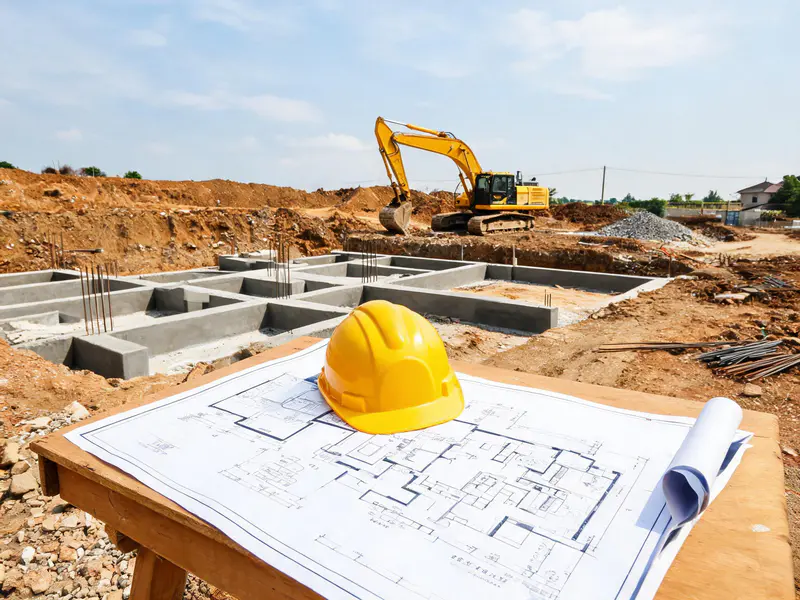
Every legendary building, from the ancient Pyramids of Giza to the modern Burj Khalifa, shares one quiet structural secret: a flawless foundation. In the construction world, the foundation is the invisible workhorse. It sits silently beneath the ground, bearing the immense weight of the walls, roofs, furniture, and human lives above it, and transfers that cumulative load safely into the earth.
For home owners, junior civil engineers, and construction beginners, choosing the right foundation is the single most critical structural decision you will ever make. If you choose the wrong type of foundation, or skimp on material quality below the ground, it does not matter how luxurious your interior marbles or how premium your wall paints are. The building will develop catastrophic cracks, tilt, or even face sudden collapse.
In my years of managing structural site works, I have learned that the earth is unpredictable. To build a structure that lasts for generations, you must understand the soil beneath your feet and match it with the correct structural base. This comprehensive guide breaks down the different Types of Foundation in Construction using simple, everyday language, real-world field examples, and practical on-site quality tips.
What is a Foundation and Why Does It Matter?
Before diving into the technical categories, let us understand what a foundation actually does. A foundation is the lowest part of a structural system that makes direct contact with the soil.
If you place a heavy concrete pillar directly onto raw, soft mud, the weight will force the pillar to sink straight into the ground, just like a high-heeled shoe sinking into a wet lawn. A foundation acts like a snowshoe. It spreads that heavy, concentrated weight over a much larger surface area, ensuring the ground can support the building without shifting or settling unevenly.
A properly engineered foundation fulfils three non-negotiable roles on-site:
- Load Distribution: It collects the weight from upper beams and columns and distributes it evenly across the soil.
- Structural Stability: It anchors the building against horizontal forces like heavy wind storms, underground water currents, and minor seismic earthquakes.
- Moisture Prevention: It acts as a barrier that prevents groundwater from wicking upward into your living rooms and destroying your bricks and woodwork.
The Core Foundations Blueprint: Shallow vs. Deep
In civil engineering, all Types of Foundation in Construction are broadly divided into two major families based on their installation depth: Shallow Foundations and Deep Foundations.
+-------------------------------------------------------+

|                TYPES OF FOUNDATION                    |
+-------------------------------------------------------+

|                                                       |
|   [SHALLOW FOUNDATIONS]        [DEEP FOUNDATIONS]     |
|   (Depth is small/surface)     (Depth is very deep)   |
|            |                            |             |
|   -- Isolated Footings         -- Pile Foundations    |
|   -- Combined Footings         -- Pier Foundations    |
|   -- Strip/Wall Footings       -- Well/Caisson        |
|   -- Raft/Mat Foundations                             |
+-------------------------------------------------------+
As a standard engineering rule of thumb, if the depth of the foundation pit is equal to or less than its width, it is a Shallow Foundation. If the depth is significantly greater than the width, it falls into the Deep Foundation category. Let us explore each individual type, when to use them, and how they perform in real-world scenarios.
Comprehensive Breakdown of Shallow Foundations
Shallow foundations are the most common, cost-effective options used worldwide for residential houses, low-rise apartments, and light commercial shops. They are built just below the ground line and require straightforward manual excavation.
1. Isolated Footing (Pad Foundation)
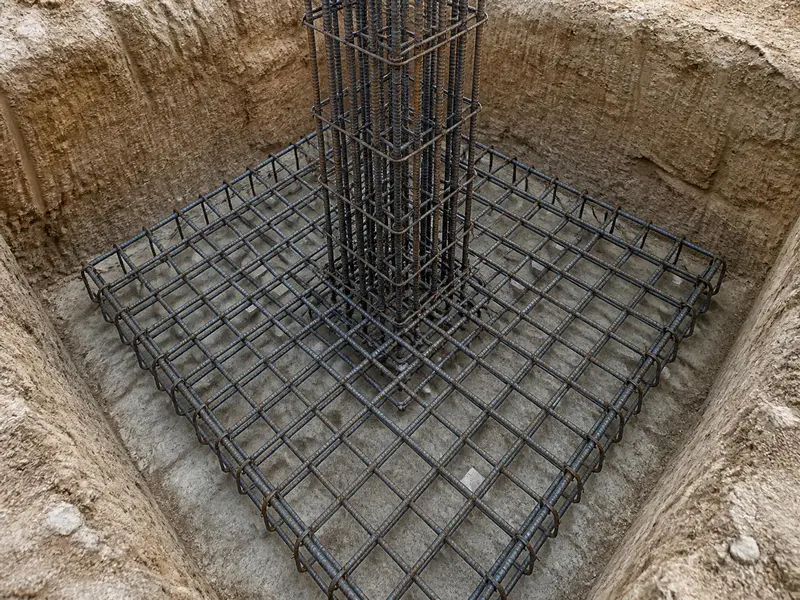
This is the absolute king of residential house construction. An isolated footing is an individual square, rectangular, or sloped concrete pad built underneath a single independent column.
- When to use it: When the soil has a high load-bearing capacity, and the columns are spaced reasonably far apart.
- My Field Experience: On a residential G+2 villa project, the client wanted to cut costs by using a single massive flat concrete slab for the whole house. However, our soil test showed excellent, firm, gravelly sand just 1.5 metres down. I advised them to switch to isolated sloped footings for each pillar. It saved them nearly 35% on concrete and steel material costs while providing flawless structural support.
- On-Site Caution: Ensure the column cage sits perfectly dead-centre on the footing pad. If it is placed off-centre, the weight will cause the footing to tilt, creating hidden bending stresses in your pillar.
2. Combined Footing
A combined footing is a single continuous concrete pad that supports two or more columns placed close to each other. It can be rectangular or trapezoidal in shape.
- When to use it: When two pillars are so close that their individual isolated footing pads would overlap each other, or when a column is built right on your property boundary line.
- Why it matters: If you build a column right against your neighbour’s wall, you cannot extend your footing pad onto their land. To fix this, you combine your boundary column’s footing with the nearest interior column’s footing using a shared concrete base. This balances the weight and stops the edge pillar from tipping over.
3. Strip Footing (Continuous Wall Footing)
Unlike column footings, a strip footing is a long, continuous ribbon of reinforced concrete that runs directly underneath an entire load-bearing brick wall.
- When to use it: Ideal for traditional load-bearing brick structures where there are no concrete pillars, and the heavy walls carry the weight of the roof directly.
- The Check: The width of a strip footing is typically two to three times the thickness of the brick wall sitting on top of it, ensuring the weight is distributed properly across the trench floor.
4. Raft or Mat Foundation
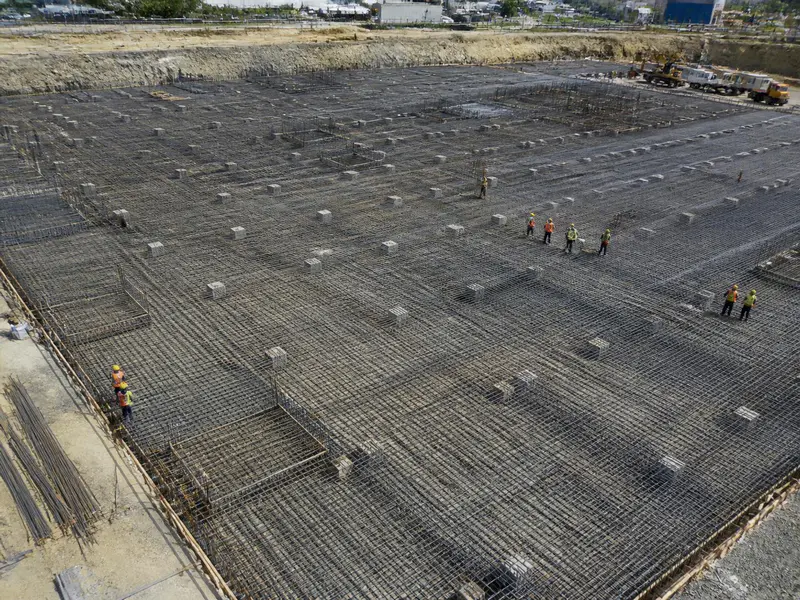
Imagine a large concrete boat floating on a sea of soil. A raft foundation is a massive, thick, continuous reinforced concrete slab that covers the entire footprint of the building, supporting every single column and wall simultaneously.
- When to use it: Used when the soil is soft, marshy, or weak, and individual footings would cover more than 50% of the total plot area. It is also perfect for buildings with heavy underground basements.
- How it works: Because it acts as a single giant plate, a raft foundation prevents “differential settlement”—a dangerous situation where one corner of a house sinks faster than another, causing the building to tear apart and crack.
Comprehensive Breakdown of Deep Foundations
When the surface soil is loose sand, soft clay, organic marsh mud, or uncompacted fill-dirt, shallow footings will fail. You must bypass this weak upper layer to reach solid rock or stiff clay deep underground using deep foundations.
1. Pile Foundation
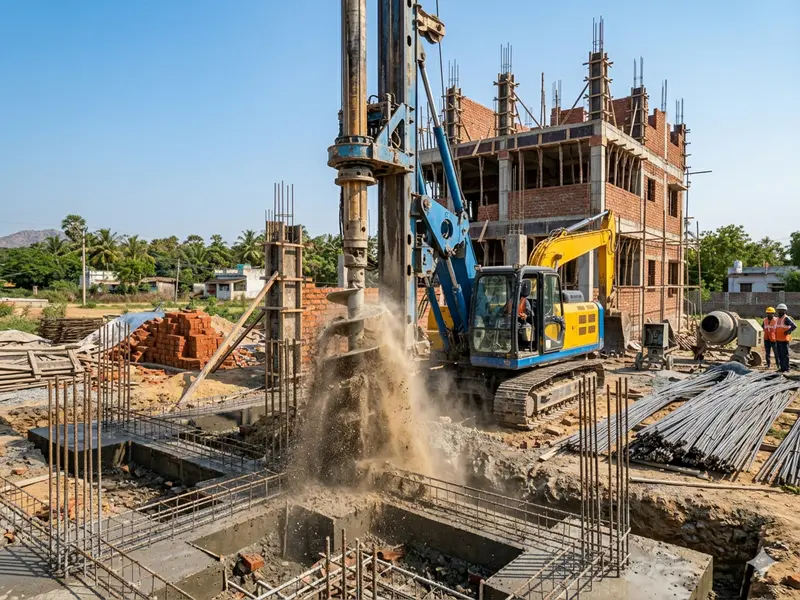
Piles are long, slender cylinders made of high-strength concrete and heavy steel cages that are driven or drilled deep into the earth.
+--------------------------------------------------------+

|                HOW PILE FOUNDATIONS WORK               |
+--------------------------------------------------------+

|                                                        |
|   [Building Weight] --> [Pillar] --> [Pile Cap]        |
|                                           |            |
|       +-----------------------------------+--------+   |
|       | Soft, Weak Topsoil Layer (No Support)      |   |
|       +--------------------------------------------+   |
|       |                                            |   |
|       v  [Friction Pile]              v [End Pile] v   |
|   (Grips soil along sides)      (Rests on solid rock)  |
|                                                        |
+--------------------------------------------------------+
Piles carry weight down using two clever engineering methods:
- End-Bearing Piles: The bottom tip of the pile rests directly on a solid layer of underground bedrock, acting like a sturdy stilts system.
- Friction Piles: If solid rock is too deep to reach, the pile uses the rough friction along its long concrete sides to grip the surrounding stiff soil, holding the building up through pure surface resistance.
- My Field Experience: I once supervised a commercial project located near a riverbed delta. The top 6 metres of soil were nothing but loose river silt and wet mud. A shallow footing would have sunk immediately. We used a hydraulic boring machine to drill 12-metre-deep friction pile foundations. The piles bypassed the mud entirely and anchored the building into a deep, stable sand strata. The building stands perfectly level today.
2. Pier Foundation
Piers are large-diameter concrete shafts excavated manually or mechanically and then filled with concrete. They function similarly to piles but are much wider and typically installed at shallower depths than deep marine piles. They are commonly used for bridge supports and large public assembly halls.
3. Well or Caisson Foundation
These are massive, hollow vertical concrete boxes or cylinders that are sunk deep into riverbeds or ocean floors. Once they reach the bedrock, the water is pumped out, the hollow core is filled with concrete, and they form the heavy underwater pillars for massive bridges, dams, and overwater highways.
Critical On-Site Calculations for Foundation Planning
Site managers must understand basic concrete volume and soil capacity checks to ensure foundation work matches structural designs perfectly.
1. Concrete Volume for an Isolated Footing Pad
To order the right amount of wet concrete mix from a vendor or mix it manually on-site, use this plain-text formula:
- Concrete Volume (Cubic Metres) = Length x Width x Thickness of the Pad
Example: If your foundation drawing requires an isolated pad measuring 2.0 metres long, 2.0 metres wide, and 0.4 metres thick:
- Volume = 2.0 x 2.0 x 0.4 = 1.6 Cubic Metres of Concrete per Footing.
2. Soil Pressure Check (The Weight Safety Rule)
To ensure your foundation is wide enough and won’t sink into the ground, civil engineers use this basic safety check:
- Soil Pressure = Total Weight of the Building / Total Surface Area of the Foundation
The Rule: The calculated Soil Pressure must always be significantly less than the natural Safe Bearing Capacity (SBC) of the soil obtained from the laboratory soil test report. If the pressure is too high, you must increase the length and width of your foundation pads to spread the weight out more.
Quick Reference Table: Matching Foundations to Soil Types
Use this skimmable reference chart to quickly understand which type of foundation suits your specific site ground conditions and project scale.
| Type of Foundation | Ideal Soil Condition | Maximum Building Scale | Key Risk If Done Wrong |
|---|---|---|---|
| Isolated Footing | Hard gravel, firm dry sand, stiff red soil | G+3 Residential Houses / Villas | Off-center loading causes the column to tilt |
| Combined Footing | Firm soil near boundary walls or tight spaces | Low-rise commercial complexes | Uneven load balancing creates structural cracks |
| Raft / Mat Foundation | Soft expansive clay, peat mud, marshy land | Mid-rise apartments with basements | Water pressure from underneath can lift the slab |
| Pile Foundation | Loose waterlogged river sand, black cotton soil | High-rise towers, heavy bridges | Poor drilling alignment compromises load capacity |
You can also use our Concrete Calculator for Construction to estimate the required cement, sand, and aggregate for foundation concrete work.
Material and Metric Conversions for Site Managers
Material orders across processing yards and suppliers regularly switch between metric dimensions and traditional marketplace scales. Internalise this data to prevent calculation mistakes during procurement.
- 1 Cubic Metre (cum) = 35.314 Cubic Feet (CFT)
- 1 Brass (Local Aggregate/Masonry Scale) = 100 Cubic Feet (CFT) = 2.831 Cubic Metres
- 1 Metric Ton (MT) = 1,000 Kilograms (kg) = 10 Quintals
- 1 Inch = 25.4 Millimetres (mm)
Engineers also calculate reinforcement using proper methods, such as Steel Required for 1000 Sq Ft House Calculation.
Site Quality Controls: The Foundation Inspection Protocol
When managing foundation work, quality control cannot be rushed. Once a foundation pit is filled with concrete, mistakes are buried forever under tons of earth. Before you authorise a concrete pour, complete this physical site audit checklist:
1. The Excavation Depth & Compaction Check
- The Reality: Labourers often stop digging the moment they hit hard dirt, even if they are still short of the depth specified in the blueprint.
- The Check: Take a structural tape measure and verify the depth from the natural ground level. Once the correct depth is reached, use a mechanical compactor or heavy rammers on the loose soil floor. If you pour concrete onto uncompacted, loose dirt, the soil will compress later under the heavy building weight, causing your foundation pad to settle and crack.
2. The Mud-Slinging Guard (PCC Check)
- Never allow steel reinforcement cages to be laid directly onto raw dirt inside an open pit.
- Ensure a minimum 75mm to 100mm thick layer of Plain Cement Concrete (PCC) is laid down first and allowed to harden. This layer acts as a smooth, clean shield that keeps mud away from your steel rebars, protecting them from long-term rusting.
3. The 50mm Structural Cover Block Rule
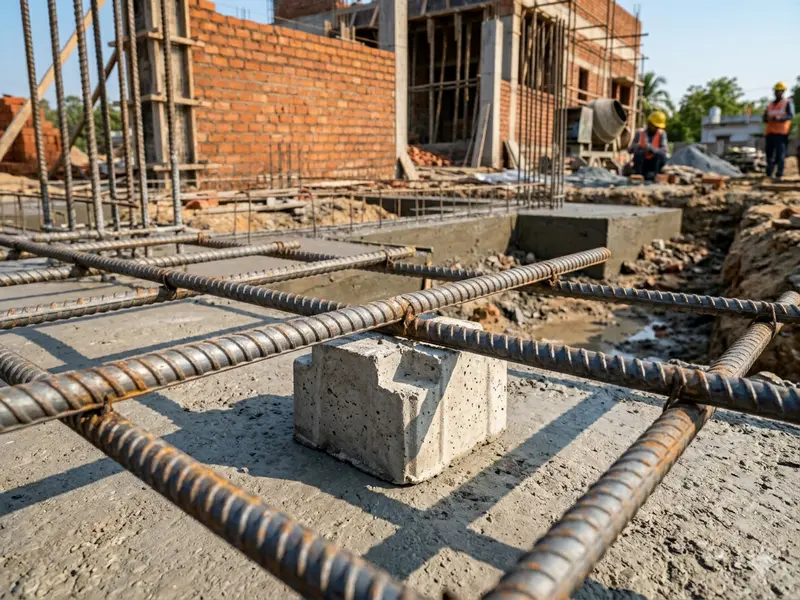
- The Check: Ensure that large, pre-cast concrete spacer blocks are placed underneath and along the sides of the steel reinforcement mats before pouring concrete.
- Why it matters: Underground foundations face aggressive soil chemicals, constant moisture, and shifting water tables. Slabs above ground only require a 20mm cover, but underground foundations require a massive 50mm clear concrete cover to wrap around the steel. This thick concrete shield stops moisture from reaching the steel, preventing rust expansion and foundation damage over time.
Frequently Asked Questions (FAQs)
1. Why can’t we use standard, cheap, isolated shallow footings for all building construction types?
Because shallow footings rely entirely on the strength of the surface soil layer. If your plot contains soft clay, loose waterlogged sand, or organic marshlands, these soils lack the strength to carry heavy building loads. Using a shallow footing on weak ground will cause it to sink unevenly, leading to major structural damage or collapse. In these situations, deep foundations like piles are necessary to reach firm rock deep underground.
2. What is differential settlement, and why is it considered a nightmare for house foundations?
Settlement occurs when the soil beneath a building compresses under its weight. If the entire building settles evenly by a few millimetres, it is completely normal and safe. However, differential settlement happens when one corner or side of the house sinks deeper or faster than the rest. This creates immense twisting forces across the structure, tearing open massive diagonal cracks through your brick walls, beams, and columns.
3. What is Black Cotton Soil, and why does it require special foundation engineering?
Black Cotton Soil is a type of clay soil rich in montmorillonite clay minerals. It is highly expansive, meaning it swells significantly when it absorbs water during the rainy season and shrinks drastically, forming deep cracks, during the dry summer. This continuous pushing and pulling action can tear shallow footings apart. Buildings on this soil require either deep pile foundations or a robust raft foundation that can resist the ground movements.
4. How long should the foundation concrete cure before you can start building brick walls or columns on top of it?
Once a foundation pad is poured, the concrete must be water-cured continuously for at least 7 to 10 days by keeping it wet or covering it with damp burlap gunny bags. This allows the concrete to reach over 70% of its structural design strength. You can cast vertical column starters after 24 to 48 hours, but do not apply heavy brickwork or equipment loads until the first week of curing is complete.
5. Can a damaged or sinking building foundation be repaired after construction is completed?
Yes, but it is an incredibly expensive and complex engineering process known as underpinning. Engineers must dig beneath the existing sinking foundation, install temporary hydraulic jacks to level the structure, and then pour new, wider concrete pads or drive micro-piles deep into the earth to support the load. It is far cheaper to invest in a proper soil test and build the correct foundation type during day one of construction.
Many modern construction guidelines recommend proper soil investigation and foundation design before starting building work, as explained by organisations like the National Building Code of India (NBC).
Conclusion
Every structural choice you make above the ground relies entirely on the strength of the foundation you build below it. Understanding the different Types of foundations in Construction allows you to select the most cost-effective, safest system for your specific site conditions.
Always prioritise a professional geotechnical soil test before finalising your building drawings. Ensure your on-site teams maintain proper excavation compaction, lay down a clean PCC base, and enforce the mandatory 50mm concrete cover rule. By focusing on these core engineering practices, you can ensure your building stands rock-solid for generations.

Shakeel T is a qualified Civil Engineer and Structural Consultant with extensive on-site experience in residential and commercial building construction. Specializing in material estimation, cost budgeting, and structural safety guidelines, he has successfully managed multiple real estate projects from foundation to finishing. Through this blog, Shakeel shares field-tested civil engineering thumb rules, IS Code practices, and practical site tips to help home builders execute their projects efficiently and within budget.
Education: Diploma in Civil Engineering
Expertise: Quantity Surveying, Material Estimation, Structural Design, and Site Management.