
Introduction
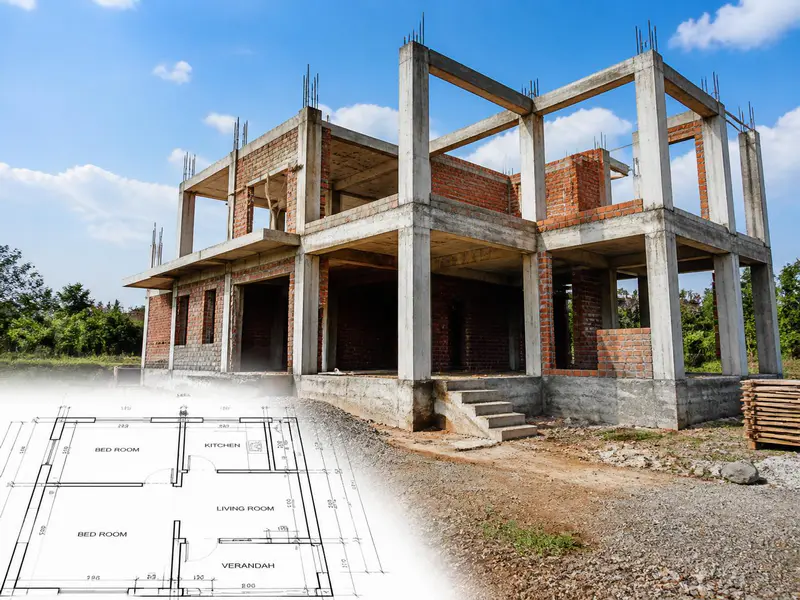
Building your dream home is a milestone event. However, it also demands precise financial and structural planning. One of the most common questions homeowners, builders, and fresh civil engineers ask during the planning phase is: How much steel required for 1000 sq ft house construction?
Steel is the backbone of modern residential architecture. It provides the necessary tensile strength to resist earthquakes, heavy loads, and environmental stresses. While concrete is excellent at handling compressive forces, it is brittle on its own. Steel rebars (Reinforced Cement Concrete or RCC) ensure your building stands strong for generations.
Estimating the exact quantity of steel prevents structural failure from under-ordering and saves thousands of rupees or dollars from over-ordering and wastage. This comprehensive guide breaks down the exact steel calculation methods, real-world rules of thumb, structural component requirements, and professional site checks to ensure your project is a success.
Building your dream home is a milestone event, but it requires careful execution of every phase, from excavation to finishing. It is highly recommended to understand the entire Step-by-Step Guide to House Construction Process to avoid costly mistakes before diving into structural material calculations.
The Rule of Thumb for Steel Estimation
In structural engineering, while exact quantities are determined via detailed structural drawings and bar bending schedules (BBS), we use highly accurate rules of thumb for preliminary budgeting. These rules are derived from historical data of thousands of successfully completed residential buildings.
For a standard residential building (G+0 or G+1 floors), the steel consumption typically ranges from:
- 2.5 kg to 4.5 kg per square foot of built-up area.
- Alternatively, 4.5 metric tons to 5.5 metric tons per 1000 square feet of total built-up area, depending on the number of floors, soil condition, and structural design.
Quick Estimates by House Floor Level
- Single Story House (G+0): Approx. 3.5 kg to 4.0 kg per sq ft. For a 1000 sq ft house, you will need roughly 3,500 kg to 4,000 kg (3.5 to 4.0 Metric Tons) of steel.
- Double Story House (G+1): Approx. 4.0 kg to 4.5 kg per sq ft. For a 1000 sq ft footprint with two floors (total 2000 sq ft built-up area), you will need roughly 8,000 kg to 9,000 kg (8.0 to 9.0 Metric Tons) of steel.
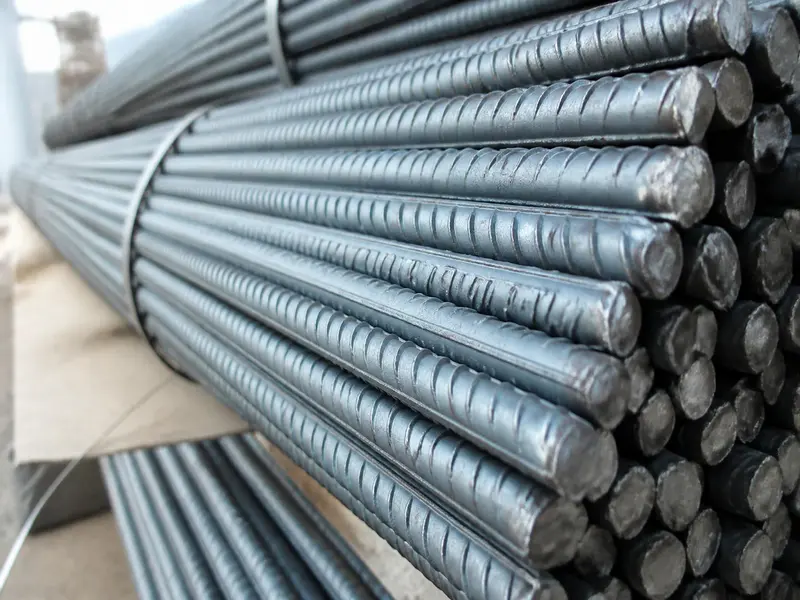
Component-Wise Breakdown of Steel Requirement
A house is made of different structural members, each handling different types of loads. The density of steel varies significantly between a slab, a column, and a footing.
To give you an exact picture of where your steel goes, engineers calculate consumption based on the percentage of concrete volume. Here is the standard structural distribution:
1. Slab (Roof and Floors)
Slabs handle bending stresses. They require thin, closely spaced rebars, typically 8mm, 10mm, or 12mm in diameter.
- Steel Percentage: 0.7% to 1.0% of total concrete volume.
- Estimated Steel for 1000 Sq Ft Slab: 800 kg to 1,000 kg.
2. Beams (Plinth, Floor, and Roof Beams)
Beams endure heavy bending and shear forces, transferring loads from the slab to the columns. They use thicker bars (12mm, 16mm, and sometimes 20mm) along with stirrups (8mm) to resist shear stress.
- Steel Percentage: 1.0% to 2.0% of total concrete volume.
- Estimated Steel for 1000 Sq Ft House Beams: 1,100 kg to 1,300 kg.
3. Columns
Columns are vertical load-bearing members that experience high compressive and buckling loads. They demand thick structural steel (12mm, 16mm, 20mm, or 25mm) wrapped in lateral ties (8mm).
- Steel Percentage: 1.0% to 5.0% of total concrete volume (Standard average is 2.0% to 2.5%).
- Estimated Steel for 1000 Sq Ft House Columns: 900 kg to 1,100 kg.
4. Foundation / Footings
Footings distribute the building weight safely into the soil. Rebars form a mesh network at the bottom of the excavation pit, usually utilizing 10mm or 12mm bars.
- Steel Percentage: 0.5% to 0.8% of total concrete volume.
- Estimated Steel for 1000 Sq Ft House Footings: 600 kg to 800 kg.
Core Engineering Formulas for Steel Calculation
To calculate the exact weight of steel required on-site without a weighing scale, civil engineers use standard mathematical relationships based on the density of steel. The density of mild steel and TMT (Thermo-Mechanically Treated) bars is universally taken as 7850 kg per cubic meter.
Formula 1: Unit Weight of a Steel Bar per Meter
To find the weight of a single-meter length of a steel rebar of any diameter:
- Weight per Meter = (D x D) / 162
Where D is the diameter of the steel bar in millimeters (mm). The resulting unit weight is in Kilograms per Meter (kg/m).
Formula 2: Total Weight of Steel Bars
- Total Weight = Unit Weight x Total Length of Bars
Formula 3: Volume-Based Steel Weight Calculation
If you know the total volume of concrete and the structural design percentage:
- Total Steel Weight = Total Volume of Concrete x Steel Percentage x 7850
Step-by-Step Practical Calculation Examples
Let us execute two practical site-level calculations to show you exactly how these numbers are generated.
Example 1: Finding the Weight of 50 Standard Steel Bars (12mm Diameter)
A standard full-length steel bar manufactured in industries is exactly 12 meters (approx. 39.37 feet) long. Let us calculate the total weight for 50 pieces of 12mm structural bars.
- Calculate Unit Weight:
- Weight per meter = (12 x 12) / 162
- Weight per meter = 144 / 162
- Weight per meter = 0.888 kg/m
- Calculate Length of One Bar:
- Standard Length = 12 meters
- Calculate Weight of One Bar:
- Weight = 0.888 kg/m x 12 m = 10.665 kg
- Calculate Total Weight for 50 Bars:
- Total Weight = 10.665 kg x 50 = 533.25 kg (or 0.533 Metric Tons)
Example 2: Calculating Steel Required for a 1000 Sq Ft Roof Slab (4.5 Inches Thick)
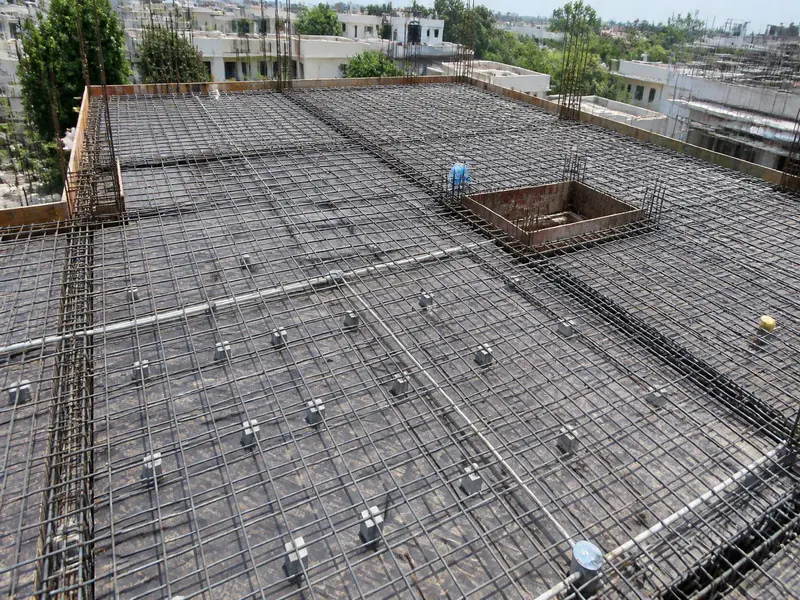
Let us calculate the concrete volume and subsequent steel requirement for casting a 1000 sq ft roof slab with a standard thickness of 4.5 inches.
- Convert Slab Thickness to Feet:
- 4.5 inches / 12 inches = 0.375 feet
- Calculate Volume of Concrete in Cubic Feet (CFT):
- Volume = Area x Thickness
- Volume = 1000 sq ft x 0.375 ft = 375 CFT
- Convert Cubic Feet to Cubic Meters:
- 1 Cubic Meter = 35.3147 Cubic Feet
- Volume in Cubic Meters = 375 / 35.3147 = 10.62 Cubic Meters
- Apply Steel Percentage (Assuming 1% for standard slab design):
- Volume of Steel = 10.62 Cubic Meters x 1% = 0.1062 Cubic Meters
- Convert Steel Volume to Weight:
- Total Steel Weight = Volume of Steel x Density of Steel
- Total Steel Weight = 0.1062 x 7850 = 833.67 kg
Therefore, the roof slab alone will require approximately 834 kg of reinforcing steel.
Unit Conversions Guide for Construction Materials
Material procurement formats change across regions. While structural consultants design in metric systems, local suppliers often trade in regional units. Use this quick cheat sheet for error-free ordering.
- 1 Metric Ton (MT): 1000 Kilograms (kg)
- 1 Quintal: 100 Kilograms (kg)
- 1 Cubic Meter (Cum): 35.3147 Cubic Feet (CFT)
- 1 Brass (Common in Indian Construction): 100 Cubic Feet (CFT) = 2.831 Cubic Meters
- 1 Foot: 0.3048 Meters
- 1 Inch: 25.4 Millimeters (mm)
Material Summary Table for a 1000 Sq Ft House
The following data summarizes the structural metal demand for a typical G+0 (Single Story) residential house spanning a 1000 sq ft built-up area.
| Structural Component | Diameter of Bars Used (mm) | Approximate Percentage | Steel Quantity Required (kg) |
|---|---|---|---|
| Footings & Foundations | 10mm, 12mm | 0.7% | 600 kg – 750 kg |
| Columns & Pedestals | 12mm, 16mm, 20mm | 2.2% | 900 kg – 1,100 kg |
| Beams (Plinth & Roof) | 12mm, 16mm, 8mm (Stirrups) | 1.5% | 1,100 kg – 1,300 kg |
| Slabs (Roof/Floor) | 8mm, 10mm, 12mm | 0.9% | 800 kg – 1,000 kg |
| Staircases & Chajjas | 8mm, 10mm | 1.0% | 200 kg – 250 kg |
| TOTAL ESTIMATE | Mixed Assortment | Rule of Thumb | 3,600 kg – 4,400 kg (3.6 to 4.4 Tons) |
Site Quality Controls, Inspection, and Wastage Management
Procuring the correct weight of steel is only half the battle. Managing that steel on the construction field determines the ultimate structural durability of your home.
1. Account for Wastage Factor
When steel bars are cut to match the structural blueprints, small fragments are left over. These are called cutting wastes. Lap lengths (overlapping two bars when a single continuous run is insufficient) also use up additional steel.
- Action Tip: Always add a 4% to 5% wastage allowance to your final calculations before placing an order. If your calculation states 4,000 kg, purchase 4,160 kg to 4,200 kg to prevent mid-work shortages.
2. Critical On-Site Quality Verification Checks
Before allowing the contractor to pour concrete over the steel framework, execute these crucial quality inspections:
- The Rust Check: Superficial scaling or minor surface rust is acceptable and can even improve concrete bonding. However, flaky, deeply pitted, or corroded steel must be rejected immediately, as it severely lacks design tensile strength.
- The Bend Test: Ensure the site team bends hooks and stirrups smoothly without creating micro-cracks at the bends. TMT steel bars must be bent cold; applying heat to ease bending ruins their crystalline structure and leaves them brittle.
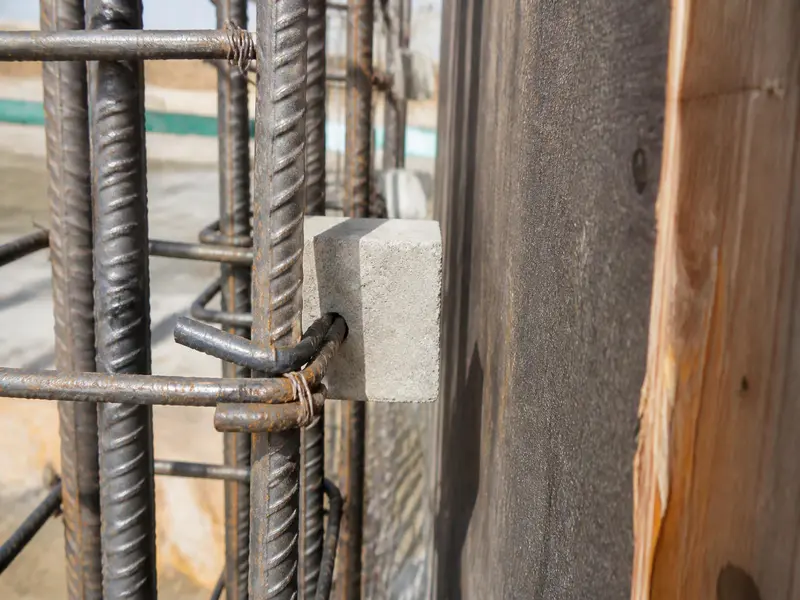
- Clear Cover Maintenance: Concrete cover blocks (made of cement mortar or plastic) must be placed underneath and beside the steel cages. Slabs need a 20mm cover, beams need 25mm, columns need 40mm, and footings need 50mm. Without proper cover blocks, water will seep through the concrete, rusting the steel internally and fracturing the structure (a process known as concrete spalling).
- Binding Wire Inspection: Ensure every bar intersection is bound firmly using 18-gauge annealed binding wire. Loose cages warp and shift when laborers walk on them during concrete pouring. For 1000 kg of reinforcement steel, budget roughly 10 kg to 12 kg of binding wire.
Frequently Asked Questions (FAQs)
Which steel grade is best for building a 1000 sq ft house?
For modern residential buildings, Fe 500D or Fe 550D TMT bars are ideal. The “Fe” represents iron, “500” denotes the yield strength in Newtons per square millimeter, and “D” stands for ductility. High ductility ensures the steel can bend considerably during seismic movements without suddenly snapping.
Can I reduce the amount of steel to save money?
No. Cutting down on structural steel below the minimum architectural design guidelines is highly dangerous. Under-reinforced concrete members can fail suddenly without warning under normal load stresses. To save costs safely, focus on minimizing cutting waste and sourcing directly from wholesale manufacturing distributors.
How many bundles of steel are required for a 1000 sq ft house?
Steel is packaged into bundles depending on the diameter of the bars. A single industrial bundle typically weighs approximately 45 kg to 50 kg. For a 1000 sq ft single-story house requiring 4,000 kg of steel, you will need to order approximately 80 to 90 bundles of mixed diameters.
What diameter of steel bars should be used for columns?
According to standard structural safety codes, the minimum diameter of longitudinal main structural bars in columns must never be less than 12mm. For standard G+1 residential properties, a combination of 12mm and 16mm bars is most commonly used for vertical reinforcement, bound by 8mm stirrups.
How does soil condition affect the steel quantity?
Poor soil conditions, such as loose sand or black cotton clay, have a low bearing capacity. This requires deeper, wider foundations, or even raft foundations instead of isolated footings. Deep foundations demand significantly more concrete and structural steel mesh to distribute loads safely, raising overall steel consumption by 15% to 25%.
For modern residential buildings, Fe 500D or Fe 550D TMT bars are ideal. The “Fe” represents iron, “500” denotes the yield strength, and “D” stands for ductility. To ensure structural safety and legal compliance on-site, always check if your procured steel matches the stress parameters specified in the official Bureau of Indian Standards IS 1786 Product Manual.
Conclusion
Determining how much steel is required for a 1000 sq ft house comes down to practical planning and careful structural adherence. By applying a standard rule of thumb, you can confidently estimate that a single-story 1000 sq ft home will require between 3.6 and 4.4 Metric Tons of reinforced steel.
Remember to balance your purchase by selecting high-quality Fe 500D or Fe 550D TMT bars, accounting for a 5% material wastage factor, and maintaining strict clear cover guidelines on-site. Always cross-verify these preliminary calculations with an analysis from a certified structural engineer before commencing excavation.

Shakeel T is a qualified Civil Engineer and Structural Consultant with extensive on-site experience in residential and commercial building construction. Specializing in material estimation, cost budgeting, and structural safety guidelines, he has successfully managed multiple real estate projects from foundation to finishing. Through this blog, Shakeel shares field-tested civil engineering thumb rules, IS Code practices, and practical site tips to help home builders execute their projects efficiently and within budget.
Education: Diploma in Civil Engineering
Expertise: Quantity Surveying, Material Estimation, Structural Design, and Site Management.