
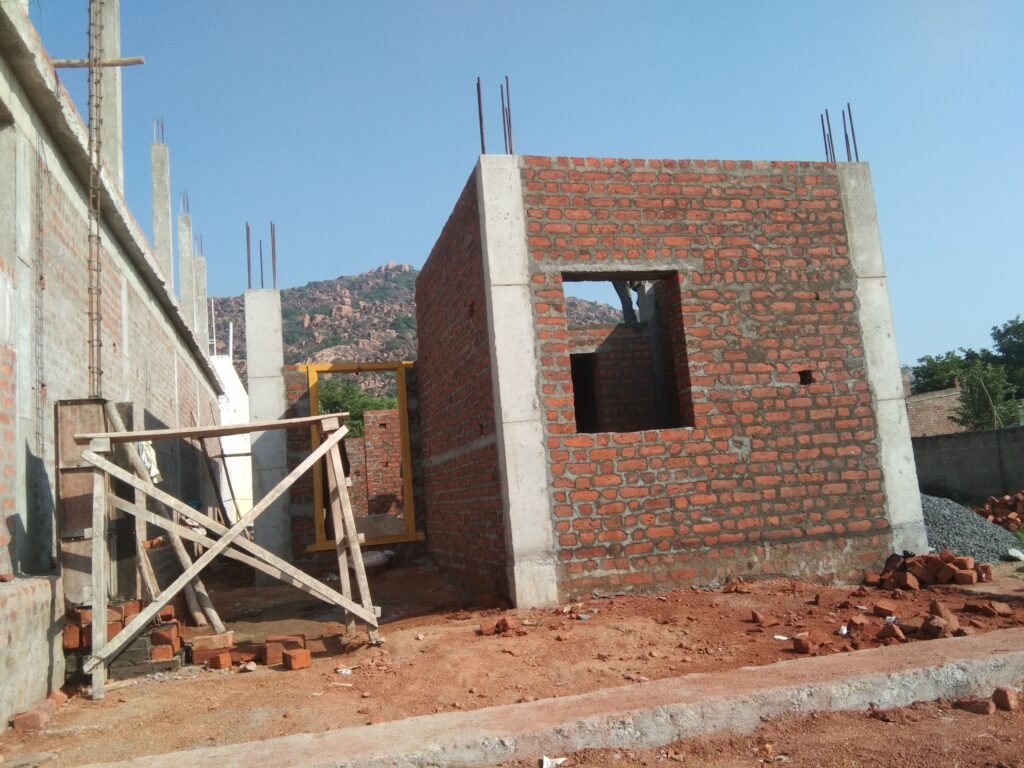
Introduction
Brick calculation is a fundamental concept in civil engineering that helps estimate construction materials accurately. Knowing the number of bricks required for a wall allows engineers, contractors, and builders to plan construction materials efficiently and reduce material wastage on site.
Brick calculation in wall is one of the most important topics in civil engineering and house construction. Before starting brickwork, engineers and contractors must calculate the number of bricks required. Proper brick calculation helps in cost estimation, material planning, and avoiding wastage at construction site.
If brick quantity is not calculated correctly, it may cause material shortage or extra expense. Every civil engineering student, site engineer, and contractor must know how to calculate bricks in wall easily. This guide explains brick calculation in wall with formula, example, and simple steps.
According to Bureau of Indian Standards (BIS) guidelines, modular bricks are commonly used in building construction in India.
Standard Brick Size in India
Before calculating bricks, we must know standard brick size.
Standard brick size (without mortar):
- Length = 19 cm
- Width = 9 cm
- Height = 9 cm
Standard brick size (with mortar):
- Length = 20 cm
- Width = 10 cm
- Height = 10 cm
Mortar thickness is usually 10mm.
Standard Brick Sizes Used in Different Countries
Brick sizes may vary from country to country depending on construction standards and manufacturing practices.
| Country | Brick Size |
|---|---|
| India | 190 × 90 × 90 mm |
| USA | 203 × 92 × 57 mm |
| UK | 215 × 102.5 × 65 mm |
| Australia | 230 × 110 × 76 mm |
In India, the modular brick size (190 × 90 × 90 mm) is widely used in residential and commercial construction.
Types of Bricks Used in Wall Construction
Different types of bricks are used in construction depending on strength, durability, and cost. Understanding the type of brick helps in estimating the correct number of bricks required for a wall.
1. First Class Bricks
First class bricks are high-quality bricks used in important structural works. They have smooth edges, uniform shape, and high compressive strength. These bricks are commonly used in residential and commercial building construction.
2. Second Class Bricks
Second class bricks are slightly irregular in shape and surface finish. They are used for general construction where plastering will be done later.
3. Third Class Bricks
These bricks are of lower quality and mainly used for temporary structures.
4. Fly Ash Bricks
Fly ash bricks are modern eco-friendly bricks made using coal ash. They have better strength, smooth finish, and require less mortar.
Number of Bricks in 1m³
To calculate brick quantity, we use standard formula.
Volume of brick with mortar =
0.20 × 0.10 × 0.10 = 0.002 m³
Number of bricks in 1m³ =
1 / 0.002 = 500 bricks
So, standard number of bricks required for 1 cubic meter brickwork = 500 bricks
Formula for Brick Calculation
In civil engineering, the number of bricks required for brick masonry can be calculated using a simple formula.
Number of bricks = Volume of brickwork / Volume of one brick (including mortar)
For standard modular bricks:
Brick size = 190 mm × 90 mm × 90 mm
Brick size with mortar = (200 × 100 × 100) mm
Volume of one brick with mortar:
= 0.2 × 0.1 × 0.1
= 0.002 m³
Number of bricks required for 1 cubic meter brickwork:
= 1 / 0.002
= 500 bricks
This is the standard brick calculation method used by civil engineers in construction projects.
Brick Calculation in Wall (Step by Step)
Let us calculate number of bricks in a wall.
Example:
Wall length = 5m
Wall height = 3m
Wall thickness = 0.23m
Step 1: Calculate wall volume
Volume = Length × Height × Thickness
Volume = 5 × 3 × 0.23
Volume = 3.45 m³
Step 2: Calculate number of bricks
Bricks required = 3.45 × 500
Bricks required = 1725 bricks
Step 3: Add 5% wastage
Wastage = 1725 × 5% = 86 bricks
Total bricks = 1725 + 86
Total bricks = 1811 bricks
So, total bricks required = approx 1800 bricks
Mortar Calculation for Brickwork
Mortar is required to join bricks.
Mortar required for 1m³ brickwork = 0.30 m³ approx
For 3.45m³ brickwork:
Mortar = 3.45 × 0.30
Mortar = 1.03 m³
Cement and sand can be calculated based on mix ratio.
Importance of Brick Calculation
Brick calculation in wall helps in:
- Accurate estimation
- Cost planning
- Avoiding material shortage
- Reducing wastage
- Proper site management
Every civil engineer must know this basic calculation.
Brick Calculation for 100 sq ft Wall
Quick method:
100 sq ft wall (9-inch wall) requires approx
1000 bricks
This is used for quick site estimation.
Bricks Required per Square Meter Wall
In many construction projects, engineers also estimate bricks based on wall area instead of wall volume.
For a standard 9 inch (230 mm) thick wall, approximately 120 bricks are required per square meter of wall.
For a 4.5 inch (115 mm) thick wall, around 60 bricks are required per square meter.
These values are approximate and may slightly change depending on mortar thickness, brick size variations, and construction methods used on the site.
This quick estimation method helps engineers calculate the required number of bricks quickly during site work.
Brick Requirement for Different Wall Thickness
The number of bricks required depends on the thickness of the wall.
| Wall Thickness | Bricks Required per Sq Ft |
|---|---|
| 4.5 inch wall | 5 bricks |
| 9 inch wall | 10 bricks |
| 13.5 inch wall | 15 bricks |
External walls are usually constructed with 9 inch thickness, while partition walls often use 4.5 inch brickwork.
Quick Brick Calculation Chart
Engineers often use quick reference charts to estimate brick quantity during construction planning.
| Wall Area | Approximate Bricks Required |
|---|---|
| 10 sq ft | 100 bricks |
| 50 sq ft | 500 bricks |
| 100 sq ft | 1000 bricks |
| 200 sq ft | 2000 bricks |
This quick estimation method helps builders estimate materials before detailed calculations.
Factors Affecting Brick Quantity in Construction
Several factors influence the total number of bricks required in construction.
Brick size
Different brick sizes lead to different brick quantities.
Mortar thickness
Mortar joints usually have a thickness of about 10 mm, which affects the number of bricks required.
Wall openings
Doors, windows, and ventilation openings reduce the number of bricks needed.
Brick wastage
During transportation and construction, about 5–10% brick wastage may occur.
Considering these factors helps in making accurate brick calculations.
Brick Wastage in Construction
During construction work, some bricks may break during transportation, handling, or cutting. Because of this reason, engineers always add extra bricks while ordering materials.
Normally, a wastage factor of 5% to 10% is considered safe in construction projects.
For example, if the calculated number of bricks required for a wall is 5000 bricks, an additional 5% bricks should be added to avoid shortage.
5% of 5000 = 250 bricks
Total bricks required = 5250 bricks
Adding wastage ensures that the construction work does not stop due to lack of materials on the site.
Site Tips for Brickwork
- Use good quality bricks
- Soak bricks before use
- Maintain proper line and level
- Use correct mortar ratio
- Check vertical alignment
- Do proper curing
Good brickwork increases building strength.
Accurate brick calculation in wall construction is essential for proper planning and cost estimation in any building project. Knowing how to calculate the number of bricks required for 1m³ of brickwork helps engineers, contractors, and homeowners manage materials efficiently and avoid unnecessary wastage. The total number of bricks depends on the size of bricks used, thickness of mortar joints, and the type of wall construction.
Standard modular bricks are commonly used in residential buildings, making calculations easier and more reliable. Proper estimation ensures that sufficient cement and sand are arranged for masonry work without delays. It also helps in preparing a clear budget and maintaining construction quality throughout the project. By following standard calculation methods, builders can ensure strong and durable walls while completing construction work smoothly and on time. Careful material planning ultimately results in better cost control and efficient project execution.
Advantages of Brick Masonry
Brick masonry has been used in construction for centuries due to its durability and strength.
Some major advantages include:
- Good compressive strength
- Fire resistance
- Thermal insulation
- Easy availability of materials
- Economical construction method
Because of these benefits, brick masonry is widely used in residential buildings.
Tools Used for Brick Calculation
Civil engineers use different tools and methods to calculate brick quantities accurately.
Some commonly used tools include construction calculators, Excel sheets, quantity takeoff software, and mobile construction apps.
Many engineers also use online brick calculators to quickly estimate the number of bricks required for walls, foundations, and masonry structures.
Using these tools helps reduce manual calculation errors and saves time in large construction projects.
Uses of Brick Masonry in Construction
Brick masonry is widely used in building construction due to its strength, durability, and cost-effectiveness.
Common uses of brick masonry include:
- Construction of residential house walls
- Boundary walls
- Partition walls inside buildings
- Load bearing structures
- Small retaining walls
Because bricks are easily available and economical, brick masonry remains one of the most commonly used construction methods worldwide.
Understanding brick calculation in wall helps engineers estimate materials accurately and plan construction work efficiently.
To understand plaster material estimation, read our guide on Cement Required for Plastering 100 Sq Ft Wall
Frequently Asked Questions (FAQs)
How many bricks are required for 1 cubic meter of brickwork?
For standard modular bricks, approximately 500 bricks are required for 1 cubic meter of brickwork including mortar thickness.
What is the standard brick size used in India?
The commonly used brick size in India is 190 mm × 90 mm × 90 mm without mortar.
What is the mortar thickness in brick masonry?
In most brick masonry works, mortar thickness is usually 10 mm.
CPWD Construction Specifications
Standard Number of Bricks in 1m³ Brickwork
For standard modular bricks with mortar thickness, the number of bricks required for 1 cubic meter brickwork is approximately 500 bricks.
This value is commonly used by civil engineers for estimating brick masonry quantities in building construction projects.
Conclusion
Brick calculation in wall is essential knowledge for civil engineers and construction workers. Standard brick requirement is 500 bricks per cubic meter. By using simple formulas, you can calculate number of bricks required for any wall easily.
Proper brick calculation helps in estimation, budgeting, and smooth construction work. Every civil engineering student and site engineer must learn this method for successful construction projects.

Shakeel T is a civil engineering enthusiast and founder of CivilGuide.in. He specializes in construction estimation, quantity surveying, and practical civil engineering calculations. Through CivilGuide, he shares real-world construction knowledge, calculators, and step-by-step guides to help students and site engineers improve their technical skills.