
Introduction
Building construction process step by step is one of the most important topics for civil engineers, students, and house owners. Before starting any construction project, it is necessary to understand all construction steps clearly. Proper knowledge of construction process helps in planning, cost control, and quality work.
A building is constructed in different stages such as planning, foundation, structure, brickwork, plastering, and finishing. Each stage plays a major role in building strength and durability. This complete guide explains building construction process step by step in simple language.
onstruction standards in India are regulated by the Bureau of Indian Standards (BIS).
Stages of Building Construction
Building construction is generally divided into three major stages.
1. Pre-construction stage
• Site selection
• Soil testing
• Planning and design
• Budget estimation
• Government approvals
2. Construction stage
• Site clearing and layout
• Foundation work
• Column and beam construction
• Brickwork and wall construction
• Roofing and slab work
3. Post-construction stage
• Plastering and finishing
• Electrical and plumbing installation
• Painting and flooring
• Final inspection and handover
Understanding these stages helps homeowners track the construction progress effectively.
Site Selection and Soil Testing
The first step in building construction process is selecting a suitable site.
Important points:
- Check soil condition
- Check water level
- Good road access
- Proper drainage
- Legal documents
Soil testing is done to know soil bearing capacity. It helps in selecting the correct type of foundation.
Planning and Design
After site selection, planning and design work starts.
Includes:
- Building plan
- Structural drawing
- Elevation design
- Estimation and costing
Proper planning saves time and money during construction.
Government construction guidelines and building codes can be found in CPWD construction manuals.
You can also calculate concrete quantities using our Concrete Calculator.
Site Cleaning and Layout
Construction site must be cleaned before starting work.
Steps:
- Remove plants and waste
- Level the ground
- Mark building layout
- Set reference points
Layout marking is done using lime powder and thread.
Excavation Work
Excavation is done for foundation.
Steps:
- Mark foundation area
- Dig soil as per drawing
- Maintain required depth
- Remove loose soil
Excavation depth depends on soil condition and building load.
Foundation Work
Foundation is one of the most important parts of any building because it transfers the entire structural load to the soil. The type of foundation used depends on soil condition, building load, and groundwater level.
Foundation steps:
- PCC (Plain cement concrete)
- Footing reinforcement
- Footing concrete
- Column starter
A strong foundation ensures building safety.
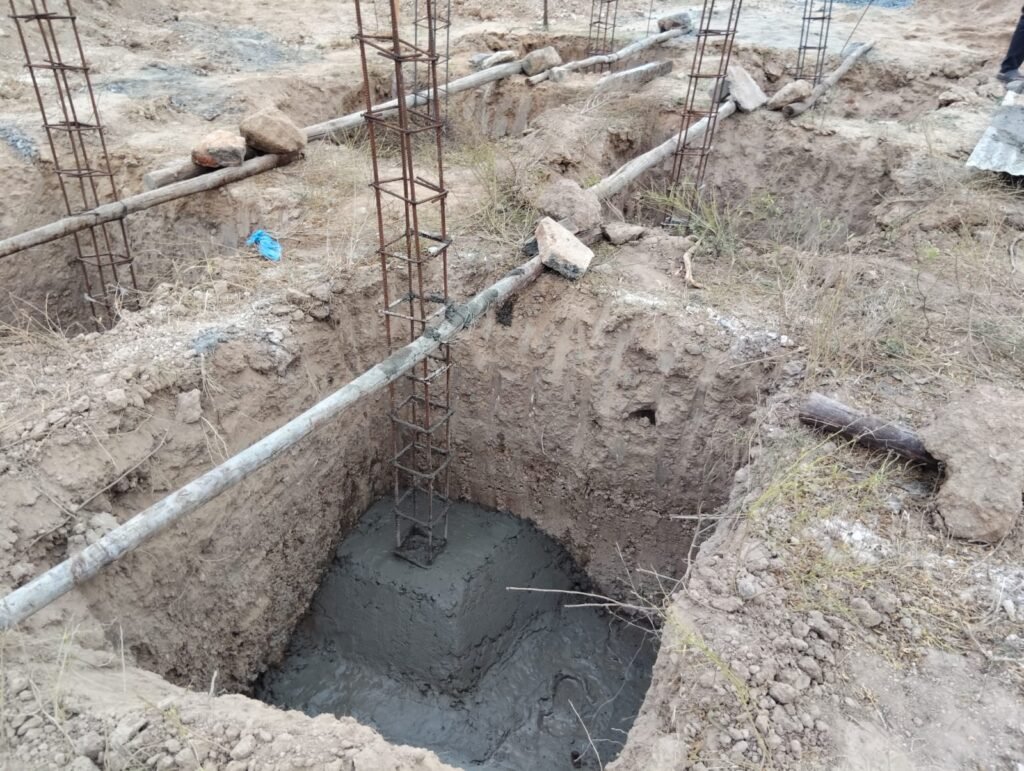
Types of Foundations Used in Building Construction
Common foundation types include:
• Isolated footing – used for individual columns
• Combined footing – used when two columns are close together
• Strip footing – used for load bearing walls
• Raft foundation – used when soil bearing capacity is low
• Pile foundation – used for very weak soils
Selecting the correct foundation type ensures structural safety and durability.
To understand different foundation systems in detail, read our article Types of Foundation in Construction.
Column and Beam Construction
Columns and beams provide structural strength.
Steps:
- Fix reinforcement
- Provide shuttering
- Pour concrete
- Proper curing
This stage forms the building frame.
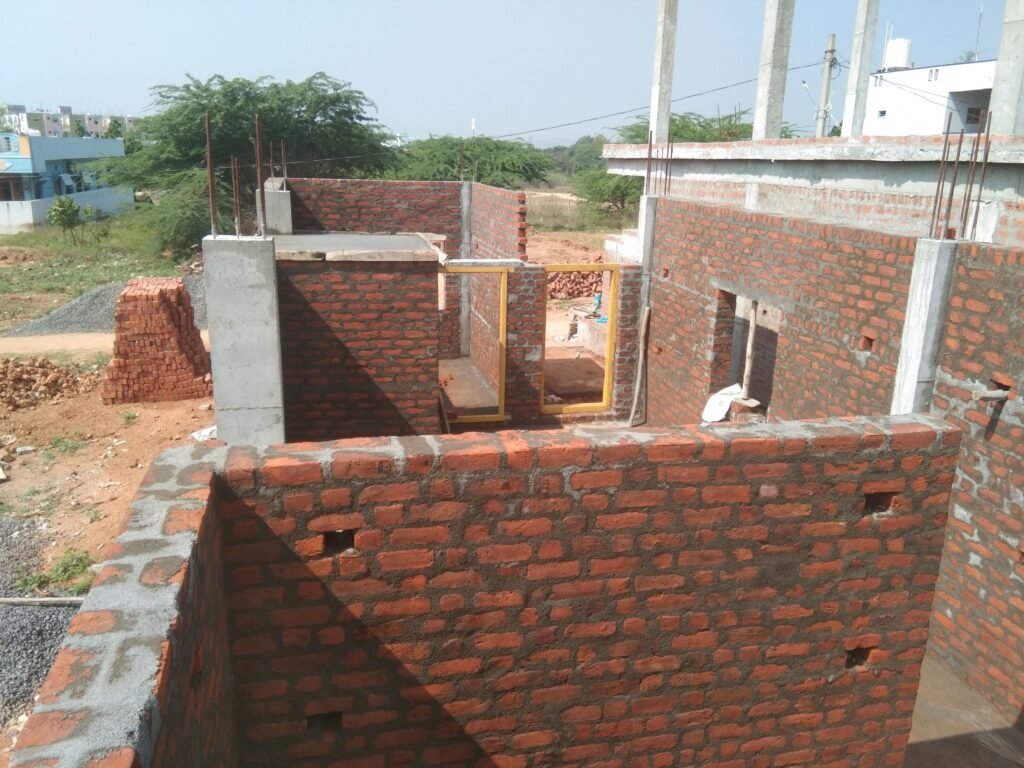
Brickwork and Wall Construction
Brickwork forms the vertical structure of the building. Proper alignment, mortar quality, and curing are essential to achieve strong and durable walls.
Steps:
- Use good quality bricks
- Maintain line and level
- Use proper mortar ratio
- Check vertical alignment
Walls divide rooms and support roof.
Lintel and Slab Work
Lintel is provided above doors and windows.
Slab construction steps:
- Centering and shuttering
- Steel reinforcement
- Electrical conduits
- Concrete pouring
- Curing
Slab gives roof to building.
You can estimate steel quantity using our guide Steel Weight Calculation for Slab.
Plastering Work
Plastering provides smooth wall surface.
Types:
- Internal plaster
- External plaster
Cement mortar is used for plastering. It improves wall strength and appearance.
Flooring and Finishing
After plastering, finishing work starts.
Includes:
- Flooring tiles
- Painting
- Electrical work
- Plumbing work
- Door and window fixing
This stage gives final look to building.
Typical Timeline for House Construction
The time required to complete a residential building depends on size and labour availability.
Typical timeline for a small house:
| Stage | Approximate Time |
|---|---|
| Planning and approvals | 2–4 weeks |
| Foundation work | 2–3 weeks |
| Structural work | 6–8 weeks |
| Brickwork and plastering | 4–6 weeks |
| Finishing work | 3–4 weeks |
Total construction time is usually 4–6 months for a standard house.
Construction Materials Used in Building Construction
Building construction requires several materials that contribute to the strength and durability of the structure.
Common construction materials include:
• Cement – used for concrete, plastering, and masonry work
• Steel reinforcement – provides tensile strength to concrete structures
• Bricks or blocks – used for wall construction
• Sand – used in mortar and concrete mixtures
• Aggregates – crushed stones used in concrete
• Wood – used for doors, windows, and formwork
• Tiles and flooring materials – used for finishing
The quality of construction materials plays a major role in the overall durability and safety of a building.
Role of Civil Engineer in Building Construction
A civil engineer plays an important role throughout the building construction process.
Their responsibilities include:
• Preparing structural designs and drawings
• Ensuring the building follows safety standards
• Supervising construction work on site
• Checking material quality and workmanship
• Managing construction schedules and budgets
Hiring a qualified civil engineer ensures that the building is structurally safe and constructed according to approved standards.
Final Inspection and Handover
After completing all work:
- Check quality
- Fix defects
- Clean building
- Handover to owner
Proper inspection ensures safe building.
Importance of Construction Process
Following a systematic construction process helps avoid structural defects and delays. Proper planning also improves construction quality and reduces unnecessary expenses.
Each stage of construction should be inspected carefully to ensure the building meets engineering standards and safety requirements.
- Proper planning
- Quality construction
- Cost control
- Time management
- Avoiding mistakes
Every civil engineer must know all steps.
Quality Control in Building Construction
Quality control is an important part of the building construction process. It ensures that all construction activities follow proper engineering standards and safety guidelines.
During construction, engineers and supervisors check several factors such as material quality, structural alignment, and workmanship. Concrete strength, brickwork alignment, and reinforcement placement must be inspected regularly.
Proper quality control helps prevent structural defects and increases the durability of the building. It also reduces future maintenance costs and ensures the building remains safe for occupants.
Tips for Successful Construction
- Use quality materials
- Follow structural drawing
- Maintain curing
- Check work regularly
- Hire skilled labour
- Monitor cost and material
- Maintain proper communication between engineers, contractors, and workers
- Keep a contingency budget of 10–15% for unexpected expenses
These tips ensure strong and durable building.
Safety Measures During Building Construction
Construction sites involve many risks, so safety precautions are essential.
Important safety measures include:
• Workers should wear helmets, gloves, and safety shoes
• Proper scaffolding should be used during wall construction
• Electrical wiring should be handled carefully
• Heavy materials should be lifted using proper equipment
• Construction areas should be kept clean to prevent accidents
Following safety measures helps protect workers and ensures smooth construction progress
Common Mistakes to Avoid During Building Construction
Many construction projects face problems due to poor planning. Some common mistakes include:
• Starting construction without soil testing
• Poor supervision during foundation work
• Using low-quality construction materials
• Improper curing of concrete
• Lack of waterproofing in bathrooms and roofs
Avoiding these mistakes improves the durability and safety of the building.
Modern Technologies Used in Building Construction
Modern construction projects increasingly use advanced technologies to improve efficiency and accuracy.
Some commonly used technologies include:
• Building Information Modeling (BIM) for digital building planning
• Drones for site inspection and monitoring
• 3D construction printing for faster building construction
• Precast concrete technology for faster structural work
• Construction management software for project tracking
These technologies help engineers complete projects faster, reduce construction errors, and improve overall building quality.
Frequently Asked Questions (FAQs)
What is the first step in building construction?
The first step in building construction is site selection and soil testing, which helps determine the suitable foundation type.
How much time is required to build a house?
A typical residential house construction project takes around 4 to 6 months depending on the building size and labour availability.
What is the most important stage in building construction?
The foundation stage is considered the most important because it supports the entire weight of the building. A strong foundation ensures stability and prevents structural problems in the future.
Conclusion
Understanding the building construction process step by step is very important for every beginner in civil engineering and house construction. When you clearly know each stage, from site selection and planning to foundation, superstructure, roofing, and finishing works, it becomes easy to manage the project without confusion. A proper building construction process step by step guide helps beginners understand how materials, labor, and time are coordinated to complete a building safely and efficiently.
Following the correct building construction process step by step ensures quality construction, cost control, and safety at the worksite. It also helps in avoiding common mistakes such as improper foundation work, poor material selection, and incorrect structural practices. When each stage of construction is completed in a planned manner, the durability and strength of the building will increase, resulting in a long-lasting and safe structure.
For civil engineering students, site supervisors, and house owners, learning the building construction process step by step provides practical knowledge that can be used in real construction projects. It improves decision-making, helps in proper supervision, and ensures that the project runs smoothly from start to finish. By following a systematic construction process, anyone can successfully complete a building project with better quality, proper budget management, and timely completion.
Proper planning, quality materials, and professional supervision are essential for successful building construction. Following a step-by-step construction process helps reduce delays and ensures structural safety.
Building construction is a complex process that requires careful planning, quality materials, and skilled labor. Understanding each stage of construction helps homeowners and engineers manage projects efficiently.
Proper supervision and adherence to construction standards ensure the building remains safe and durable for many years.

Shakeel T is a civil engineering enthusiast and founder of CivilGuide.in. He specializes in construction estimation, quantity surveying, and practical civil engineering calculations. Through CivilGuide, he shares real-world construction knowledge, calculators, and step-by-step guides to help students and site engineers improve their technical skills.