
Introduction
Building materials list for house construction is very important before starting any construction project. Every house owner and civil engineer must know what materials are required to build a strong and durable house. Proper planning of building materials helps in cost estimation, material management, and smooth construction work.
If materials are not planned properly, construction may get delayed and cost may increase. A complete building materials list for house construction helps engineers and contractors arrange materials on time and avoid wastage. This guide explains all essential materials required for house construction in simple language.
This guide provides a complete building materials list for house construction, helping beginners and homeowners understand the materials required for each stage of construction.
House construction requires proper planning and the correct selection of building materials. Using high-quality materials helps improve the strength, durability, and safety of the structure. Preparing a complete building materials list before starting construction also helps avoid delays, reduce wastage, and control overall construction costs.
Uses of Building Materials Required for House
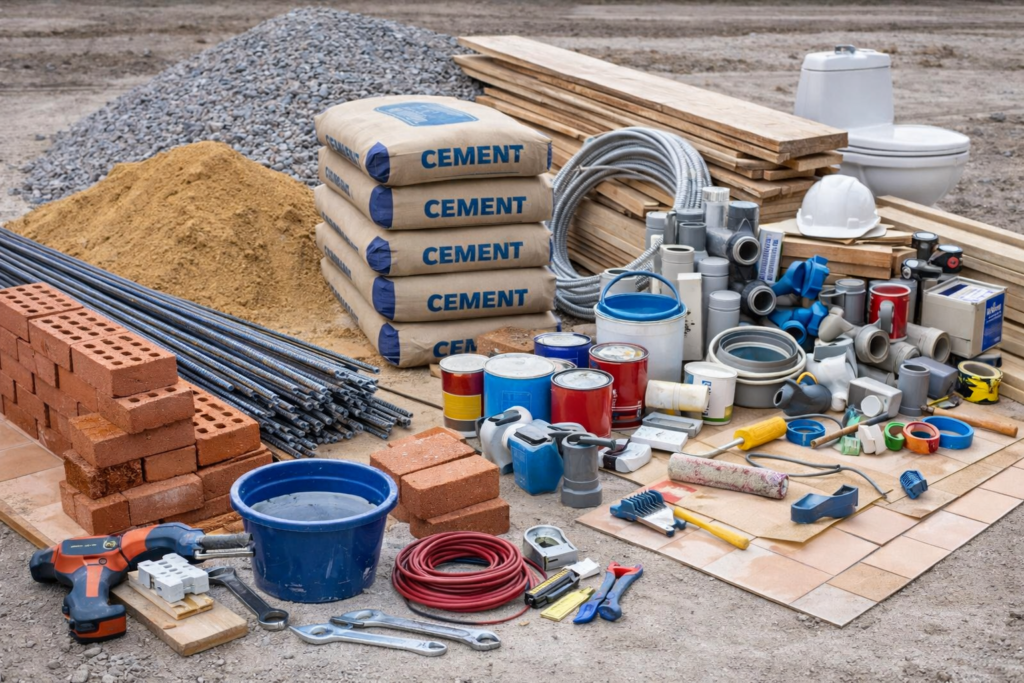
Different stages of house construction require different types of materials. Foundation work mainly requires cement, sand, aggregates, and steel reinforcement. The superstructure uses bricks or blocks, cement mortar, and reinforced concrete. After structural work is completed, finishing materials such as tiles, paint, doors, windows, and electrical fittings are used to complete the building. Understanding the purpose of each material helps in better planning and budgeting for construction.
Basic Building Materials Required for House
House construction requires many materials from foundation to finishing stage. Below is the complete building materials list for house construction.
1. Cement
Cement is the main material used in construction. It is used in concrete, mortar, plastering, and flooring.
Uses:
- Foundation work
- Column and beam
- Slab concrete
- Brickwork
- Plastering
For a 1000 sq ft house, around 400–500 cement bags are required.
2. Sand
Sand is used for making concrete and mortar. Good quality sand increases strength of construction.
Types of sand:
- River sand
- M sand
- Plastering sand
Sand is used in brickwork, plastering, and concrete works.
3. Aggregate (Gravel)
Aggregate is used in concrete to provide strength.
Types:
- 20mm aggregate
- 10mm aggregate
Aggregate is mainly used in PCC, RCC, slab, and footing.
4. Steel (Reinforcement)
Steel is used to increase tensile strength of concrete. It is used in slab, beam, column, and footing.
Common sizes:
- 8mm
- 10mm
- 12mm
- 16mm
- 20mm
For 1000 sq ft house, 3–4 tons steel required.
5. Bricks or Blocks
Bricks are used for wall construction.
Types:
- Red bricks
- Fly ash bricks
- Concrete blocks
- AAC blocks
Good quality bricks ensure strong walls.
To make this process easier, the CivilGuide Brick Masonry Calculator helps engineers
6. Water
Water is required for mixing concrete, mortar, and curing.
Use clean water free from chemicals and impurities.
7. Concrete Materials
Concrete is made of:
- Cement
- Sand
- Aggregate
- Water
Used in foundation, slab, beam, and column.
8. Wood and Timber
Wood is used for doors, windows, and furniture.
Uses:
- Door frames
- Window frames
- Shuttering work
Quality wood improves durability.
9. Electrical Materials
Electrical materials required:
- Wires
- Switches
- Switch boards
- Pipes
- Distribution board
Proper electrical materials ensure safety.
10. Plumbing Materials
Plumbing materials include:
- Pipes
- Taps
- Valves
- Water tank
- Bathroom fittings
Used for water supply and drainage system.
11. Flooring Materials
Used for floor finishing.
Types:
- Tiles
- Marble
- Granite
- Cement flooring
Flooring improves house appearance.
12. Paint and Finishing Materials
Used for final finishing.
- Wall putty
- Primer
- Paint
- Polish
Painting gives attractive look to house.
Factors to Consider When Choosing Building Materials
Choosing the right building materials is very important for the safety, durability, and overall quality of a house. Before purchasing construction materials, several factors should be considered to ensure the best results.
One of the most important factors is the quality of the materials. High-quality materials provide better strength and long-term durability. For example, good quality cement and properly graded aggregates help in producing strong concrete structures.
Another factor to consider is the cost of materials. While it may be tempting to choose cheaper materials, low-quality materials can lead to structural problems and higher maintenance costs in the future. It is always better to balance cost and quality.
Availability is also an important consideration. Materials that are easily available in the local market can help avoid delays in construction. In addition, selecting environmentally friendly and sustainable materials can help reduce the environmental impact of construction projects.
Importance of Material Planning
Proper building materials list for house construction helps in:
- Accurate cost estimation
- Avoiding material shortage
- Saving time
- Reducing wastage
- Smooth construction work
Every civil engineer must prepare material list before starting construction.
House construction lo building materials planning chala important role play chestundi. Correct materials correct quantity lo purchase cheyyakapothe construction cost increase avuthundi. For example, cement, sand, steel, bricks laanti materials ni site requirement prakaram estimate chesi purchase cheyyali. Ila cheyyadam valla wastage tagguthundi mariyu budget control lo untundi.
Civil engineers generally construction start cheyyadaniki mundu material estimation prepare chestaru. Estimation lo foundation, superstructure, flooring, roofing, electrical mariyu plumbing materials anni include chestaru. Proper planning valla construction work smooth ga jaruguthundi mariyu project delay avvakunda untundi.
Anduke house construction start cheyyadaniki mundu building materials list prepare chesi, quality materials ni select cheyyadam chala mukhyam.
Material planning also helps prevent construction delays. If important materials are not available at the right time, construction work may stop temporarily, which increases project duration and labor costs. Proper planning ensures that materials are purchased and delivered according to the construction schedule.
It also allows homeowners or contractors to compare prices from different suppliers and choose the best quality materials within the available budget. Many construction professionals prepare a detailed material estimation before starting the project to ensure that all required materials are available when needed.
For standard construction practices and material quality guidelines, you can refer to the Bureau of Indian Standards (BIS) and National Building Code of India.
Tips for Buying Building Materials
- Buy good quality materials
- Compare prices in market
- Purchase in bulk
- Store materials safely
- Avoid duplicate materials
- Check cement manufacturing date
These tips help in saving money and quality construction.
It is also important to inspect construction materials physically before purchasing them in bulk. Checking the quality of bricks, the manufacturing date of cement, and the grading of aggregates can help ensure strong and durable construction. Buying materials from reliable suppliers reduces the risk of receiving poor-quality products.
In addition, materials should be stored properly at the construction site to prevent moisture damage, breakage, or wastage.
Another important tip is to purchase materials in the correct quantity based on proper estimation. Buying excessive materials may lead to wastage, while insufficient materials can delay construction work. A proper quantity estimation prepared by a civil engineer or contractor can help manage materials efficiently.
It is also advisable to check whether the materials meet standard specifications. Many construction materials such as cement and steel come with certification marks that indicate their quality and compliance with construction standards. Always verify these certifications before purchasing materials.
Proper transportation and storage of materials at the construction site are equally important. Materials should be protected from moisture, rain, and physical damage to maintain their quality.
Common Mistakes to Avoid When Buying Building Materials
While purchasing building materials for house construction, many people make common mistakes that can increase construction costs and affect the quality of the structure. One of the biggest mistakes is buying low-quality materials to save money. Poor quality cement, bricks, or steel can reduce the strength and durability of the building.
Another common mistake is purchasing materials without proper quantity estimation. If materials are purchased randomly, it can lead to wastage or shortage during construction work. That is why preparing a proper material list and quantity estimation before starting construction is very important.
Many house owners also ignore checking the manufacturing date of cement and the quality of sand and aggregates. Fresh cement and properly graded aggregates help in achieving strong concrete.
It is always better to consult a civil engineer or construction professional before purchasing bulk building materials. Proper planning, quality checking, and buying materials from reliable suppliers can help ensure a strong and long-lasting house
FAQs About Building Materials for House Construction
1. What are the basic materials required for house construction?
The basic materials required for house construction include cement, sand, aggregates, bricks or blocks, steel reinforcement, water, wood, electrical materials, plumbing materials, and finishing materials like paint and tiles.
2. Why is material planning important in construction?
Material planning helps in reducing wastage, controlling construction costs, and ensuring that the right materials are available at the right time during the construction process.
3. How can we ensure the quality of building materials?
Quality of building materials can be ensured by purchasing from trusted suppliers, checking certification standards, and verifying material specifications before use in construction.
4. Which material is most important in house construction?
Cement, steel, and aggregates are the most important materials because they provide strength and stability to the building structure.
Conclusion
Building materials list for house construction is essential for successful building project. Cement, sand, steel, bricks, aggregate, wood, and finishing materials are required for building a strong house. Proper planning and quality materials ensure long life and safety of building.
Every house owner and civil engineer must prepare complete material list before starting construction. This helps in cost control, time saving, and smooth construction process. Using good quality materials always results in strong and durable house construction.
Before starting house construction, it is always advisable to consult a civil engineer or construction expert to prepare a proper material estimation. This helps in selecting the right materials and maintaining quality during construction. Proper planning and the use of quality materials ensure a safe, durable, and long-lasting building.
In addition to selecting the right materials, proper supervision during construction is also essential to ensure quality work. Skilled labor, proper construction techniques, and regular inspection by professionals help maintain the strength and safety of the building.
A well-planned building materials list also helps homeowners estimate the overall cost of construction more accurately. This allows better financial planning and prevents unexpected expenses during the construction process.
By understanding the purpose and importance of each construction material, homeowners and builders can make informed decisions when purchasing materials. Using the right materials and proper planning ultimately results in a safe, durable, and comfortable house that can last for many years.

Shakeel T is a civil engineering enthusiast and founder of CivilGuide.in. He specializes in construction estimation, quantity surveying, and practical civil engineering calculations. Through CivilGuide, he shares real-world construction knowledge, calculators, and step-by-step guides to help students and site engineers improve their technical skills.