
Introduction
Have you ever walked into a beautiful home and wondered why the ceiling looked so elegant?
Most people immediately notice the lights, paint, or furniture. But the real secret is often hiding above their heads a well-designed false ceiling.
Look, many homeowners think a false ceiling is only for luxury homes. That’s simply not true anymore. Today, false ceilings have become common in apartments, independent houses, villas, and even small homes. They improve appearance, hide electrical wiring, reduce heat, and create a modern interior without making major structural changes.
But here’s the thing.
Choosing the wrong false ceiling material can lead to cracks, moisture problems, high maintenance costs, and unnecessary expenses. That’s why understanding different false ceiling materials before installation is extremely important.
Whether you’re constructing a new house or renovating an existing one, this guide will help you make the right decision.
Let’s begin.
What is a False Ceiling?
A false ceiling, also known as a dropped ceiling, secondary ceiling, or suspended ceiling, is an additional ceiling installed below the main reinforced concrete (RCC) roof slab.
It creates a gap between the original roof and the new decorative ceiling.
This gap is extremely useful because it can hide:
- Electrical wiring
- Water pipes
- AC ducts
- Internet cables
- Speaker wiring
- Fire alarm systems
- CCTV cables
- LED strip lighting
Besides hiding services, a false ceiling makes a room look cleaner, brighter, and more stylish.
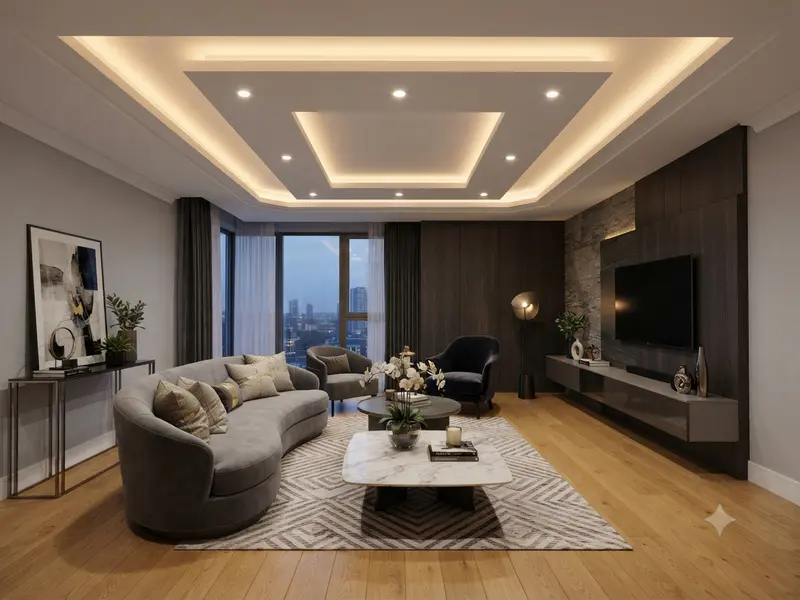
Why Do People Install a False Ceiling?
Honestly, appearance is only one reason.
Professional builders recommend false ceilings for several practical purposes.
1. Improves Interior Appearance
A plain concrete roof often looks dull.
A false ceiling adds:
- Elegant finishing
- Decorative lighting
- Modern architecture
- Luxury appearance
2. Hides Electrical Services
Nobody likes visible electrical conduits.
False ceilings conceal:
- Electrical conduits
- Junction boxes
- AC piping
- Drain pipes
- Internet cables
Everything stays hidden.
Everything looks clean.
3. Better Lighting
LED strip lights can be installed inside the ceiling.
Popular lighting options include:
- Cove lights
- Spot lights
- Panel lights
- Hanging lights
- Chandeliers
The result is soft, uniform lighting throughout the room.
4. Reduces Heat
Certain false ceiling materials reduce heat transfer from the roof slab.
During summer, the room remains relatively cooler.
This is especially useful in Indian cities where roof slabs receive intense sunlight.
5. Better Sound Insulation
Some ceiling materials absorb sound.
This helps reduce:
- Echo
- Noise transmission
- TV sound reflection
Bedrooms, offices, and home theatres especially benefit.
6. Easy Maintenance
Electrical repairs become easier.
Instead of breaking walls or slabs, technicians can access hidden wiring through removable ceiling panels.
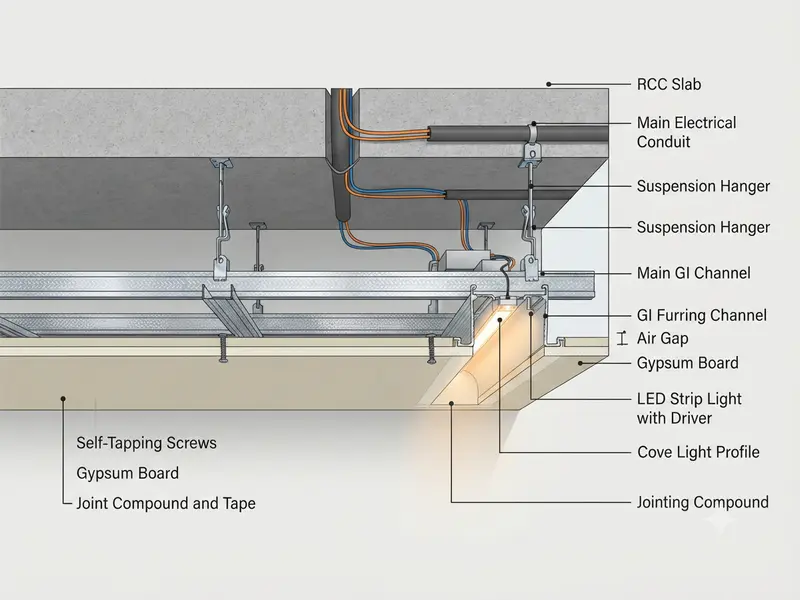
Main Components of a False Ceiling
Every false ceiling system consists of several parts.
| Component | Purpose |
|---|---|
| Ceiling Frame | Supports entire ceiling |
| Suspension Rods | Connect frame to roof slab |
| Main Channel | Primary structural member |
| Cross Channel | Supports ceiling boards |
| Ceiling Boards | Visible decorative surface |
| Joint Compound | Covers joints |
| Screws | Fix boards to frame |
| Corner Beads | Protect edges |
| Paint | Final finishing |
Types of False Ceilings
There are several types available in the market.
Each has different advantages.
Let’s understand them one by one.
1. Gypsum False Ceiling
Gypsum is currently the most popular false ceiling material used in India.
It is manufactured from gypsum plaster boards fixed on a galvanized iron (GI) framework.
Advantages
- Smooth finish
- Crack-resistant
- Lightweight
- Fire resistant
- Easy to paint
- Quick installation
- Elegant appearance
Disadvantages
- Not suitable for continuous water leakage
- Requires skilled installation
Best Suitable For
- Living room
- Bedrooms
- Dining room
- Office
- Hotel
Average Life
20–25 years
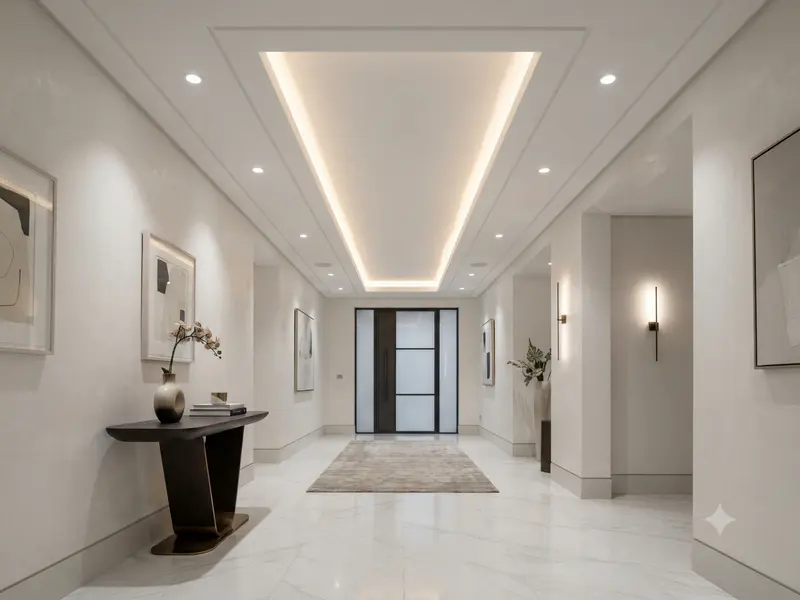
2. POP (Plaster of Paris) False Ceiling
POP ceilings were extremely popular before gypsum boards became common.
Here, plaster is mixed with water and applied manually over a metal mesh.
It allows beautiful curved designs.
Advantages
- Attractive decorative designs
- Curved shapes possible
- Seamless finish
- Custom mouldings
Disadvantages
- Longer installation time
- Higher labour requirement
- Chances of shrinkage cracks
- Difficult repairs
Best Suitable For
- Decorative halls
- Villas
- Luxury interiors
Average Life
15–20 years
3. PVC False Ceiling
PVC (Polyvinyl Chloride) ceilings are becoming increasingly popular because they are waterproof.
These panels interlock together and require minimal maintenance.
Advantages
- Waterproof
- Termite resistant
- Lightweight
- Easy installation
- Low maintenance
- Affordable
Disadvantages
- Limited premium appearance
- May discolor under prolonged sunlight
- Lower fire resistance compared to gypsum
Best Suitable For
- Bathrooms
- Kitchens
- Utility rooms
- Balconies
Average Life
15–20 years
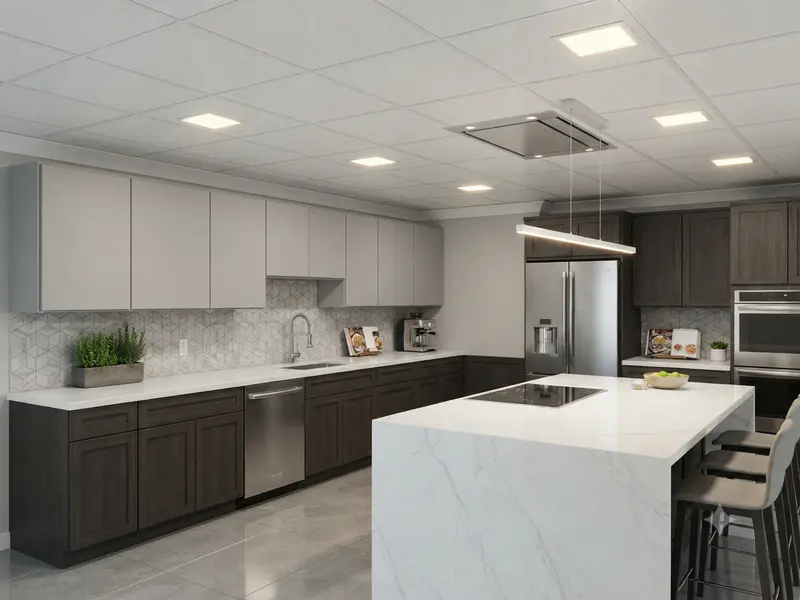
4. Wooden False Ceiling
Wood creates a warm and luxurious atmosphere.
Natural timber, MDF panels, plywood, and engineered wood are commonly used.
Advantages
- Premium appearance
- Excellent aesthetics
- Warm interior feel
- Natural texture
Disadvantages
- Expensive
- Requires polishing
- Termite protection needed
- Sensitive to moisture
Best Suitable For
- Luxury villas
- Hotels
- Resorts
- Living rooms
Average Life
20–30 years
5. Metal False Ceiling
Metal ceilings are manufactured using aluminium or galvanized steel.
These ceilings are commonly used in commercial buildings.
Advantages
- Highly durable
- Moisture resistant
- Fire resistant
- Long service life
Disadvantages
- Industrial appearance
- Higher cost
- Less common in homes
Best Suitable For
- Hospitals
- Airports
- Offices
- Shopping malls
Average Life
30+ years
6. Mineral Fiber False Ceiling
Mineral fiber ceiling tiles are lightweight acoustic panels.
They absorb sound effectively.
Advantages
- Excellent sound insulation
- Fire resistant
- Lightweight
- Easy replacement
Disadvantages
- Fragile
- Not waterproof
- Mainly used indoors
Best Suitable For
- Offices
- Conference rooms
- Educational institutions
- Hospitals
Average Life
15–20 years
Comparison of Different False Ceiling Materials
| Material | Appearance | Water Resistance | Fire Resistance | Maintenance | Cost | Best For |
|---|---|---|---|---|---|---|
| Gypsum | Excellent | Medium | Excellent | Low | Medium | Living Room |
| POP | Excellent | Low | Good | Medium | Medium | Decorative Ceilings |
| PVC | Good | Excellent | Medium | Very Low | Low | Kitchen & Bathroom |
| Wood | Premium | Low | Low | High | High | Luxury Homes |
| Metal | Good | Excellent | Excellent | Low | High | Commercial Buildings |
| Mineral Fiber | Good | Low | Excellent | Medium | Medium | Offices |
Which False Ceiling Material is Best?
There isn’t a single answer.
It depends on where you’re installing it.
Here’s a quick recommendation from practical site experience.
| Room | Recommended Material |
|---|---|
| Living Room | Gypsum |
| Bedroom | Gypsum |
| Dining Room | Gypsum |
| Kitchen | PVC |
| Bathroom | PVC |
| Balcony | PVC |
| Home Office | Gypsum |
| Home Theatre | Gypsum with acoustic insulation |
| Luxury Villa | Wooden + Gypsum Combination |
Site Tip from an Engineer:
Don’t choose a false ceiling based only on appearance. Think about moisture, maintenance, electrical access, and long-term durability. For most Indian homes, a gypsum ceiling in dry areas and a PVC ceiling in wet areas provides the best balance of appearance, performance, and cost.
False Ceiling Cost in India (2026)
One of the first questions homeowners ask is:
“How much will a false ceiling cost?”
The answer depends on several factors, including the material, design complexity, room size, brand, labor charges, and your location.
A simple gypsum ceiling costs much less than a premium wooden ceiling with LED cove lighting.
Average False Ceiling Cost in India (2026)
| Material | Approximate Cost (Per Sq Ft) | Expected Life |
|---|---|---|
| Gypsum | ₹90 – ₹180 | 20–25 Years |
| POP | ₹80 – ₹170 | 15–20 Years |
| PVC | ₹70 – ₹160 | 15–20 Years |
| Wooden | ₹250 – ₹600 | 20–30 Years |
| Metal | ₹180 – ₹350 | 30+ Years |
| Mineral Fiber | ₹100 – ₹220 | 15–20 Years |
Note: Prices vary depending on the city, labor charges, design complexity, and material brand.
Estimated Cost Based on Room Size
| Room Size | Area (Sq Ft) | Approximate Cost (Gypsum Ceiling) |
|---|---|---|
| 10 × 10 ft | 100 | ₹9,000 – ₹18,000 |
| 10 × 12 ft | 120 | ₹10,800 – ₹21,600 |
| 12 × 12 ft | 144 | ₹13,000 – ₹26,000 |
| 12 × 15 ft | 180 | ₹16,000 – ₹32,000 |
| 15 × 20 ft | 300 | ₹27,000 – ₹54,000 |
These estimates include standard installation but may not include decorative lighting or premium finishes.
A well-designed house combines beautiful interiors with sustainable water management. Learn how to calculate rainwater harvesting capacity for residential buildings.
Factors That Affect False Ceiling Cost
Several factors influence the final project cost.
1. Material Selection
Gypsum is usually more expensive than PVC but provides a smoother finish.
Wood is the most expensive option because of material and finishing costs.
2. Ceiling Design
A plain ceiling costs less.
Costs increase if you choose:
- Curved designs
- Multi-layer ceilings
- Circular patterns
- Decorative borders
- Custom shapes
3. LED Lighting
Adding lighting increases the total cost.
Examples include:
- Cove lighting
- LED strips
- Spotlights
- Pendant lights
- Smart lighting systems
4. Room Size
Larger rooms require:
- More boards
- More framing
- More labor
- More finishing materials
5. Labor Charges
Labor rates differ from city to city.
Metro cities generally have higher installation charges than smaller towns.
6. Material Brand
Premium brands usually offer:
- Better board quality
- Stronger metal framework
- Improved durability
- Better finish
Cheap materials may reduce initial costs but often require repairs sooner.
Practical Cost Example
Let’s calculate the approximate cost for a living room.
Room Size
Length = 15 ft
Width = 12 ft
Area = Length × Width
Area = 15 × 12
Area = 180 Sq Ft
Suppose you choose gypsum boards costing ₹140 per Sq Ft.
Total Cost = 180 × 140
Estimated Cost = ₹25,200
Now add LED cove lighting.
Lighting Cost = ₹8,000
Painting = ₹3,500
Total Estimated Cost
₹25,200 + ₹8,000 + ₹3,500
Final Cost ≈ ₹36,700
This is a practical example only.
Actual prices vary depending on location and contractor.
Standard False Ceiling Height
One common mistake is reducing the ceiling height too much.
A room should feel spacious even after installing the false ceiling.
Recommended Ceiling Heights
| Room | Recommended Finished Height |
|---|---|
| Living Room | 9 to 10 ft |
| Bedroom | 9 ft |
| Dining Room | 9 ft |
| Kitchen | 8.5 to 9 ft |
| Bathroom | 8 to 8.5 ft |
If the original floor-to-slab height is already low, avoid thick decorative ceiling designs.
Simple designs work much better.
How is a False Ceiling Installed?
A proper installation ensures durability and prevents future problems.
Below is the typical installation sequence followed by experienced contractors.
Step 1 – Site Measurement
The contractor measures:
- Room length
- Room width
- Ceiling height
- Beam locations
- Electrical points
- Fan locations
- AC duct positions
Accurate measurements help reduce material wastage.
Step 2 – Ceiling Layout
A chalk line or laser level is used to mark the ceiling level.
This ensures the ceiling remains perfectly horizontal.
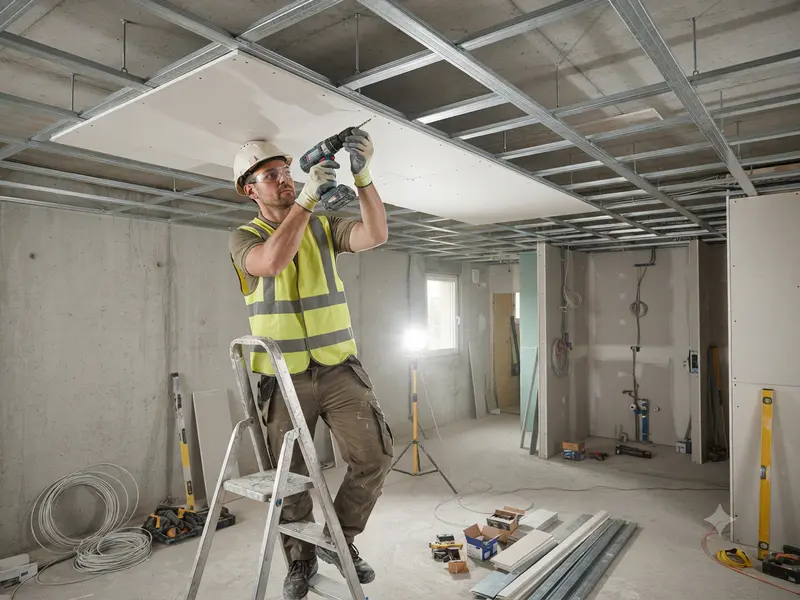
Step 3 – GI Framework Installation
Galvanized Iron (GI) channels are fixed to the slab using anchor fasteners.
The framework supports the entire ceiling.
Poor quality framing can cause ceiling sagging over time.
Step 4 – Electrical Work
Before fixing ceiling boards, electricians complete:
- Electrical conduits
- Fan boxes
- Junction boxes
- LED wiring
- Speaker cables
- Internet cables
- CCTV cables
Once the ceiling is closed, changes become difficult.
Step 5 – Ceiling Board Fixing
Gypsum or PVC boards are fixed to the GI framework using self-drilling screws.
The screw spacing should be uniform.
Loose screws may cause vibrations and cracks.
Step 6 – Joint Treatment
Board joints are covered using:
- Joint tape
- Joint compound
- Putty
This creates a smooth surface.
Step 7 – Sanding
After drying, the surface is sanded.
Proper sanding gives a flawless finish before painting.
Step 8 – Primer and Painting
Finally:
- Primer is applied
- Interior paint is applied
- Decorative lighting is installed
The ceiling is now ready.
Before installing a false ceiling, complete all electrical wiring and conduit work. Read our detailed House Electrification Guide to understand wiring planning, switch points, and electrical safety for new homes.
Advantages of a False Ceiling
Let’s be honest.
People often install false ceilings for beauty.
But they offer many practical benefits too.
1. Improves Home Appearance
A well-designed ceiling gives the room a premium look.
It instantly enhances the interior.
2. Hides Services
Electrical wiring, AC pipes, ducts, and cables remain hidden.
The room looks neat and organized.
3. Better Lighting
False ceilings allow indirect lighting, which creates a warm and comfortable atmosphere.
4. Improves Energy Efficiency
The air gap between the slab and the false ceiling helps reduce heat transfer.
Rooms stay comparatively cooler during hot weather.
5. Better Sound Control
Acoustic materials reduce echo and improve sound quality.
Ideal for:
- Home theatres
- Conference rooms
- Bedrooms
6. Easy Access for Repairs
Many ceiling systems allow maintenance through access panels.
Electricians can inspect wiring without damaging the ceiling.
7. Covers Construction Defects
Uneven slabs, minor cracks, exposed beams, and surface imperfections can be hidden.
8. Increases Property Value
Modern interiors generally improve the visual appeal of a house, which can positively influence resale value.
Disadvantages of a False Ceiling
Although false ceilings offer many benefits, they also have some limitations.
1. Reduces Ceiling Height
A false ceiling occupies several inches of vertical space.
Very low rooms may feel smaller.
2. Additional Cost
Installing a false ceiling increases the overall interior budget.
3. Moisture Problems
Roof leakage can damage gypsum or POP ceilings if repairs are delayed.
4. Regular Cleaning
Dust accumulates around LED grooves, corners, and decorative mouldings.
Periodic cleaning is necessary.
5. Repairs Can Be Costly
If a section is damaged, matching the existing design may be difficult.
Professional Site Quality Checks
Experienced engineers inspect several points before approving a false ceiling installation.
Check the Framework
Ensure the GI channels are:
- Properly aligned
- Firmly fixed
- Rust-free
- Adequately supported
Check the Level
Use a laser level or spirit level.
An uneven ceiling becomes noticeable after lighting is installed.
Check Board Joints
There should be:
- No visible gaps
- No loose joints
- Proper joint tape application
Check Screw Fixing
Screws should be evenly spaced.
Overtightened screws may damage gypsum boards.
Check Surface Finish
Inspect for:
- Waves
- Cracks
- Uneven putty
- Paint defects
A smooth finish indicates good workmanship.
Check Electrical Points
Before handing over the project, test:
- LED lights
- Fans
- Spotlights
- Switches
- Exhaust fans
Everything should function correctly before final painting is completed.
Maintenance Tips
A false ceiling doesn’t require much maintenance, but a few simple habits can extend its life.
- Clean dust every few weeks using a soft microfiber cloth.
- Avoid hanging heavy decorative items unless the ceiling is specially reinforced.
- Repair roof leaks immediately to prevent water damage.
- Repaint the ceiling when discoloration appears.
- Use mild cleaning solutions instead of harsh chemicals.
- Inspect LED drivers and concealed wiring during major renovations.
Site Tip from an Engineer:
Always complete waterproofing of the roof before installing a gypsum or POP false ceiling. Even a small leak can stain the ceiling and lead to expensive repairs later.
Common Mistakes to Avoid While Installing a False Ceiling
Let’s be honest.
A false ceiling is a long-term investment. Even high-quality materials won’t perform well if the installation is poor.
Here are the most common mistakes homeowners and contractors should avoid.
1. Choosing the Wrong Material
Many people select a ceiling only because it looks attractive.
That’s not enough.
For example:
- Gypsum is ideal for living rooms and bedrooms.
- PVC is a better choice for kitchens and bathrooms because it resists moisture.
Always choose the material based on the room’s purpose.
2. Ignoring Roof Leakage
Never install a false ceiling under a leaking roof.
Even a small water leak can:
- Damage gypsum boards
- Cause stains
- Weaken joints
- Lead to mold growth
Site Tip: Complete roof waterproofing before starting any false ceiling work.
3. Reducing Ceiling Height Too Much
A decorative ceiling shouldn’t make your room feel cramped.
If the room height is already low, choose a simple single-layer ceiling instead of a multi-layer design.
4. Using Low-Quality Framework
The GI framework supports the entire ceiling.
Poor-quality channels may:
- Bend over time
- Cause sagging
- Create cracks
Always use good-quality galvanized steel channels.
5. Poor Electrical Planning
Many homeowners decide on lighting after installing the ceiling.
That’s a mistake.
Before installation, finalize:
- Fan locations
- LED strip lights
- Spotlights
- Chandeliers
- AC vents
- CCTV cameras
- Smoke detectors
Changing them later is difficult and expensive.
6. Hiring Unskilled Labor
False ceiling work requires experienced installers.
Poor workmanship often results in:
- Uneven ceiling levels
- Visible joints
- Cracks
- Poor finishing
Saving money on labor can increase repair costs later.
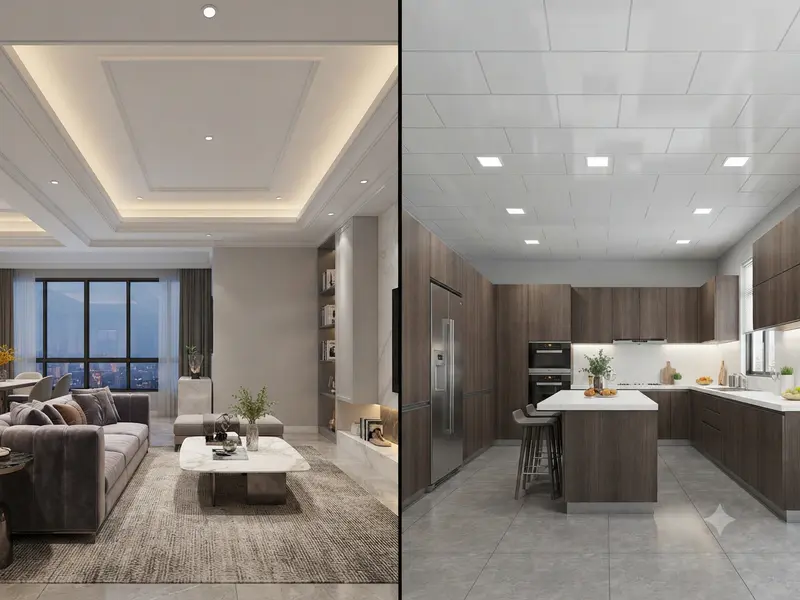
Best False Ceiling for Each Room
Choosing the right material for each room improves durability and reduces maintenance.
| Room | Recommended Material | Reason |
|---|---|---|
| Living Room | Gypsum | Smooth finish and modern appearance |
| Bedroom | Gypsum | Elegant look and good lighting options |
| Dining Room | Gypsum | Decorative and easy to maintain |
| Kitchen | PVC | Waterproof and easy to clean |
| Bathroom | PVC | Moisture resistant |
| Balcony | PVC | Better resistance to humidity |
| Home Office | Gypsum | Professional appearance |
| Home Theatre | Gypsum with acoustic insulation | Better sound quality |
| Luxury Villa | Wood + Gypsum | Premium interior finish |
Maintenance Checklist
Follow this simple checklist to keep your false ceiling in good condition.
Monthly
- Dust the ceiling with a soft cloth.
- Check LED lights.
Every Six Months
- Inspect for cracks.
- Look for water stains.
- Clean decorative grooves.
Every Year
- Check electrical fittings.
- Inspect joints and screws.
- Repaint if required.
After Heavy Rain
Inspect immediately for:
- Water leakage
- Damp patches
- Mold
- Ceiling sagging
Early repairs can prevent major damage.
Frequently Asked Questions (FAQs)
1. Which false ceiling is best for a house?
For most Indian homes, gypsum false ceilings are the best choice for living rooms and bedrooms because they provide a smooth finish, are fire-resistant, and last for many years. PVC ceilings are better for bathrooms and kitchens due to their waterproof nature.
2. What is the average cost of a false ceiling?
The average cost ranges from ₹70 to ₹600 per square foot, depending on the material, design complexity, lighting, and labor charges.
3. How long does a false ceiling last?
A properly installed false ceiling can last:
- Gypsum: 20–25 years
- PVC: 15–20 years
- Wood: 20–30 years
- Metal: More than 30 years
Regular maintenance increases its lifespan.
4. Does a false ceiling reduce room temperature?
Yes. The air gap between the roof slab and the false ceiling reduces heat transfer to some extent. While it doesn’t replace air conditioning, it can help keep rooms more comfortable during hot weather.
5. Which false ceiling is waterproof?
PVC false ceilings are waterproof and suitable for bathrooms, kitchens, balconies, and utility areas.
6. Is a false ceiling fire resistant?
Gypsum and metal ceilings offer good fire resistance. PVC ceilings are less fire-resistant than gypsum, so material selection should consider local building requirements and manufacturer specifications.
7. Can ceiling fans be installed on a false ceiling?
Yes. However, the fan should be fixed to the RCC slab using proper anchor fasteners. It should not be supported only by the false ceiling panels.
8. Which false ceiling requires the least maintenance?
PVC ceilings require very little maintenance because they resist moisture, termites, and stains.
9. Can I install a false ceiling in a small room?
Yes. Use a simple design with minimal drop to maintain a spacious appearance.
10. Is a false ceiling worth the investment?
If installed correctly using quality materials, a false ceiling improves appearance, lighting, and functionality. It can also increase the overall appeal of your home.
Professional Engineer’s Tips
After working on residential construction projects, here are a few practical recommendations.
- Choose quality materials over the cheapest option.
- Complete all electrical and plumbing work before installation.
- Don’t ignore waterproofing.
- Leave access panels for future maintenance.
- Use energy-efficient LED lighting.
- Avoid very complicated designs in small rooms.
- Hire experienced installers for better finishing.
- Inspect the ceiling before making the final payment.
A little planning today can save significant repair costs later.
The Bureau of Indian Standards develops Indian standards for construction materials, testing methods, and engineering practices used across the country.
Final Thoughts
A false ceiling is more than just a decorative feature. It improves lighting, hides electrical services, enhances the overall appearance of your home, and can even make rooms feel more comfortable.
For most homeowners, gypsum false ceilings are an excellent choice for living spaces because they combine durability, fire resistance, and a clean finish. In areas exposed to moisture, such as kitchens and bathrooms, PVC false ceilings offer better long-term performance.
Before starting your project, compare materials, estimate the total cost, plan your lighting layout, and hire experienced professionals. Paying attention to these details will help you enjoy a ceiling that looks great and performs well for many years.
Whether you’re building a new house or renovating an existing one, choosing the right false ceiling is an investment in both comfort and style.

Shakeel T is a qualified Civil Engineer and Structural Consultant with extensive on-site experience in residential and commercial building construction. Specializing in material estimation, cost budgeting, and structural safety guidelines, he has successfully managed multiple real estate projects from foundation to finishing. Through this blog, Shakeel shares field-tested civil engineering thumb rules, IS Code practices, and practical site tips to help home builders execute their projects efficiently and within budget.
Education: Diploma in Civil Engineering
Expertise: Quantity Surveying, Material Estimation, Structural Design, and Site Management.
Great content! Keep up the good work!