
Introduction
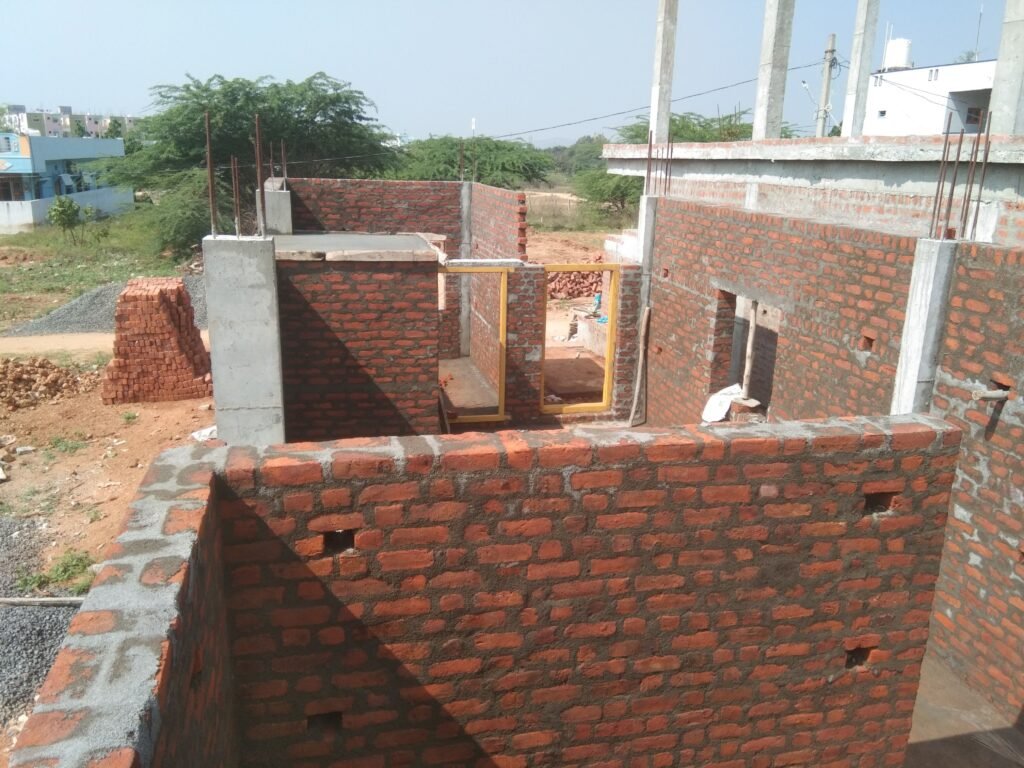
Bricks required for 1BHK house is one of the most important calculations in house construction. Before starting building work, every house owner and civil engineer wants to know how many bricks are required. Proper brick calculation helps in cost estimation, material planning, and avoiding shortage during construction.
Bricks are the main material used for wall construction. If brick quantity is not calculated correctly, construction cost may increase and work may be delayed. In this guide, you will learn how to calculate bricks required for 1BHK house with simple methods and examples.
Why Brick Calculation is Important Before Construction
Estimating the number of bricks before starting construction is very important. Proper brick calculation helps control construction cost and prevents material shortage during the work. Many house owners start construction without proper estimation, which often leads to extra expenses and delays.
Accurate brick calculation provides several benefits:
- Helps control overall construction cost
- Reduces material wastage
- Avoids construction delays
- Improves construction planning
For example, a small 1BHK house may require around 7000–9000 bricks, depending on wall thickness and building design.
Average Size of 1BHK House
A standard 1BHK house usually has:
- 1 bedroom
- 1 hall
- 1 kitchen
- 1 bathroom
Average size of 1BHK house = 400 to 600 sq ft
For calculation, let us consider a 500 sq ft 1BHK house.
Brick Calculation Formula for House Construction
Before estimating the number of bricks required for a house, it is important to understand the basic brick masonry calculation formula.
Step 1: Calculate Wall Volume
Wall Volume = Length × Height × Thickness
Example:
Length = 10 m
Height = 3 m
Thickness = 0.23 m
Wall Volume = 10 × 3 × 0.23
Wall Volume = 6.9 m³
Step 2: Calculate Brick Volume
Brick Volume = 0.23 × 0.11 × 0.07
Brick Volume = 0.00177 m³
Step 3: Number of Bricks
Number of Bricks = Wall Volume ÷ Brick Volume
Bricks = 6.9 ÷ 0.00177
Bricks ≈ 3896 bricks
| House Area | Approx Bricks Required |
|---|---|
| 400 sq ft | 6000 – 7000 |
| 600 sq ft | 8000 – 9000 |
| 800 sq ft | 10000 – 12000 |
👉 To understand wall volume calculation in detail, you can also read our guide on Brick Masonry Calculator
👉 Construction Cost per Sq Ft in India
Mortar Thickness in Brickwork
Mortar thickness is an important factor while calculating the number of bricks required for construction. In most brick masonry works, a mortar thickness of 10 mm is commonly used between bricks.
Mortar helps in:
- Binding bricks together
- Distributing load evenly
- Filling small gaps between bricks
- Improving wall strength
If mortar thickness increases, the number of bricks required decreases slightly, but mortar consumption increases.
Generally, standard brickwork calculations consider 10 mm mortar thickness for accurate estimation.
Standard Brick Size in India
Standard brick size (with mortar):
- Length = 20 cm
- Width = 10 cm
- Height = 10 cm
Number of bricks in 1 cubic meter brickwork = 500 bricks
This is the standard value used in civil engineering.
Standard Brick Size Used in India
Brick size plays an important role in estimating the total number of bricks required for construction. In India, the most commonly used brick size is 190 mm × 90 mm × 90 mm (without mortar). When mortar thickness is included, the nominal brick size becomes 200 mm × 100 mm × 100 mm.
Common Brick Sizes in India
| Brick Type | Size (mm) |
|---|---|
| Modular Brick | 190 × 90 × 90 |
| Nominal Brick (with mortar) | 200 × 100 × 100 |
| Traditional Brick | 230 × 110 × 75 |
For calculation purposes, civil engineers generally use the nominal brick size including mortar to get a practical estimate of bricks required.
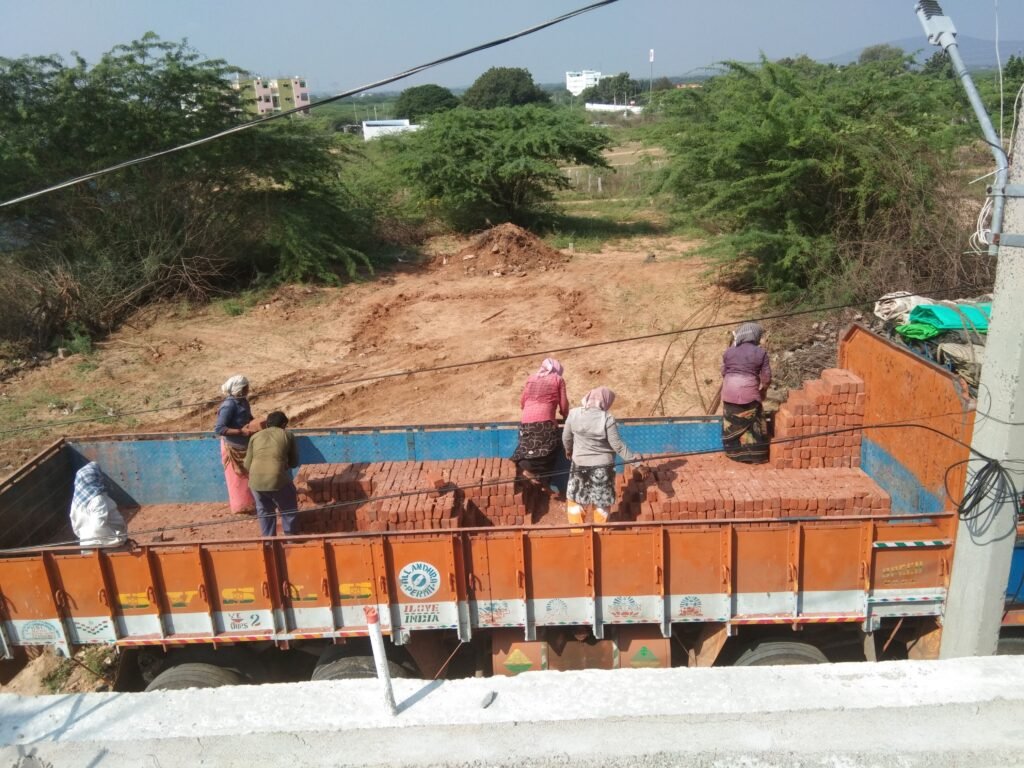
According to the Bureau of Indian Standards (BIS), modular bricks are commonly used in construction in India.
Types of Brick Bonds Used in Houses
Brick bond refers to the pattern in which bricks are arranged in masonry walls. Proper bonding improves the strength and durability of the structure.
Common brick bonds include:
Stretcher Bond
Most common bond used in residential construction.
English Bond
One of the strongest brick bonds used in load-bearing walls.
Flemish Bond
Provides better architectural appearance.
Standard Brick Size With Mortar
Add this content:
In brickwork calculations, mortar thickness must also be considered because bricks are joined using cement mortar.
Standard brick size without mortar:
- Length = 190 mm
- Width = 90 mm
- Height = 90 mm
Standard brick size with mortar:
- Length = 200 mm
- Width = 100 mm
- Height = 100 mm
In most civil engineering calculations, the brick size including mortar is used for accurate estimation.
Step-by-Step Brick Calculation for 1BHK House
Step 1: Calculate Wall Area
Assume:
Total wall length = 80 ft
Wall height = 10 ft
Wall area = 80 × 10
Wall area = 800 sq ft
Step 2: Convert into cubic meter
Wall thickness = 9 inch = 0.75 ft
Volume = Area × thickness
Volume = 800 × 0.75 = 600 cubic ft
Convert into cubic meter:
1 cubic meter = 35.3 cubic ft
Volume = 600 / 35.3
Volume = 17 m³ approx
Step 3: Number of Bricks
Bricks per m³ = 500
Total bricks = 17 × 500
Total bricks = 8500 bricks
Step 4: Add Wastage
Add 5% extra:
8500 × 5% = 425 bricks
Total bricks required =
8500 + 425 = 8925 bricks
So, bricks required for 1BHK house ≈ 9000 bricks
Brick Calculation Formula
The common formula used for brick calculation is:
Number of bricks = Volume of brickwork / Volume of one brick
Example calculation:
Volume of brickwork = 20 cubic meters
Volume of one brick = 0.002 cubic meters
Number of bricks required =
20 ÷ 0.002 = 10,000 bricks
This formula is widely used in construction estimation to calculate the number of bricks required for walls.
Brick Requirement for Different Wall Thickness
The number of bricks required depends on the thickness of the wall. Thicker walls require more bricks.
Standard Brick Requirement per Square Meter
| Wall Thickness | Bricks Required |
|---|---|
| 4.5 inch wall | 50 bricks |
| 9 inch wall | 100 bricks |
| 13.5 inch wall | 150 bricks |
In most residential houses, 9-inch brick walls are commonly used for external walls and 4.5-inch walls are used for partition walls.
Bricks Required Based on House Size
| House Size | Bricks Required | Approx Cost |
|---|---|---|
| 400 sq ft | 3500–4000 | ₹28,000 – ₹32,000 |
| 600 sq ft | 5500–6500 | ₹44,000 – ₹52,000 |
| 1000 sq ft | 9000–10000 | ₹72,000 – ₹80,000 |
This is approximate calculation.
Cost of Bricks for 1BHK House
Average brick price = ₹8 per brick
9000 bricks × ₹8 = ₹72,000
So brick cost for 1BHK house ≈ ₹70K–₹80K
Price may vary by location.
Labour Cost for Brickwork
In addition to brick material cost, labour cost is also an important factor in brickwork construction.
Average brickwork labour cost in India:
- ₹900 – ₹1500 per cubic meter
For a small 1BHK house, the approximate labour cost may range between:
₹15,000 – ₹25,000
However, labour charges may vary depending on the location, project size, and contractor.
Why Use a Brick Masonry Calculator?
Manual brick calculations can be time-consuming and may lead to errors. A brick masonry calculator simplifies the estimation process.
Benefits include:
• Accurate material estimation
• Reduces material wastage
• Helps contractors prepare budgets
• Useful for civil engineering students
• Saves time during construction planning
Cement and Sand for Brickwork
For 1m³ brickwork:
- Cement = 1.5 bags
- Sand = 0.3 m³
For 17m³ brickwork:
- Cement = 25 bags approx
- Sand = 5 m³ approx
This is used for mortar.
Factors Affecting Brick Quantity
Bricks required for 1BHK house depends on:
- Wall thickness
- House design
- Number of rooms
- Wall height
- Openings (doors & windows)
More walls = more bricks.
Brick Wastage in Construction
In construction projects, some bricks may break during transportation, handling, or construction work.
Therefore, engineers usually add 5% to 10% extra bricks as wastage.
Example:
Required bricks = 8000
Wastage (5%) = 400 bricks
Total bricks required = 8400 bricks
Adding wastage ensures that the construction work continues smoothly without material shortage.
Tips to Reduce Brick Cost
- Use fly ash bricks
- Buy bricks in bulk
- Avoid brick wastage
- Use proper mortar ratio
- Hire skilled mason
Proper planning saves money.
Importance of Brick Calculation
Knowing bricks required for 1BHK house helps in:
- Accurate estimation
- Cost planning
- Material management
- Avoiding shortage
- Smooth construction
Every civil engineer must know this calculation.
Bricks calculation for a 1BHK house is an important step in planning construction materials and estimating project cost accurately. Knowing the exact number of bricks required helps avoid wastage and ensures smooth construction work. The total bricks required mainly depend on wall thickness, plinth area, ceiling height, and type of brick used.
Generally, standard modular bricks are used in most residential buildings, making calculation easier. Proper brick estimation also helps in managing labor, cement, and sand requirements efficiently. For a typical 1BHK house, preparing a detailed material estimation before starting construction can save both time and money while ensuring quality work and structural strength throughout the building process.
How Many Bricks Required for 1000 sq ft House?
On average, a 1000 sq ft house requires around 8000 to 9000 bricks for wall construction.
However, the exact number may vary depending on several factors:
- Wall thickness
- Number of rooms
- Door and window openings
- Structural design
Proper estimation by a civil engineer helps ensure accurate material planning.
Frequently Asked Questions
How many bricks are required for a 1BHK house?
Generally, a small 1BHK house requires around 7000–9000 bricks, depending on wall thickness and building layout.
How many bricks are required per square foot?
On average, 8 to 9 bricks are required per square foot of brick wall construction.
What is the standard brick size in India?
The standard brick size used in India is 190 mm × 90 mm × 90 mm.
How many bricks are required for 1000 sq ft house?
For a 1000 sq ft house, approximately 8,000 to 10,000 bricks may be required depending on wall thickness, number of rooms, and design of the house.
Common Mistakes in Brick Quantity Calculation
Many beginners make mistakes while estimating bricks for construction.
Common mistakes include:
Ignoring mortar thickness
Not deducting door and window openings
Not adding brick wastage
Wrong unit conversion
Usually 5–10% brick wastage should be considered during construction.
Common Mistakes in Brick Calculation
While estimating the number of bricks required for construction, beginners often make some common mistakes.
1. Ignoring Mortar Thickness
Many people calculate brick volume without considering mortar thickness, which leads to incorrect brick quantity estimation.
2. Not Considering Wall Openings
Doors and windows reduce the wall area, so their area must be deducted before calculating bricks.
3. Not Adding Wastage
Brick wastage usually ranges between 5% to 10%, so additional bricks should always be considered.
4. Using Incorrect Brick Size
Different regions use different brick sizes. Using the wrong size can affect calculation accuracy.
By avoiding these mistakes, you can get a much more accurate brick estimation.
Brick Wastage Percentage in Construction
While calculating bricks required for a house, it is important to include wastage. During construction, some bricks may break during transportation, handling, or cutting.
Generally, civil engineers add 5% to 10% extra bricks to cover wastage.
Example:
If the calculated bricks required = 8000 bricks
Add 5% wastage:
Total bricks required
= 8000 + (8000 × 5%)
= 8400 bricks
Adding wastage ensures that construction work continues smoothly without material shortage.
Conclusion
Bricks required for 1BHK house is approximately 8000 to 10000 bricks depending on house size and wall thickness. For a 500 sq ft 1BHK house, around 9000 bricks are required. Proper brick calculation helps in budgeting and smooth construction work.
Understanding brick quantity estimation is essential for civil engineers and house owners. Always add extra bricks for wastage and use quality materials for strong and durable construction.

Shakeel T is a civil engineering enthusiast and founder of CivilGuide.in. He specializes in construction estimation, quantity surveying, and practical civil engineering calculations. Through CivilGuide, he shares real-world construction knowledge, calculators, and step-by-step guides to help students and site engineers improve their technical skills.