
Introduction
Types of foundation in construction is one of the most important topics in civil engineering. The foundation is the lowest structural element of a building that carries and distributes the load of the structure to the ground safely. A strong foundation ensures safety, stability, and long life of the building. If the foundation is weak, the building may develop cracks or even collapse.
Every civil engineer, site engineer, and construction supervisor must understand different types of foundation used in construction. The selection of foundation depends on soil condition, building load, and site location. This complete guide explains all types of foundation in construction with uses and advantages.
Many modern construction guidelines recommend proper soil investigation and foundation design before starting building work, as explained by organizations like the National Building Code of India (NBC).
What is Foundation in Construction?
Foundation is the bottom part of a structure that supports the building and transfers load to the ground. It provides stability and prevents settlement of the structure.
Main functions of foundation:
- Transfers load to soil
- Provides stability
- Prevents settlement
- Increases building strength
- Protects structure from moisture
Choosing the correct type of foundation in construction is very important for building safety.
Classification of Foundations
Types of foundation in construction are mainly divided into two categories:
- Shallow Foundation
- Deep Foundation
Selection depends on soil bearing capacity and building load.
1. Shallow Foundation
Shallow foundation is used when soil bearing capacity is good near the ground surface. It is economical and commonly used in house construction.
Types of Shallow Foundation
a) Isolated Footing
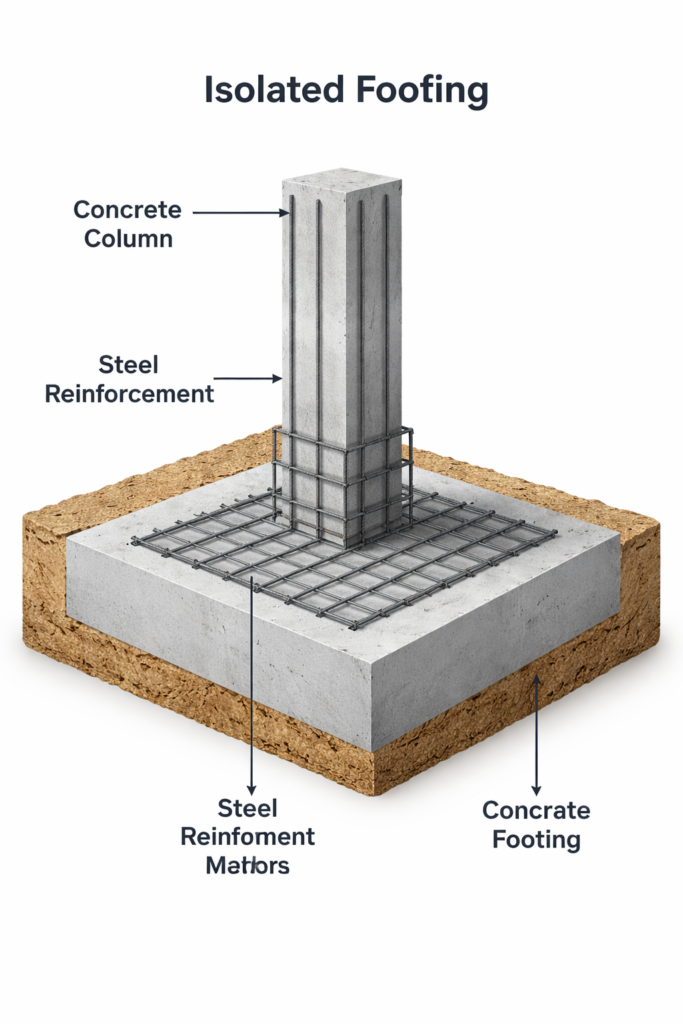
Isolated footing supports a single column.
Uses:
- Residential buildings
- Small structures
Advantages:
- Simple design
- Low cost
- Easy construction
This is the most common type of foundation in construction for houses.
b) Combined Footing
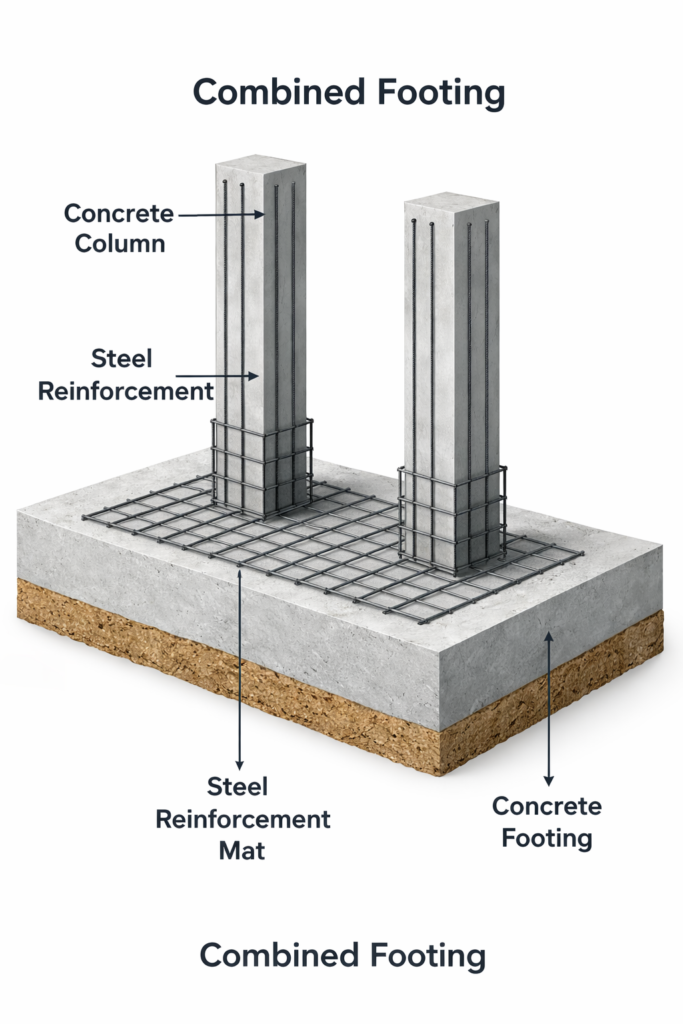
Combined footing supports two or more columns.
Uses:
- When columns are close
- When soil bearing capacity is low
It distributes load evenly to soil.
c) Strip Footing
Strip footing is used for load-bearing walls.
Uses:
- Brick wall structures
- Small buildings
It runs continuously under the wall.
d) Raft Foundation
Raft foundation covers the entire building area.
Uses:
- Low bearing capacity soil
- Multi-storey buildings
It distributes load over large area and reduces settlement.
2. Deep Foundation
Deep foundation is used when soil bearing capacity is weak near surface and strong soil is available at deeper depth.
Types of Deep Foundation
a) Pile Foundation
Pile foundation is a deep foundation where long concrete or steel piles are driven into ground.
Uses:
- High-rise buildings
- Bridges
- Weak soil areas
Advantages:
- High load capacity
- Suitable for weak soil
- Long life
Pile foundation is one of the strongest types of foundation in construction.
b) Pier Foundation
Pier foundation consists of cylindrical columns to support structure.
Uses:
- Heavy structures
- Bridges
c) Well Foundation
Well foundation is mostly used in bridge construction.
Uses:
- Bridge piers
- River structures
It provides strong support in waterlogged areas.
Difference Between Shallow and Deep Foundation
Shallow foundations and deep foundations are used based on soil strength and building load. Shallow foundations transfer building loads to the soil near the surface level, while deep foundations transfer loads to deeper and stronger soil layers.
Shallow foundations are commonly used for small residential buildings because the load is relatively low and the soil near the surface is usually strong enough to support the structure. Examples include isolated footing and combined footing.
Deep foundations are used when the surface soil is weak or when the building load is very heavy. In such cases, loads must be transferred to deeper soil layers using piles or drilled shafts.
Choosing the correct type of foundation helps ensure structural stability and long-term safety of the building.
Steps Involved in Foundation Construction
Foundation construction is one of the most important stages in building construction. Proper steps must be followed to ensure strength and stability of the structure.
The first step is site clearing and marking. In this stage, the construction area is cleaned and the building layout is marked according to the design plan.
The next step is excavation. Soil is removed to the required depth based on the foundation design. Excavation should be done carefully to avoid disturbing the surrounding soil.
After excavation, soil compaction is done to make the ground firm and stable. This helps the foundation carry the building load properly.
Then formwork and reinforcement are placed. Steel reinforcement bars are arranged according to structural drawings to increase the strength of the foundation.
Finally, concrete is poured and cured properly. Proper curing allows concrete to hydrate properly, which helps it reach its designed strength and durability.
Following these steps correctly helps build a strong and stable foundation.
Engineers also calculate reinforcement using proper methods such as Steel Required for 1000 Sq Ft House Calculation.
Materials Used in Foundation Construction
Several construction materials are used in building foundations depending on the type of structure and soil conditions. The most common material used is reinforced cement concrete (RCC), which provides strength and durability.
Concrete is widely used because it can resist heavy loads and environmental effects. Steel reinforcement is added inside concrete to improve its tensile strength and prevent cracking.
In some small structures, stone masonry or brick masonry may also be used for foundation construction. However, RCC foundations are preferred for modern buildings because they provide better structural performance.
Using good quality materials in foundation construction ensures long-term stability and reduces the risk of structural damage in the future.
You can also use our Concrete Calculator for Construction to estimate the required cement, sand, and aggregate for foundation concrete work.
Factors Affecting Selection of Foundation
Selection of correct foundation depends on:
- Soil bearing capacity
- Type of structure
- Load of building
- Water table level
- Budget of project
- Site condition
Proper soil testing helps in selecting best foundation.
Foundation design should follow guidelines provided by the Bureau of Indian Standards (BIS) for safe and durable construction practices.
Importance of Strong Foundation
Foundation is the backbone of any structure. A good foundation:
- Increases building life
- Prevents cracks
- Provides stability
- Ensures safety
- Reduces maintenance cost
Weak foundation can cause serious structural problems.
Foundation quality plays a major role in the overall Construction Cost per Sq Ft in India, as strong foundations ensure long-term structural safety.
Common Problems in Foundations
Foundations can develop problems if they are not designed or constructed properly. One common issue is settlement, which occurs when the soil beneath the foundation compresses under the building load.
Another common problem is foundation cracking. Cracks can appear when the soil expands, shrinks, or moves due to moisture changes. Poor drainage around the building can also weaken the soil and affect the stability of the foundation.
Sometimes foundations may tilt or sink if the soil is not properly compacted during construction.
To avoid these problems, proper soil testing, correct foundation design, and good construction practices are very important. A strong foundation helps maintain the stability and durability of the entire structure.
Tips for Foundation Construction
Follow these tips for strong foundation:
- Conduct soil test before construction
- Use good quality materials
- Maintain proper depth
- Provide proper curing
- Follow structural drawing
- Use correct mix ratio
These steps ensure durable foundation. Types of Foundation in Construction
Advantages of Proper Foundation Design
Proper foundation design is very important for the safety and durability of a building. A well-designed foundation distributes the building load evenly to the soil and prevents excessive settlement.
One major advantage of a good foundation is structural stability. It keeps the building safe against loads, vibrations, and environmental conditions.
Another benefit is long-term durability. When the foundation is properly designed, the building can last for many years without major structural problems.
A good foundation also helps prevent cracks in walls and floors, which improves the overall quality of the building.
In addition, proper foundation design ensures that the structure remains safe even under changing soil and weather conditions.
Causes of Foundation Failure
Foundation failure can occur when the foundation is not designed or constructed properly. One common reason for foundation failure is poor soil conditions. If the soil is weak or not properly tested before construction, it may not support the building load.
Another cause is uneven settlement. When one part of the foundation settles more than the other, cracks may develop in walls and floors.
Water problems can also affect foundations. Excess moisture in soil can reduce its strength and lead to foundation movement.
Sometimes poor construction practices such as inadequate reinforcement, poor quality concrete, or improper curing may cause foundation problems.
To prevent foundation failure, proper soil investigation, correct foundation design, and quality construction practices are essential.
Frequently Asked Questions (FAQs)
1. What is the main purpose of a foundation in construction?
The main purpose of a foundation is to transfer the load of the building safely to the soil. It provides stability and prevents excessive settlement or movement of the structure.
2. What are the main types of foundations used in construction?
The two main types of foundations are shallow foundation and deep foundation. Shallow foundations are used for small buildings, while deep foundations are used for heavy structures or weak soil conditions.
3. Which foundation is commonly used for residential buildings?
For most residential buildings, shallow foundations such as isolated footing or combined footing are commonly used because they are economical and suitable for normal soil conditions.
4. Why is soil testing important before foundation construction?
Soil testing helps engineers understand the soil strength and bearing capacity. This information is important for selecting the correct type of foundation and ensuring the safety of the building.
5. What happens if the foundation is weak?
If the foundation is weak, the building may develop cracks, uneven settlement, or structural damage. A strong foundation is essential for the long-term safety and durability of any structure.
Conclusion
Types of foundation in construction play a major role in building safety and stability. Shallow foundations like isolated footing and raft foundation are commonly used for houses, while deep foundations like pile foundation are used for heavy structures.
Every civil engineer and construction professional must understand different types of foundation and their uses. Selecting the right foundation ensures strong, safe, and long-lasting buildings. A good foundation is the first step toward successful construction.

Shakeel T is a civil engineering enthusiast and founder of CivilGuide.in. He specializes in construction estimation, quantity surveying, and practical civil engineering calculations. Through CivilGuide, he shares real-world construction knowledge, calculators, and step-by-step guides to help students and site engineers improve their technical skills.