
Introduction
Building electrification is one of the most important stages of house construction. A well-designed electrical system ensures safety, convenience, energy efficiency, and long-term reliability. Poor planning or the use of substandard materials can lead to electrical failures, fire hazards, appliance damage, and costly repairs.
In modern Indian homes, electrical requirements have increased significantly due to the growing use of air conditioners, water heaters, induction cooktops, refrigerators, washing machines, smart devices, and electric vehicle charging systems. Therefore, proper building electrification planning should begin during the construction stage itself.
This comprehensive guide explains the complete building electrification process, electrical materials, wiring standards, electrical load calculations, quality checks, safety precautions, and estimated costs for residential houses in India in 2026.
What is Building Electrification?
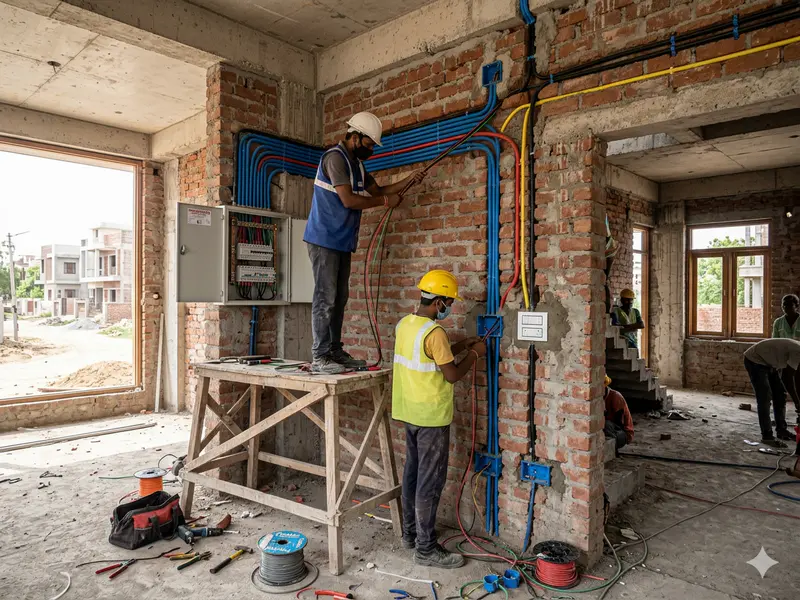
Building electrification refers to the complete process of designing, installing, testing, and commissioning the electrical system in a building.
It includes:
- Electrical load planning
- Service connection
- Meter installation
- Distribution board installation
- Wiring and conduits
- Switches and sockets
- Earthing system
- Lighting systems
- Power outlets
- Safety devices
The primary objective is to provide safe and reliable electricity to every electrical point in the house.
Importance of Proper Building Electrification
Proper building electrification offers several benefits:
Safety
Quality wiring reduces the risk of:
- Electrical shocks
- Short circuits
- Fire accidents
- Equipment failures
Energy Efficiency
Proper wire sizing minimizes voltage drops and energy losses.
Future Expansion
A well-designed system allows future additions such as:
- Solar systems
- EV chargers
- Additional rooms
- Smart home automation
Compliance
Electrical installations should comply with Indian electrical safety standards and local electricity board requirements.
Main Components of House Electrification
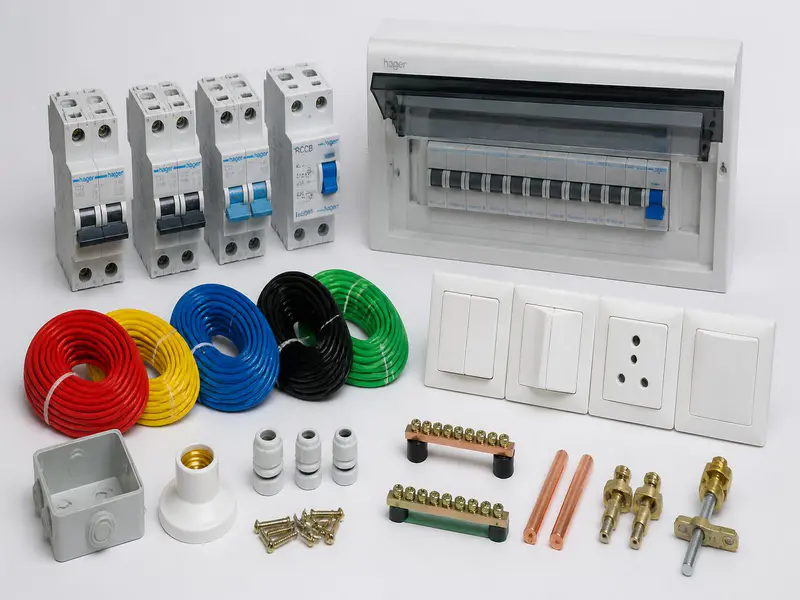
| Component | Purpose |
|---|---|
| Energy Meter | Measures electricity consumption |
| Main Switch | Controls incoming power |
| Distribution Board (DB) | Distributes power to circuits |
| MCB | Protects against overloads |
| RCCB | Protects against electric shocks |
| Wiring | Carries electrical current |
| Conduits | Protect electrical wires |
| Switches | Control electrical points |
| Sockets | Supply power to appliances |
| Earthing System | Provides safety during faults |
Types of House Wiring
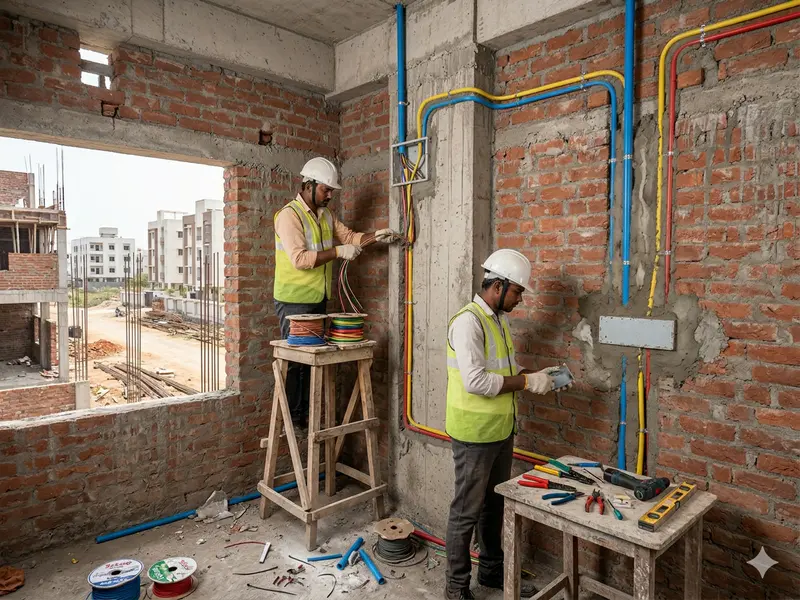
1. Concealed Wiring
Conduits are embedded inside walls and slabs.
Advantages:
- Better appearance
- Longer life
- Safer installation
- Most common in modern houses
2. Surface Wiring
Wires run externally on walls.
Advantages:
- Easy maintenance
- Low installation cost
Disadvantages:
- Less attractive
- Vulnerable to damage
3. Conduit Wiring
PVC or metal conduits are used to protect wires.
Advantages:
- High safety
- Easy wire replacement
- Protection from moisture
Electrical Load Calculation for House Wiring
Before selecting wire sizes, calculate the expected electrical load.
Formula
Total Load (Watts) = Sum of all appliance wattages
Example
Consider a 2BHK house:
| Appliance | Quantity | Wattage | Total |
| LED Lights | 15 | 12 W | 180 W |
| Fans | 6 | 75 W | 450 W |
| Refrigerator | 1 | 300 W | 300 W |
| TV | 1 | 150 W | 150 W |
| Washing Machine | 1 | 500 W | 500 W |
| Water Heater | 2 | 2000 W | 4000 W |
| Air Conditioner | 2 | 1500 W | 3000 W |
Total Connected Load = 8580 Watts
Total Load = 8.58 kW
A safety margin of 20% to 25% should always be considered.
Recommended Design Load:
8.58 × 1.25 = 10.73 kW
Standard Wire Sizes Used in Indian Homes
| Wire Size | Application |
| 1.5 sq mm | Lighting circuits |
| 2.5 sq mm | Power sockets |
| 4 sq mm | AC and geyser circuits |
| 6 sq mm | Main incoming supply |
| 10 sq mm | Large residential buildings |
Site Tip
Never use undersized wires to reduce cost. It may cause overheating and insulation failure.
House Electrical Layout Planning
Electrical planning should be completed before plastering work begins.
Living Room
Typical electrical points:
- Ceiling fan
- LED lights
- TV point
- Internet point
- Multiple power sockets
Bedrooms
Typical points:
- Fan
- Lights
- AC point
- Charging sockets
- Television point
Kitchen
Typical points:
- Refrigerator
- Microwave
- Mixer grinder
- Water purifier
- Chimney
- Exhaust fan
Bathrooms
Typical points:
- Water heater
- Exhaust fan
- Mirror light
- Shaver socket
Outdoor Areas
Typical points:
- Security lights
- Garden lighting
- Water pump
- Gate automation
Electrical Points Required for a Typical 2BHK House
| Location | Approximate Points |
| Living Room | 10–15 |
| Bedroom 1 | 8–12 |
| Bedroom 2 | 8–12 |
| Kitchen | 12–18 |
| Bathrooms | 4–6 each |
| Balcony | 2–4 |
| Staircase | 2–4 |
Total points generally range between 50 and 80.
Distribution Board (DB) Selection
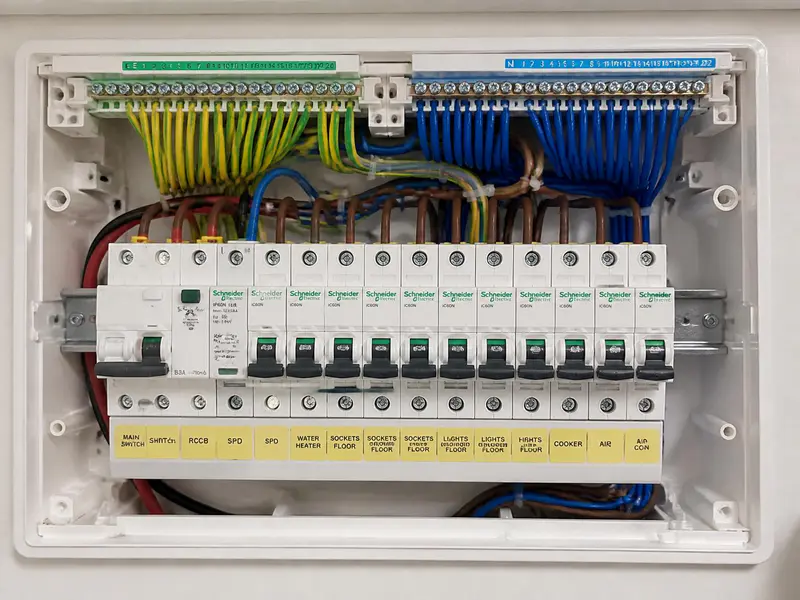
The distribution board acts as the electrical control center.
Typical Components
Main Isolator
Disconnects the entire house supply.
MCB
Protects against:
- Overloads
- Short circuits
RCCB
Protects against:
- Electric shocks
- Leakage currents
Surge Protection Device
Protects appliances from voltage spikes.
Before planning building electrification, it is important to calculate the expected load of the house. Read our detailed guide on residential building load calculation to understand how electrical and structural loads are estimated.
Earthing System in House Electrification
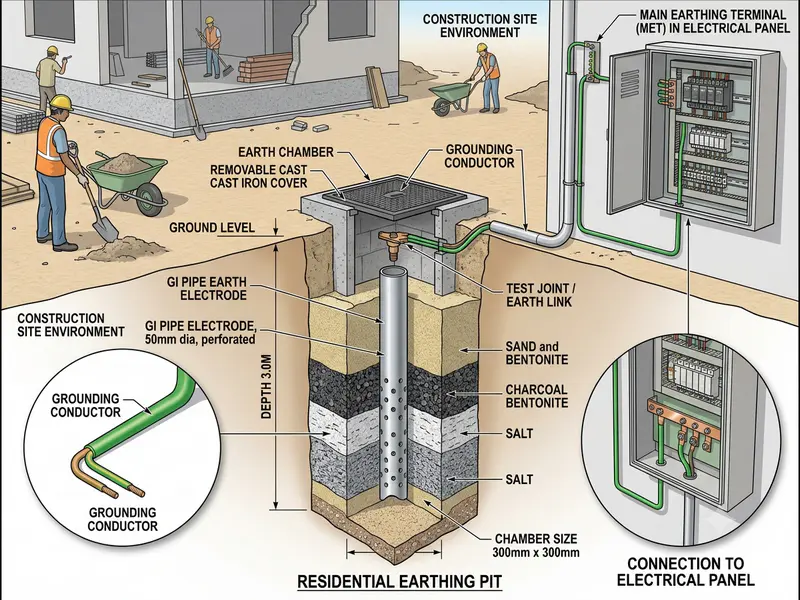
Earthing is one of the most important safety requirements.
Functions of Earthing
- Prevents electric shocks
- Protects appliances
- Dissipates fault currents
- Reduces fire risk
Common Earthing Types
Pipe Earthing
Most common for residential buildings.
Plate Earthing
Used where soil resistivity is high.
Chemical Earthing
Provides consistent performance with lower maintenance.
Step-by-Step Building Electrification Process
Step 1: Electrical Design
Prepare electrical drawings showing:
- Light points
- Fan points
- Socket points
- AC points
- DB locations
Step 2: Conduit Installation
Install conduits inside:
- Walls
- Columns
- Slabs
Check alignment before concreting.
Step 3: Switch Box Installation
Fix switch boxes according to the approved layout.
Step 4: Wire Pulling
Pull wires through conduits after plastering.
Avoid excessive bending.
Step 5: Distribution Board Installation
Install DB at an accessible location.
Step 6: Earthing Work
Construct earthing pits and connect earth conductors.
Step 7: Testing
Conduct insulation resistance and continuity tests.
Step 8: Final Energization
Obtain the electricity board approval and energize the system.
Electrical Materials Required for Building Electrification
| Material | Typical Usage |
| PVC Conduits | Wire protection |
| Copper Wires | Electrical supply |
| Junction Boxes | Wire connections |
| MCBs | Circuit protection |
| RCCBs | Shock protection |
| Modular Switches | Operation |
| Sockets | Appliance connection |
| Earthing Electrode | Grounding |
| Distribution Board | Power distribution |
Quality Checks During Electrical Work
Professional site engineers should verify:
Conduit Checks
- Proper alignment
- No cracks
- Adequate diameter
Wire Checks
- Correct wire gauge
- ISI-marked products
- Copper conductor quality
Junction Checks
- Tight connections
- Proper insulation
Earthing Checks
- Earth resistance testing
- Secure connections
MCB Checks
- Correct ratings
- Proper labeling
Common House Wiring Mistakes to Avoid
Undersized Wiring
Leads to overheating and voltage drop.
Poor Earthing
Major safety risk.
Overloaded Circuits
May trip MCBs frequently.
Excessive Joints
Reduces reliability.
Cheap Electrical Accessories
Often fail prematurely.
Improper Circuit Separation
Lighting and power circuits should be separated.
Building Electrification Cost in India (2026)
Approximate costs vary depending on:
- House size
- Material quality
- Number of electrical points
- City location
- Labor rates
| House Area | Approximate Cost |
| 600 Sq Ft | ₹35,000 – ₹60,000 |
| 1000 Sq Ft | ₹60,000 – ₹1,20,000 |
| 1500 Sq Ft | ₹1,00,000 – ₹2,00,000 |
| 2000 Sq Ft | ₹1,50,000 – ₹3,00,000 |
Premium smart home systems may significantly increase costs.
Professional Site Tips from Experienced Engineers
Plan Additional Conduits
Install spare conduits for future wiring.
Provide Separate AC Circuits
Avoid connecting ACs to general circuits.
Label All Circuits
Makes maintenance easier.
Use RCCB Protection
Strongly recommended for residential buildings.
Test Before Painting
Rectify wiring issues before finishing work.
Maintain Electrical Drawings
Useful for future repairs and renovations.
Electrical Safety Checklist Before Handover
✔ All switches are functioning properly
✔ All sockets tested
✔ RCCB tested successfully
✔ Earthing resistance checked
✔ MCB ratings verified
✔ Voltage levels checked
✔ Circuit labels provided
✔ Electrical drawings updated
✔ No exposed conductors
✔ Main isolator functioning correctly
Frequently Asked Questions (FAQs)
1. What is building electrification?
Building electrification is the process of installing complete electrical systems, including wiring, distribution boards, switches, sockets, earthing, and safety devices within a building.
2. Which wiring type is best for residential houses?
Concealed conduit wiring is considered the best option because it provides safety, durability, and an attractive appearance.
3. How many electrical points are required for a 2BHK house?
A typical 2BHK house requires between 50 and 80 electrical points, depending on occupant requirements and appliance usage.
4. Is earthing mandatory in residential buildings?
Yes. Proper earthing is essential for electrical safety and protection against electric shocks.
5. What wire size should be used for house wiring?
Generally, 1.5 sq mm wires are used for lighting circuits, 2.5 sq mm for sockets, and 4 sq mm or higher for heavy-load appliances.
6. What is the average electrical cost for a new house in India?
For a standard 1000 sq ft house, building electrification typically costs between ₹60,000 and ₹1,20,000, depending on material quality and electrical points.
7. Why is RCCB important?
RCCB protects occupants from electric shocks by disconnecting power when leakage currents are detected.
Refer to BIS standards for technical guidelines related to electrical installations, wiring practices, and safety requirements in residential buildings.
Conclusion
Building electrification is a critical component of modern house construction that directly affects safety, functionality, and long-term maintenance costs. Proper electrical planning, correct wire sizing, quality materials, adequate earthing, and professional installation practices ensure a safe and reliable electrical system for decades.
Whether constructing a small house or a large residential building, investing in high-quality electrical materials and following standard installation procedures can prevent future electrical failures and expensive repairs. Homeowners, contractors, and site engineers should always prioritize safety, compliance, and future expansion while designing electrical systems for new homes in India.

Shakeel T is a qualified Civil Engineer and Structural Consultant with extensive on-site experience in residential and commercial building construction. Specializing in material estimation, cost budgeting, and structural safety guidelines, he has successfully managed multiple real estate projects from foundation to finishing. Through this blog, Shakeel shares field-tested civil engineering thumb rules, IS Code practices, and practical site tips to help home builders execute their projects efficiently and within budget.
Education: Diploma in Civil Engineering
Expertise: Quantity Surveying, Material Estimation, Structural Design, and Site Management.