
Introduction
Designing a residential home in India requires careful spatial planning, ergonomics, and structural execution. A common mistake during the blueprint stage is assigning arbitrary dimensions to rooms. This error can result in cramped living spaces, awkward furniture placement, poor ventilation, or structurally inefficient column positioning.
According to the National Building Code (NBC) of India and RERA guidelines, standard room sizes optimize both structural safety and human comfort. For civil engineers, contractors, and homeowners, mastering these dimensions is essential for cost-efficient construction.
This comprehensive guide breaks down the standard room size for house in india, structural layout formulas, material estimation examples, and critical on-site layout marking procedures.
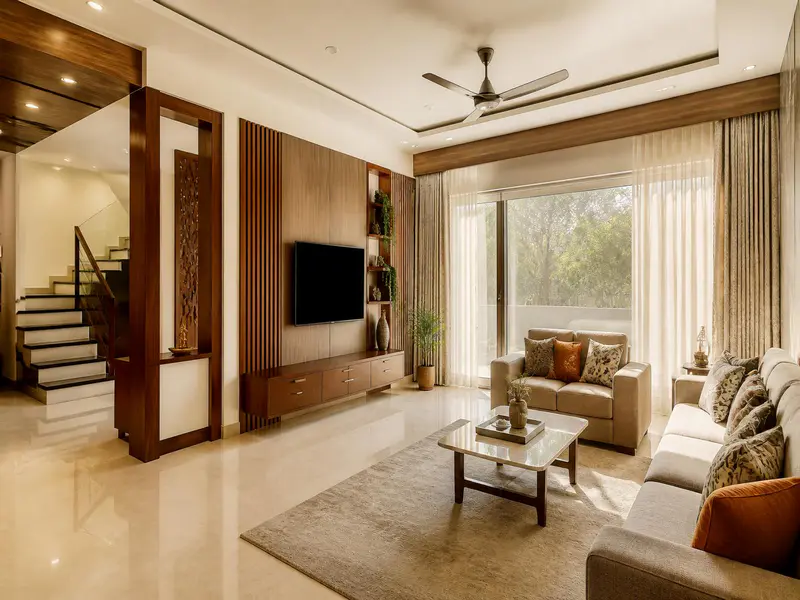
Why Standard Room Sizes Matter in Indian Construction
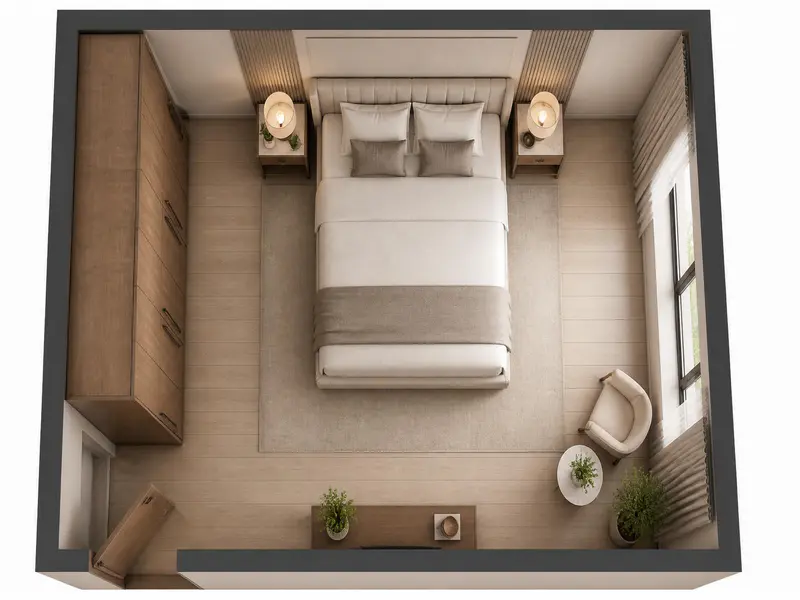
In Indian residential architecture, rooms must accommodate specific furniture, provide proper circulation paths, and adhere to local municipal building bylaws.
1. Ergonomic Efficiency and Circulation
A room is more than its walls; it dictates how people move within it. Standard sizing ensures that when a king-size bed, wardrobe, or sofa set is placed, there remains at least 900 mm (3 feet) of clear walking space (circulation path) around the furniture.
2. Structural Optimization and Column Alignment
When room dimensions follow standard spans, structural engineers can align columns uniformly. This reduces the need for long beam spans, eliminates floating columns, minimizes steel reinforcement requirements, and lowers overall concrete costs.
3. Compliance with National Building Code (NBC)
The NBC specifies minimum carpet areas and heights for habitable rooms to guarantee safe, healthy, and hygienic living conditions. Adhering to these specifications is mandatory to secure municipal building permission approvals.
Standard Room Sizes for a House in India (Comprehensive Matrix)
The table below provides a detailed summary of standard room sizes in India, comparing metric dimensions with local imperial market units, alongside the minimum dimensions recommended by the NBC.
| Room Type | Minimum Size (NBC Guidelines) | Standard Size (Medium Income House) | Luxury / Premium Size (Villas & Bungalows) | Recommended Operational Purpose |
|---|---|---|---|---|
| Living Room (Drawing Hall) | 2700 x 3600 mm (9’0″ x 12’0″) | 3600 x 4800 mm (12’0″ x 16’0″) | 4800 x 6600 mm (16’0″ x 22’0″) | Accommodating 7-seater sofas, TV units, and transit paths. |
| Master Bedroom | 3000 x 3000 mm (10’0″ x 10’0″) | 3600 x 4200 mm (12’0″ x 14’0″) | 4200 x 5400 mm (14’0″ x 18’0″) | Accommodating a King-size bed, wardrobes, and attached dressers. |
| Kids / Guest Bedroom | 2700 x 3000 mm (9’0″ x 10’0″) | 3000 x 3600 mm (10’0″ x 12’0″) | 3600 x 4200 mm (12’0″ x 14’0″) | Twin or Queen-size bed layout with a study desk setup. |
| Kitchen | 1500 x 2400 mm (5’0″ x 8’0″) | 2400 x 3000 mm (8’0″ x 10’0″) | 3000 x 4200 mm (10’0″ x 14’0″) | L-shaped or parallel counters with appliance clear zones. |
| Dining Room | 2400 x 2400 mm (8’0″ x 8’0″) | 2700 x 3600 mm (9’0″ x 12’0″) | 3600 x 4800 mm (12’0″ x 16’0″) | Placing 6 to 8-seater dining tables comfortably. |
| Combined Bathroom & WC | 1200 x 2100 mm (4’0″ x 7’0″) | 1500 x 2400 mm (5’0″ x 8’0″) | 2100 x 3000 mm (7’0″ x 10’0″) | Dividing distinct dry and wet shower zones safely. |
| Pooja Room | 1200 x 1200 mm (4’0″ x 4’0″) | 1500 x 1800 mm (5’0″ x 6’0″) | 2400 x 2400 mm (8’0″ x 8’0″) | Compact single-tier or multi-tier prayer temple layouts. |
| Store Room | 900 x 1200 mm (3’0″ x 4’0″) | 1500 x 2100 mm (5’0″ x 7’0″) | 2100 x 2400 mm (7’0″ x 8’0″) | Utility pantry racking and heavy trunk storage bins. |
Note: The standard clear height for all habitable rooms from the finished floor level to the bottom of the ceiling slab must be a minimum of 2750 mm (9 Feet) according to the NBC.
If you are planning to build a house, understanding the overall construction cost is very important. Read our detailed guide on House Construction Cost in India 2026 to estimate your building budget accurately.
Core Planning & Material Estimation Formulas
To convert an architectural room size into practical site procurement figures (such as tile counts, plastering mortar, and concrete floor screed volumes), engineers use the following plain-text formulas.
1. Carpet Area Formula
- Carpet Area = Internal Room Length x Internal Room Width
2. Room Aspect Ratio Formula
- Aspect Ratio = Room Length / Room Width
(Note: For ideal aesthetics and lighting distribution, the aspect ratio should fall between 1.2 and 1.5. Avoid long, narrow rooms where the length is more than double the width).
3. Window Ventilation Opening Ratio
- Minimum Window Area = Carpet Area / 10
(Note: NBC mandates that window openings for proper light and ventilation must be at least 10% of the total room carpet area).
4. Wet Volume of Floor Screed/Mortar
- Wet Mortar Volume = Internal Room Length x Internal Room Width x Screed Thickness
5. Dry Volume Conversion for Cement Mortar
- Dry Mortar Volume = Wet Mortar Volume x 1.33
(Note: 1.33 is the material density factor used to account for dry volume shrinkage when mixing water with dry sand and cement).
Practical Step-by-Step Site Engineering Calculations
Let us look at two real-world operational examples using a standard Indian residential room size layout.
Example 1: Ventilation Compliance for a Standard Master Bedroom
A design indicates a standard master bedroom size of 3.6 meters x 4.2 meters. What is the minimum window opening size required to comply with NBC guidelines?
Step 1: Calculate the Carpet Area
- Carpet Area = Length x Width
- Carpet Area = 4.2 meters x 3.6 meters
- Carpet Area = 15.12 Square Meters
Step 2: Apply the Ventilation Opening Ratio
- Minimum Window Area = Carpet Area / 10
- Minimum Window Area = 15.12 / 10
- Minimum Window Area = 1.512 Square Meters
Step 3: Determine Practical Window Dimensions
- If we select a standard window height of 1.2 meters (4 feet):
- Required Window Width = Minimum Window Area / Window Height
- Required Window Width = 1.512 / 1.2 = 1.26 meters
- Site Action: Provide a window size of at least 1200 mm x 1300 mm to meet compliance standards.
Example 2: Material Requirements for Flooring Screed Base
Calculate the exact cement bags, sand volume, and tile count required for a standard living room measuring 3.6 meters x 4.8 meters. The floor requires a 50 mm thick cement mortar bedding under vitrified tiles, using an M10 mortar mix ratio of 1:4 (1 part cement to 4 parts sand).
Step 1: Calculate the Floor Surface Area
- Floor Area = 3.6 meters x 4.8 meters = 17.28 Square Meters
Step 2: Calculate the Wet Volume of Mortar
- Screed Bedding Thickness = 50 mm = 0.05 meters
- Wet Volume = Floor Area x Thickness
- Wet Volume = 17.28 x 0.05 = 0.864 Cubic Meters
Step 3: Calculate the Dry Volume of Mortar
- Dry Volume = Wet Volume x 1.33
- Dry Volume = 0.864 x 1.33 = 1.149 Cubic Meters
Step 4: Calculate Cement and Sand Quantities
- Total Parts in Mix Ratio = 1 + 4 = 5
A. Cement Calculation
- Cement Volume = (1 / 5) x 1.149 = 0.2298 Cubic Meters
- Total Weight of Cement = 0.2298 x 1440 kg/m3 = 330.91 kg
- Number of 50 kg Bags Required = 330.91 / 50 = 6.61 Bags (Say 7 Bags)
B. Sand Calculation
- Sand Volume = (4 / 5) x 1.149 = 0.9192 Cubic Meters
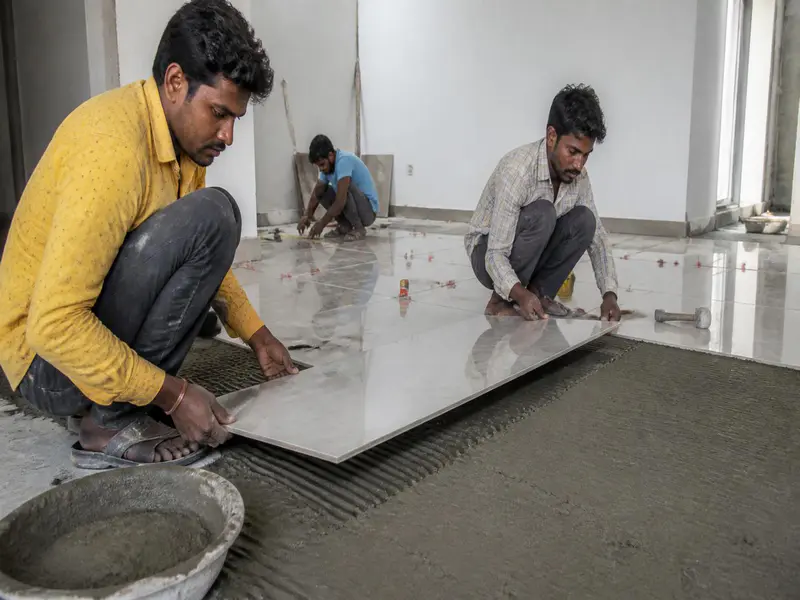
Unit Conversions Matrix for Spatial and Material Estimations
Indian real estate markets trade using square feet, while construction raw materials are sourced in metric units, cubic feet, or local brass loads. Use this conversion matrix for commercial procurement processing.
| From Unit | To Unit | Multiplication Factor | Real-World Application |
|---|---|---|---|
| Square Meter (m2) | Square Feet (Sq. Ft.) | 10.7639 | Converting floor carpet area for real estate sales. |
| Cubic Meter (m3) | Cubic Feet (CFT) | 35.3147 | Sourcing sand, river silt, or crushed aggregates. |
| Cubic Feet (CFT) | Brass | 0.0100 | Local bulk material transport billing (1 Brass = 100 CFT). |
| Cubic Meter (m3) | Metric Tons | 1.6000 | Converting sand volume to truck axle weight scale limits. |
Practical Market Conversion (From Example 2)
Convert the sand volume needed for the living room floor (0.9192 m3) into CFT and Brass for commercial ordering:
- Sand Volume in CFT = 0.9192 x 35.3147 = 32.46 Cubic Feet (CFT)
- Sand Volume in Brass = 32.46 / 100 = 0.324 Brass
On-Site Quality Controls, Marking Steps & Wastage Management
When transferring room layouts from a paper blueprint to the physical ground, precision is critical. Errors during the initial marking stage can result in skewed walls.
The 3-4-5 Layout Thread Alignment Technique
To ensure every room corner forms a perfect 90-degree right angle (Milaan check), site engineers use the Pythagorean theorem method during lineout marking:
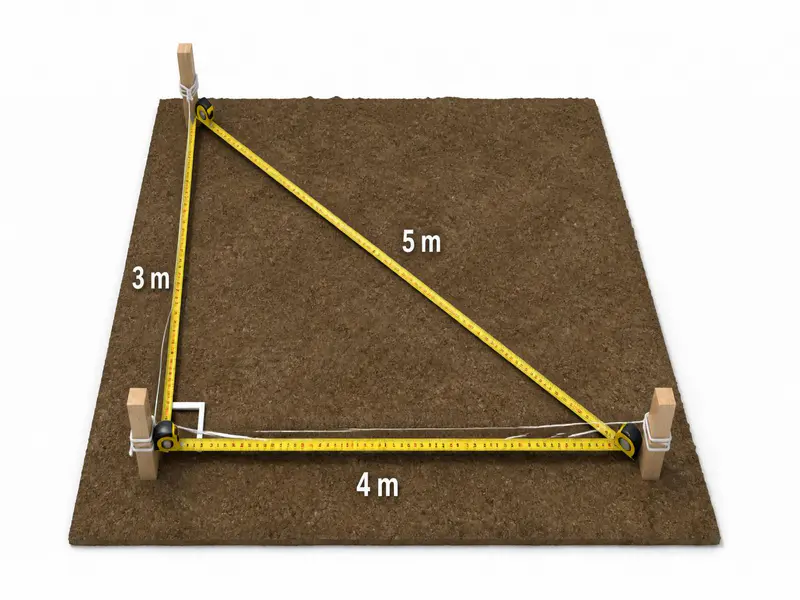
- Mark a starting layout point for a room corner and run a straight chalk string line along the main wall x-axis. Measure exactly 3 meters and mark point A.
- Run a perpendicular string line along the adjacent y-axis. Measure exactly 4 meters and mark point B.
- Measure the diagonal distance between point A and point B. If it measures exactly 5 meters, the corner is perfectly square (90 degrees).
- If the diagonal is less or more than 5 meters, adjust the y-axis string line until it hits the 5-meter mark exactly before starting masonry excavation work.
On-Site Construction Quality Controls
- Dampness Check: Ensure that the internal brick wall plastering ends at least 10 mm above the raw floor structural slab level to prevent ground moisture from rising through capillary action.
- Slab Level Control: Check that bathroom floor levels are cast 25 mm to 50 mm lower than the adjacent bedroom or living room floor levels. This prevents water from spilling into dry living spaces during washing cycles.
- Column Centerline Verification: Double-check that internal room clear spans are measured from the finished plastered surface line, not the raw concrete core face, to avoid losing functional space.
Material Wastage Factors Matrix
Always include these wastage buffer multipliers when managing materials on-site:
- Vitrified Floor Tiles: Add 8% to 10% wastage for corner cuts, border trims, and handling breakage.
- Wall Plastering Mortar over Bricks: Add 12% to 15% wastage to account for joints, rebounds, and surface unevenness.
- Skirting Tile Strips: Add 5% linear cutting loss buffer.
Frequently Asked Questions (FAQs)
1. What is the minimum legal size for a living room in India under RERA/NBC?
According to the National Building Code of India, a habitable living room must have a minimum clear carpet area of 9.5 Square Meters (approximately 102 Sq. Ft.) with a minimum width of 2.4 meters (8 feet). Anything below this dimension cannot be legally classified as a standard room in building layout approval documents.
2. Can the kitchen and dining room be combined into a single open plan?
Yes, modern Indian apartments often combine the kitchen and dining areas into an open plan to maximize natural light and space. For a combined kitchen and dining layout, a minimum standard room size of 2.4 meters x 5.4 meters (8’0″ x 18’0″) is recommended to maintain distinct food preparation and seating areas.
3. Does standard room size planning include the width of internal brick walls?
No, standard room sizes always refer to the clear internal carpet area dimensions from wall surface to wall surface. When creating a full footprint layout plan, you must add the wall thicknesses—typically 230 mm (9 inches) for outer load-bearing walls and 115 mm (4.5 inches) for internal partition walls—to determine the total built-up area.
4. What is the standard height of a residential room ceiling in India?
The standard height for a residential room ceiling is 2.75 meters to 3.05 meters (9 to 10 feet) from the finished floor level to the underside of the ceiling slab. If you plan to install a false ceiling with concealed central HVAC air duct ducts, a clear ceiling height of 3.2 meters (10.5 feet) is recommended.
5. Why do bathrooms require a smaller door width than standard bedrooms?
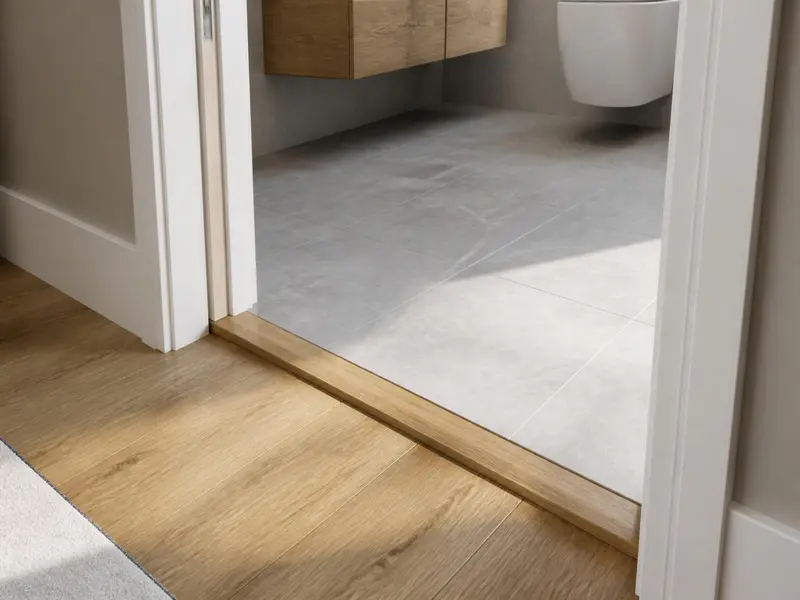
Bathrooms do not require the transit of heavy furniture pieces like wardrobes or king-size mattresses. Therefore, to save usable floor space inside narrow bathrooms, the door width is standardized at 750 mm (2.5 feet), whereas bedrooms require a minimum width of 900 mm (3 feet).
The Bureau of Indian Standards provides official building guidelines and standards used in construction projects across India.
Engineering Toolbox provides useful engineering data, formulas, and construction information related to building design and structural engineering.
Conclusion
Understanding the standard room size for a house in India is key to balancing building bylaw compliance, structural affordability, and daily comfort. Designing within standard boundaries—such as 12’x16′ for living rooms and 12’x14′ for master bedrooms—creates an efficient flow throughout your home while keeping raw material wastage low.
Always verify your layout markings on-site using the 3-4-5 right-angle method before starting brickwork, account for tile cutting loss factors during procurement, and maintain correct relative floor drops to build a durable, low-maintenance home.

Shakeel T is a qualified Civil Engineer and Structural Consultant with extensive on-site experience in residential and commercial building construction. Specializing in material estimation, cost budgeting, and structural safety guidelines, he has successfully managed multiple real estate projects from foundation to finishing. Through this blog, Shakeel shares field-tested civil engineering thumb rules, IS Code practices, and practical site tips to help home builders execute their projects efficiently and within budget.
Education: Diploma in Civil Engineering
Expertise: Quantity Surveying, Material Estimation, Structural Design, and Site Management.
I know this if off topic but I’m looking into starting my own blog and
was curious what all is needed to get set up? I’m assuming having a
blog like yours would cost a pretty penny? I’m not very internet savvy so I’m not 100% positive.
Any suggestions or advice would be greatly appreciated.
Cheers