
Introduction
The foundation is one of the most critical parts of any building because it supports the entire structure and transfers the load safely to the soil. One of the most important aspects of foundation design is determining the minimum depth of foundation for residential building.
If the foundation depth is not sufficient, the building may face problems such as settlement, cracks in walls, or structural instability. Therefore, selecting the correct foundation depth is very important for ensuring the safety and durability of the building.
In residential construction, the minimum depth of foundation for residential building depends on several factors such as soil condition, type of building, load on the structure, and local building practices. Engineers usually determine the required depth based on these factors to ensure the building remains stable for many years.
In this article, we will clearly explain the minimum depth of foundation for residential building, the factors affecting foundation depth, and practical construction guidelines followed on building sites.
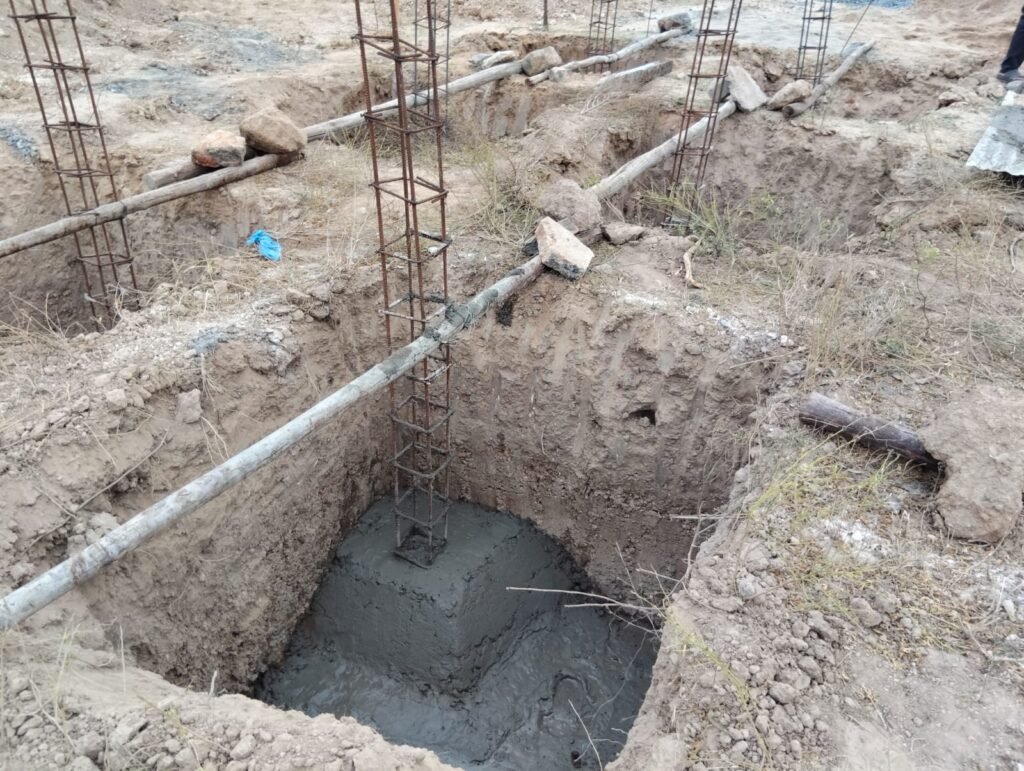
What is Foundation Depth in Building Construction?
Foundation depth refers to the vertical distance between the ground surface and the bottom of the foundation. It determines how deep the foundation must be constructed below the ground level to safely support the structure.
A properly designed foundation should reach stable soil layers that can safely support the building load.
In most residential buildings, foundations are constructed below the ground level to avoid problems caused by soil movement, moisture changes, and environmental effects.
Providing the correct minimum depth of foundation for residential building helps ensure that the structure remains stable and durable.
Minimum Depth of Foundation for Residential Building
According to common construction practice and building standards, the minimum depth of foundation for residential building is generally around:
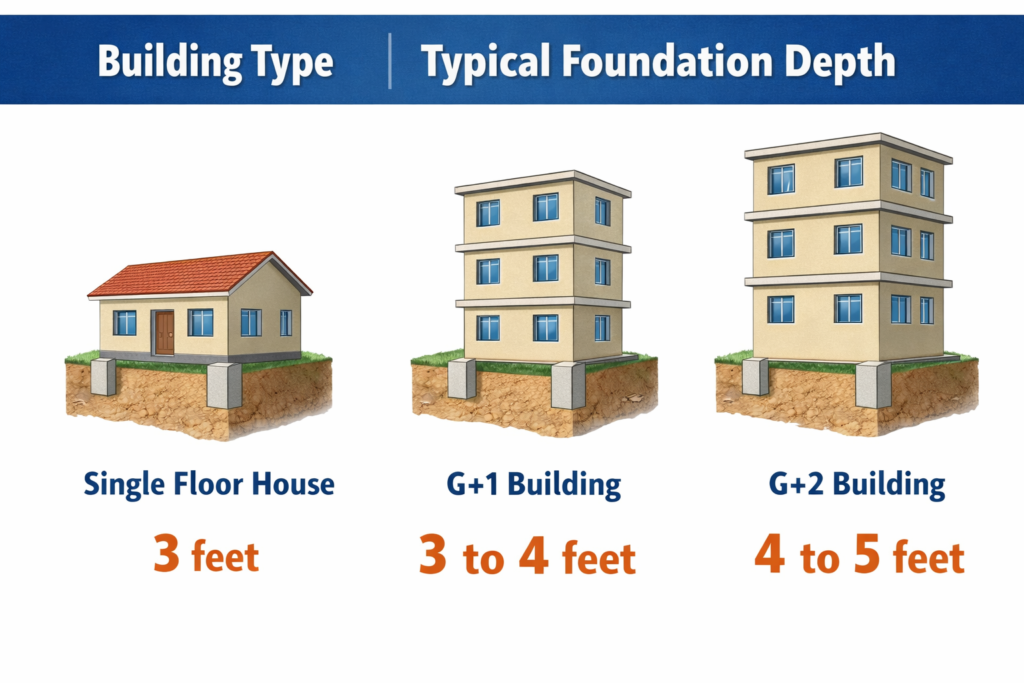
3 feet (about 1 meter) below ground level
This depth is considered sufficient for many small residential buildings constructed on normal soil conditions.
However, the actual depth may vary depending on several factors such as soil type, groundwater level, and structural load.
For example:
| Building Type | Typical Foundation Depth |
|---|---|
| Single Floor House | 3 feet |
| G+1 Building | 3 to 4 feet |
| G+2 Building | 4 to 5 feet |
These values are general guidelines and may vary depending on site conditions.
Proper footing design also depends on correct structural calculations. Our article on Footing Size Calculation for Residential Building explains how engineers determine safe footing dimensions.
Factors Affecting Minimum Depth of Foundation for Residential Building
The minimum depth of foundation for residential building cannot be fixed without considering site conditions and structural requirements. Engineers usually analyze several factors before finalizing the foundation depth.
Soil Type
Soil condition plays a major role in foundation design. Different types of soil have different load-carrying capacities.
For example:
- Clay soil usually requires deeper foundations
- Sandy soil may require moderate depth
- Hard soil or rock may allow shallow foundations
Weak soil conditions usually require deeper foundations to reach stronger soil layers.
Load from the Building
The load acting on the building also affects foundation depth.
Buildings with multiple floors produce higher loads, which require stronger and sometimes deeper foundations.
Single-floor houses usually require smaller foundation depth compared to multi-storey buildings.
Groundwater Level
If groundwater is present near the ground surface, foundation depth may need adjustment to avoid water-related issues during construction and in the future.
Frost Action and Soil Movement
In colder regions, foundations must be placed below the frost line to prevent damage caused by soil expansion during freezing conditions.
Although frost action is not a major concern in most parts of India, soil movement due to moisture changes can still affect foundation stability.
Local Building Codes
Structural engineers usually follow standard design guidelines and building codes while deciding the minimum depth of foundation for residential building.
Understanding foundation depth is an important part of the overall building process. You can also read our detailed guide on Building Construction Process Step by Step to understand each stage of residential construction.
Importance of Providing Correct Foundation Depth
Providing the correct foundation depth ensures that the building remains safe and stable.
If the foundation is too shallow, the structure may experience uneven settlement, which can cause cracks in walls and floors.
Proper foundation depth helps distribute building loads evenly across the soil and prevents excessive pressure on the ground.
Correct depth also protects the foundation from surface disturbances such as erosion, moisture variation, and soil movement.
Foundation design in India is usually based on guidelines published by the Bureau of Indian Standards (BIS). You can visit the official BIS website to explore Indian Standard codes related to building construction and structural design.
Practical Example of Foundation Depth in Residential Construction
In many residential construction projects, engineers commonly use the following practice:
For a single-storey house, the foundation depth is usually around 3 feet below ground level.
For G+1 buildings, the depth may increase to 3.5 to 4 feet depending on soil conditions.
For G+2 buildings, the depth may reach 4 to 5 feet to ensure sufficient stability.
These values are commonly followed in residential construction but must always be verified through proper structural design.
Steps Followed During Foundation Excavation
Foundation construction usually begins with excavation work.
The process typically involves the following steps:
First, the building layout is marked on the ground according to the structural drawings.
Next, excavation is carried out to the required depth for the foundation.
After excavation, the bottom surface is leveled and compacted properly.
A layer of plain cement concrete (PCC) is usually provided at the bottom to create a clean and level surface for reinforcement and footing construction.
Finally, reinforcement and footing concrete are placed according to the structural design.
Proper excavation depth ensures the foundation performs effectively.
Recommended Foundation Depth for Different Soil Types
The minimum depth of foundation for residential building can vary depending on the type of soil present at the construction site. Different soil types have different load-bearing capacities, and this directly affects the foundation design.
For example, buildings constructed on clay soil often require deeper foundations. Clay soil tends to expand when it absorbs moisture and shrink when it dries. Because of this movement, shallow foundations may become unstable over time. To avoid such problems, engineers usually provide a deeper foundation so that it rests on more stable soil layers.
In the case of sandy soil, the soil particles are loose but generally provide moderate bearing capacity when properly compacted. For residential buildings constructed on sandy soil, the minimum depth of foundation for residential building is usually around 3 to 4 feet below ground level.
If the building site contains hard soil or gravel, the foundation may not need to be very deep because these soils have higher load-bearing capacity. In such conditions, the minimum depth of foundation for residential building may remain around 3 feet, provided that the soil layer is stable and compact.
In areas where rocky soil is present near the surface, foundations can sometimes be constructed at a shallower depth because rock provides excellent support for structural loads.
Because soil conditions vary from location to location, engineers often recommend conducting a soil test before starting construction. Soil testing helps determine the exact bearing capacity of the soil and assists engineers in deciding the proper foundation depth.
Understanding soil conditions helps ensure that the minimum depth of foundation for residential building is sufficient to safely support the structure without causing settlement or structural damage.
Providing the correct foundation depth based on soil type improves the overall safety and durability of the building.
Common Mistakes in Foundation Construction
Several construction mistakes can occur if foundation depth is not properly determined.
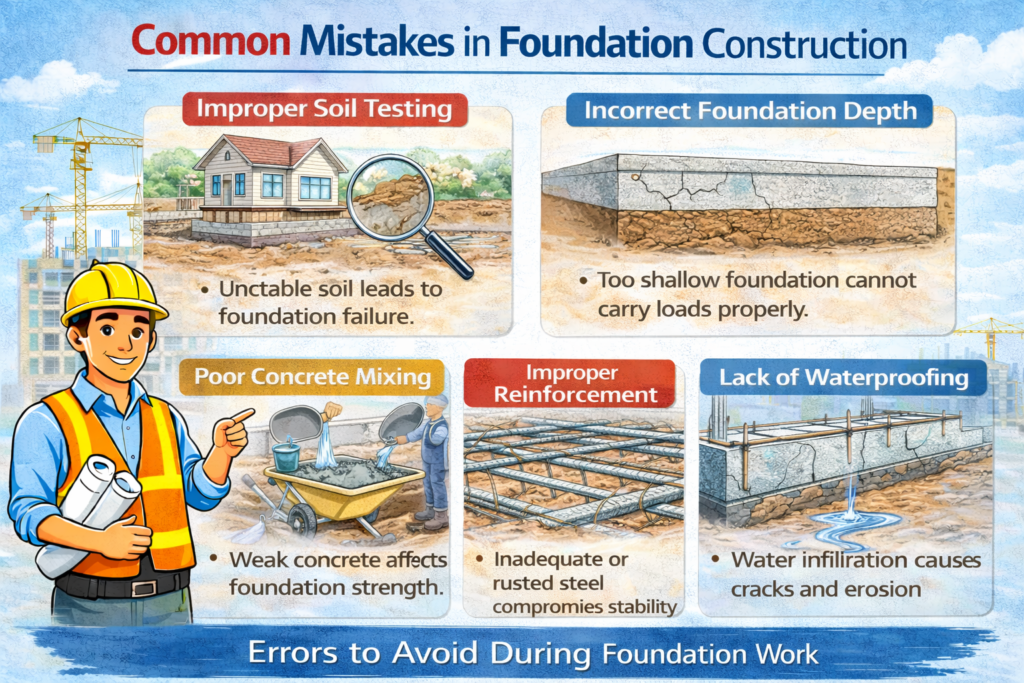
Shallow foundation depth
Providing insufficient foundation depth may cause settlement problems.
Ignoring soil conditions
Weak soil conditions require deeper foundations or special foundation types.
Poor excavation quality
Improper excavation can create uneven base surfaces that affect foundation strength.
Lack of soil investigation
Skipping soil testing may result in incorrect foundation design.
Avoiding these mistakes helps ensure a safe and durable foundation system.
Engineers often use reliable engineering resources for formulas and technical data during design. The Engineering ToolBox website provides useful engineering references, calculators, and technical information used in construction and engineering fields.
Practical Tips for Foundation Construction
The following tips are commonly followed on construction sites to ensure strong foundations.
- Always ensure proper excavation depth before placing concrete
- Maintain proper alignment and level during foundation work
- Use good quality concrete for footing construction
- Provide proper curing to improve concrete strength
- Follow structural drawings carefully during construction
These practices improve the long-term performance of the building foundation.
Frequently Asked Questions (FAQs)
What is the minimum depth of foundation for residential building?
The minimum depth of foundation for residential building is generally around 3 feet (1 meter) below ground level under normal soil conditions.
Why is foundation depth important?
Foundation depth helps ensure that the building load is transferred to stable soil layers and prevents settlement problems.
Can foundation depth vary for different buildings?
Yes, foundation depth varies depending on soil type, building load, and structural design requirements.
What happens if foundation depth is too shallow?
If the foundation depth is too shallow, the building may experience settlement, cracks in walls, or structural instability.
Who decides the foundation depth for a building?
A structural engineer usually determines the correct foundation depth based on soil condition and building load.
Conclusion
The minimum depth of foundation for residential building plays a crucial role in ensuring the safety and stability of the structure. A properly designed foundation transfers the building load safely to the soil and prevents settlement problems.
In most residential construction projects, the minimum depth is usually around 3 feet below ground level, but the exact depth depends on factors such as soil type, building load, and site conditions.
For safe construction, foundation design should always be verified by a qualified structural engineer. Proper planning and correct construction practices will help ensure that the building remains strong and durable for many years.

Shakeel T is a civil engineering enthusiast and founder of CivilGuide.in. He specializes in construction estimation, quantity surveying, and practical civil engineering calculations. Through CivilGuide, he shares real-world construction knowledge, calculators, and step-by-step guides to help students and site engineers improve their technical skills.