
Introduction
Understanding the standard door size for house in India is very important when designing a residential building. Doors provide access between rooms, allow proper movement inside the house, and play an important role in ventilation and safety.
Civil engineers and architects usually follow commonly accepted door sizes while preparing house plans. These sizes are based on building guidelines, furniture movement requirements, and comfortable human passage.
Knowing the standard door size for house in India helps homeowners design houses that are practical, comfortable, and easy to use.
Room dimensions play an important role in house planning. You can read our detailed guide on Standard Room Size for House in India to understand the recommended room sizes used in residential buildings.
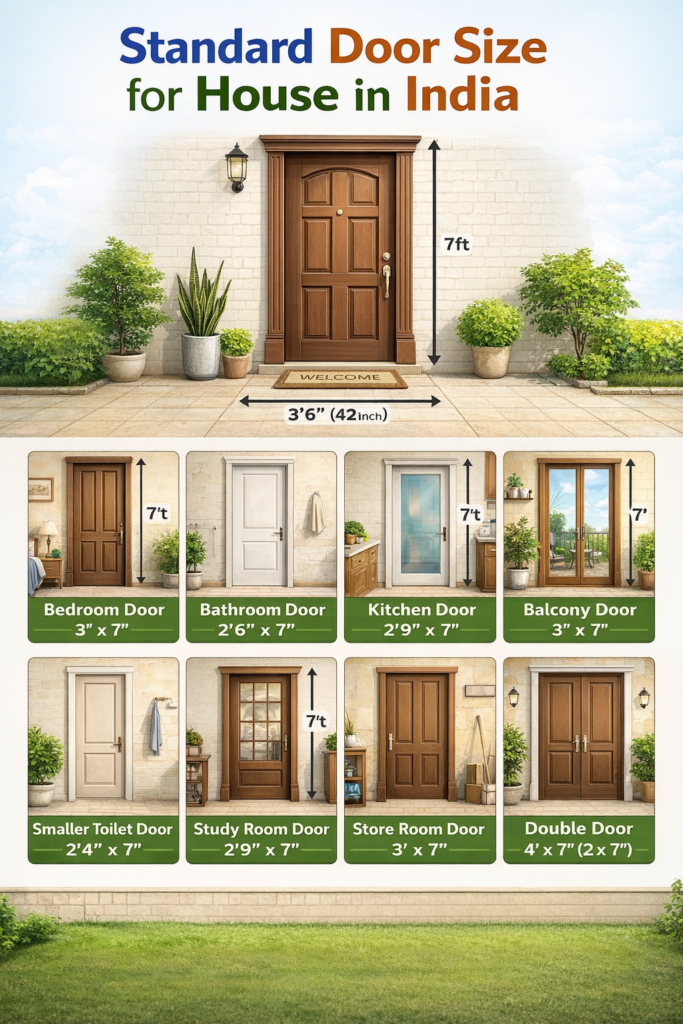
Standard Door Size for House in India – Room Wise Dimensions
Different rooms in a house require different door sizes depending on their usage. The standard door size for house in India is usually determined based on room function, furniture movement, and building design.
Below are commonly used door dimensions in residential buildings.
Main Door Size (Entrance Door)
The main entrance door is the most important door in a house because it provides the primary access to the building.
The standard door size for house in India for the main entrance usually ranges between:
| Type | Size |
|---|---|
| Minimum entrance door | 3 ft × 7 ft |
| Standard entrance door | 3.5 ft × 7 ft |
| Large entrance door | 4 ft × 7 ft |
The main door is usually wider than other doors to allow easy movement of furniture and improve the appearance of the house.
In many houses, decorative wooden doors or double doors are used for the entrance.
Bedroom Door Size
Bedroom doors should provide comfortable movement while maintaining privacy inside the room.
The standard door size for house in India for bedroom doors is typically:
| Type | Size |
|---|---|
| Minimum bedroom door | 2.5 ft × 7 ft |
| Standard bedroom door | 3 ft × 7 ft |
Bedroom doors are usually single doors made of wood, flush doors, or laminated doors.
Kitchen Door Size
Kitchen doors allow access to the cooking area and should provide enough space for easy movement while carrying utensils or groceries.
The standard door size for house in India for kitchens generally includes:
| Type | Size |
|---|---|
| Minimum kitchen door | 2.5 ft × 7 ft |
| Standard kitchen door | 3 ft × 7 ft |
Some modern houses use sliding doors or open kitchen layouts without doors.
Bathroom Door Size
Bathroom doors are usually smaller than other doors in the house.
The standard door size for house in India for bathrooms is typically:
| Type | Size |
|---|---|
| Minimum bathroom door | 2 ft × 7 ft |
| Standard bathroom door | 2.5 ft × 7 ft |
Bathroom doors are often made of PVC, aluminum, or waterproof materials to prevent moisture damage.
Balcony Door Size
Balcony doors connect indoor spaces with outdoor areas. They also allow natural light and ventilation.
Typical balcony door sizes include:
| Type | Size |
|---|---|
| Standard balcony door | 3 ft × 7 ft |
| Sliding balcony door | 5 ft × 7 ft |
Sliding glass doors are commonly used for balconies in modern house designs.
Standard Door Height in India
In most residential buildings, the door height is usually kept constant for all rooms.
The standard door size for house in India generally uses a door height of:
7 feet (2100 mm)
This height provides comfortable passage for most people and maintains uniform appearance inside the house.
In luxury houses, door heights may sometimes be increased to 8 feet.
Door Frame Size in Residential Buildings
Door frames support the door and transfer loads from the wall around the opening.
Typical door frame thickness used in residential houses includes:
| Door Type | Frame Size |
|---|---|
| Internal door | 100 mm × 60 mm |
| Main door | 125 mm × 75 mm |
Door frames are usually made of wood, steel, or aluminum depending on the building design.
Foundation depth is an important factor for structural safety. Our article on Minimum Depth of Foundation for Residential Building explains how engineers determine the correct foundation depth.
Factors Affecting Door Size in House Planning
Several factors influence the standard door size for house in India during building design.
Room Function
Different rooms require different door sizes based on their usage.
Furniture Movement
The entrance door should be large enough to allow furniture to pass through easily.
Ventilation and Lighting
Door openings may also help improve ventilation and lighting.
Construction Budget
Larger doors increase material cost and installation cost.
Architectural Design
Modern house designs sometimes include sliding doors, glass doors, or larger openings.
Standard Door Size According to Building Guidelines
In many residential construction projects, architects and civil engineers follow general building guidelines while deciding door sizes. These guidelines ensure comfortable movement, safety, and proper usability of spaces inside the house.
According to common residential planning practices, the standard door size for house in India should allow easy passage for people and furniture. In most houses, internal doors are designed with a width of 3 feet, which provides comfortable access between rooms.
The entrance door is usually wider because it serves as the main access point of the house. A wider entrance door also improves ventilation and allows large furniture such as beds, sofas, and cupboards to be moved easily during shifting.
Following proper door size guidelines helps maintain a balanced house design and improves convenience for occupants.
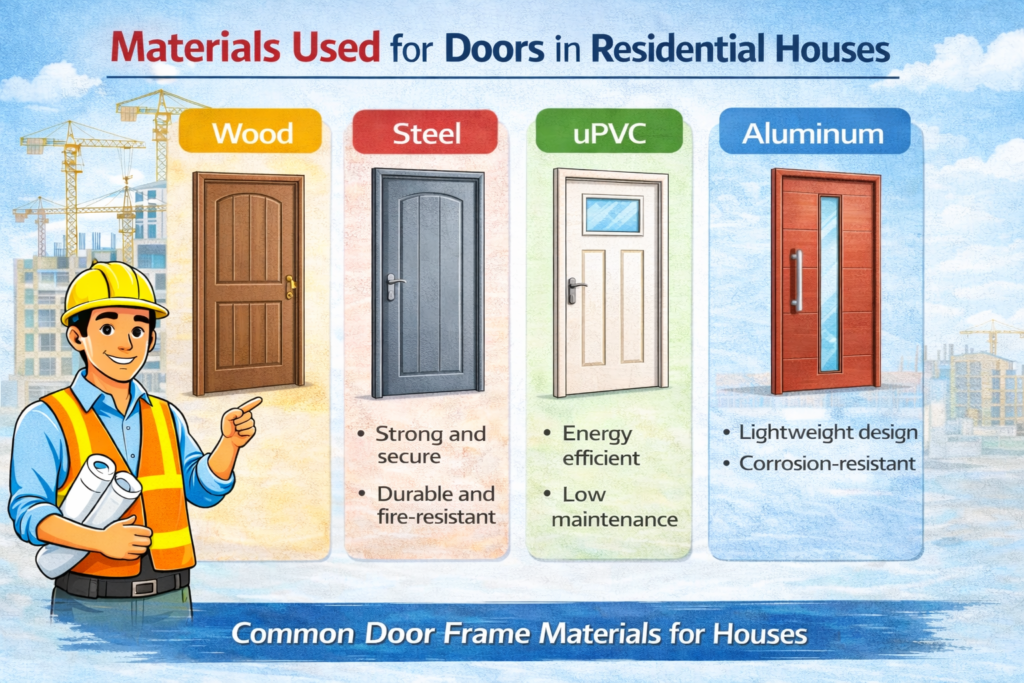
Materials Used for Doors in Residential Houses
Different types of materials are used for doors depending on their location and purpose. Choosing the right material helps improve durability and appearance.
Common door materials used in residential buildings include:
Wooden Doors
Wooden doors are widely used for main entrances because they provide strength and a decorative appearance. Teak wood and engineered wood are commonly used materials.
Flush Doors
Flush doors are commonly used for bedrooms and internal rooms. These doors are cost-effective, durable, and easy to maintain.
PVC Doors
PVC doors are often used for bathrooms because they are waterproof and resistant to moisture.
Aluminum and Glass Doors
Aluminum or glass doors are commonly used for balconies and modern house designs. These doors allow natural light to enter the room and improve ventilation.
Selecting the correct door material is important for both durability and aesthetic appeal.
Importance of Proper Door Placement
Apart from size, the placement of doors also plays a major role in house planning. Incorrect door placement can affect room usability and movement inside the house.
When planning door locations, architects consider several factors.
Easy Movement
Doors should allow easy movement between rooms without blocking furniture or walking areas.
Privacy
Bedroom and bathroom doors should be placed in locations that maintain privacy.
Ventilation
Proper door placement helps improve airflow inside the building.
Natural Lighting
Doors connected to balconies or outdoor areas allow natural light to enter the house.
Proper door placement improves comfort and functionality inside the house.
Modern Door Designs in Residential Houses
Modern residential buildings often use stylish door designs to improve the appearance of the house.
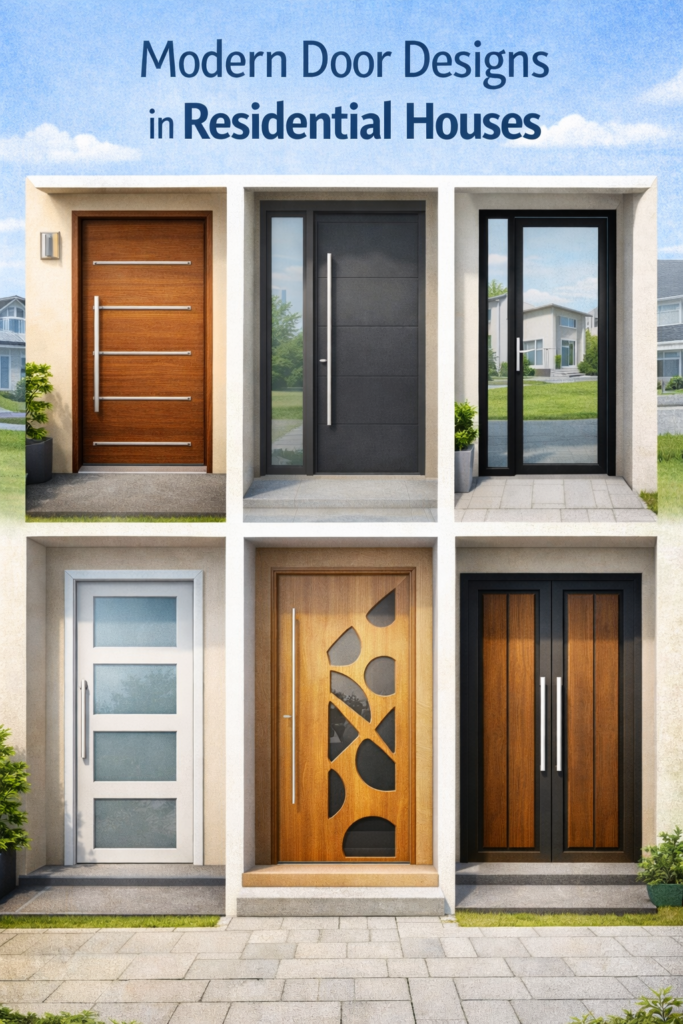
Some popular modern door styles include:
Sliding doors
Glass doors
Panel doors
Double doors
Decorative wooden doors
Sliding doors are commonly used for balconies and wardrobes because they save space.
Glass doors are often used in living rooms or balconies to increase natural lighting.
Decorative wooden doors are frequently used for the main entrance to enhance the visual appeal of the house.
Modern door designs combine functionality with aesthetics, making the house look more attractive.
Practical Example for a Residential House
For a typical 1000 sq ft residential house, the standard door size for house in India may be planned as follows:
Main door – 3.5 ft × 7 ft
Bedroom doors – 3 ft × 7 ft
Kitchen door – 3 ft × 7 ft
Bathroom door – 2.5 ft × 7 ft
Balcony door – 3 ft × 7 ft
These sizes provide comfortable movement and proper functionality inside the house.
Common Mistakes in Door Size Planning
Some homeowners make mistakes when deciding door sizes during house construction.
Common mistakes include:
Using doors that are too narrow for furniture movement
Not maintaining uniform door height
Ignoring ventilation requirements
Choosing unsuitable door materials for bathrooms
Improper door opening direction
Avoiding these mistakes helps improve the usability and appearance of the house.
Engineering Toolbox provides useful engineering data, formulas, and technical resources related to construction and building design.
FAQs
What is the standard door size for houses in India?
The most common standard door size for house in India is 3 ft × 7 ft for internal doors and 3.5 ft × 7 ft for main entrance doors.
What is the minimum door width for a house?
The minimum door width for residential buildings is usually 2.5 feet.
Why is the main door wider than other doors?
The main door is wider to allow easy entry, furniture movement, and better appearance of the house.
What is the standard door height in India?
The standard door height for most residential buildings in India is 7 feet (2100 mm).
The Bureau of Indian Standards provides official building codes and guidelines used in construction projects across India.
Conclusion
Understanding the standard door size for house in India helps homeowners design houses that are practical, comfortable, and functional. Proper door dimensions improve movement inside the house and allow easy furniture access.
Civil engineers and architects usually follow standard door dimensions while designing residential buildings. Choosing the correct door size ensures better usability, ventilation, and overall appearance of the house.
Following the standard door size for house in India also helps maintain uniformity and convenience in residential building design.

Shakeel T is a civil engineering enthusiast and founder of CivilGuide.in. He specializes in construction estimation, quantity surveying, and practical civil engineering calculations. Through CivilGuide, he shares real-world construction knowledge, calculators, and step-by-step guides to help students and site engineers improve their technical skills.