
Introduction
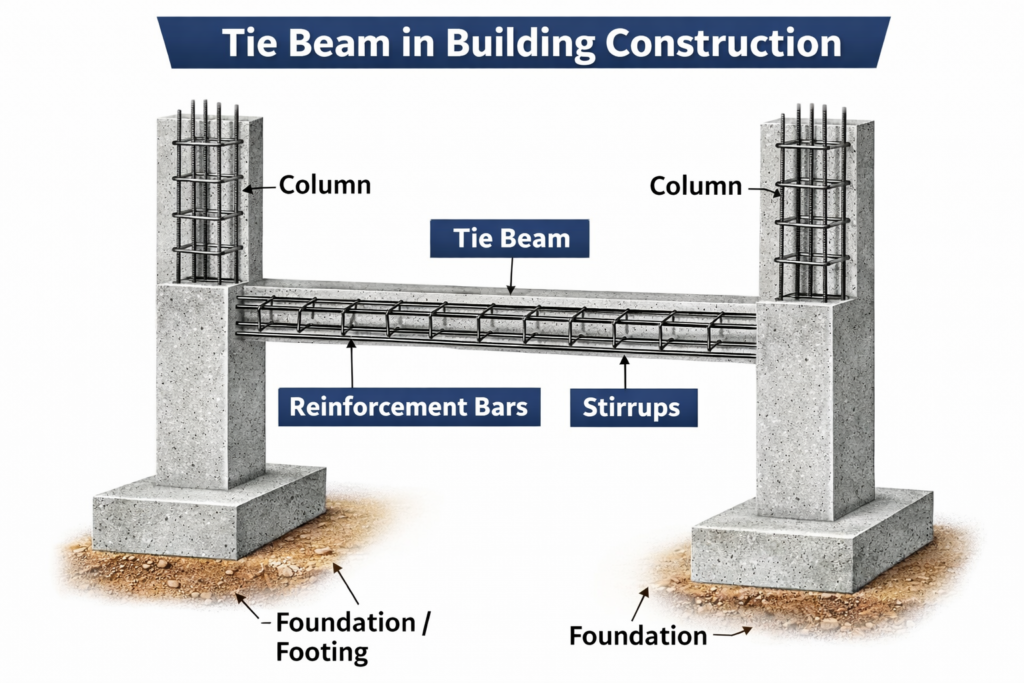
Tie beam in construction is an important structural element used to connect columns and improve the stability of a building structure. It is a reinforced concrete beam provided between two columns to hold them together and prevent excessive movement.
In many buildings, columns carry heavy loads from slabs, beams, and walls. If columns are not properly connected, they may move independently due to soil settlement, wind loads, or seismic forces. Tie beams help maintain structural alignment by tying the columns together.
Tie beams are commonly used in residential buildings, multi-storey buildings, and structures built on weak soil conditions. They improve the overall rigidity of the structure and reduce the chances of structural cracks or settlement problems.
Understanding tie beam design, size, reinforcement, and construction process is important for civil engineers, contractors, and house owners involved in building construction.
What is Tie Beam in Construction
A tie beam is a horizontal reinforced concrete beam that connects two or more columns in a building structure. The main purpose of the tie beam is to maintain the structural integrity of the building by tying the columns together.
Tie beams are usually provided above the foundation level or between columns at different heights of the building. Unlike plinth beams, tie beams generally do not support masonry walls directly.
Instead, they mainly act as structural connectors that prevent columns from moving independently.
Tie beams are particularly useful in buildings constructed on soft soil, where uneven settlement may occur. By connecting the columns together, tie beams help distribute loads evenly and maintain structural stability.
Purpose of Tie Beam in Construction
Tie beams serve several important purposes in building construction.
Connects Columns
The main function of a tie beam is to connect columns and keep them aligned.
Prevents Differential Settlement
Tie beams reduce the effect of uneven soil settlement by distributing loads between columns.
Improves Structural Stability
By tying columns together, tie beams improve the overall rigidity and stability of the structure.
Reduces Column Buckling
Tie beams help prevent columns from buckling under heavy loads.
Improves Earthquake Resistance
In earthquake-prone areas, tie beams help distribute lateral forces across the structure, improving seismic performance.
Column design is essential for structural stability. Read our detailed guide on column size for 1, 2 and 3 storey buildings.
Standard Tie Beam Size for Residential Buildings
The size of a tie beam depends on the building design, column spacing, and structural load.
Typical tie beam sizes used in residential construction include:
| Building Type | Typical Tie Beam Size |
|---|---|
| Single floor house | 9 in × 9 in |
| G+1 building | 9 in × 12 in |
| Multi-storey building | 9 in × 15 in |
In most residential buildings:
Width of tie beam = width of column or wall
Depth of tie beam = 9 inches to 15 inches depending on design.
The exact beam size should always be decided by a structural engineer.
Factors Affecting Tie Beam Design
The design and size of tie beams depend on several structural and site-related factors. Civil engineers carefully analyze these factors to ensure that the beam performs effectively in maintaining structural stability.
Column Spacing
The distance between columns plays an important role in determining the size of the tie beam. When columns are spaced farther apart, stronger beams with larger dimensions and more reinforcement may be required.
Soil Condition
Soil condition significantly influences the need for tie beams. In areas with weak or expansive soil, tie beams help reduce the effects of differential settlement between columns.
Building Load
The total load acting on the building, including slabs, beams, walls, and live loads, affects the tie beam design. Buildings with higher loads may require stronger beams.
Number of Floors
Multi-storey buildings generally require stronger tie beams compared to single-storey houses because of increased structural loads.
Proper structural design ensures that tie beams maintain alignment between columns and provide adequate support to the building structure.
Reinforcement Details of Tie Beam
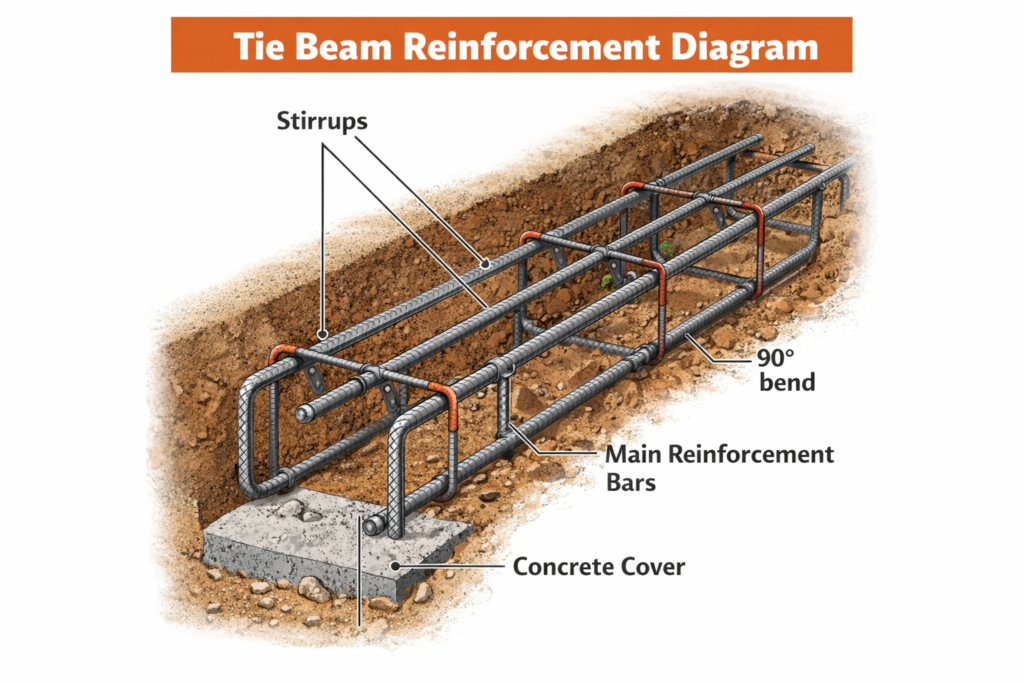
Proper reinforcement is necessary to ensure the strength and durability of tie beams.
Main Reinforcement Bars
Usually 4 steel bars are used in tie beams.
Common bar diameters:
- 10 mm bars
- 12 mm bars
- 16 mm bars
Typical arrangement:
2 bars at top
2 bars at bottom
Stirrups
Stirrups hold the main reinforcement bars in position and resist shear forces.
Typical stirrup details:
- 6 mm or 8 mm diameter
- Spacing: 150 mm to 200 mm
Concrete Grade
The commonly used concrete grade for tie beams in residential construction is:
M20 concrete
Proper reinforcement ensures that tie beams can safely resist bending and shear forces.
Understanding plinth beams is important because they also connect structural elements at the ground level. Read our guide on plinth beam in construction to learn about its purpose and reinforcement details.
Difference Between Tie Beam and Plinth Beam
Many people confuse tie beams with plinth beams, but they serve different purposes.
| Feature | Tie Beam | Plinth Beam |
|---|---|---|
| Location | Between columns | At plinth level |
| Purpose | Connect columns | Support masonry walls |
| Load bearing | Usually no | Yes |
Plinth beams support wall loads, while tie beams mainly connect columns and improve structural stability.
Construction Process of Tie Beam
The construction of tie beams typically follows these steps.
1. Column Construction
Columns are constructed first up to the required level where the tie beam will be placed.
2. Formwork Installation
Shuttering is installed around the beam area to support the concrete.
3. Reinforcement Placement
Steel bars and stirrups are placed according to the structural design.
4. Concrete Pouring
Concrete is poured into the formwork and compacted using a vibrator.
5. Curing
Proper curing is carried out for 7 to 14 days to achieve the required strength.
After curing, the formwork is removed and construction continues.
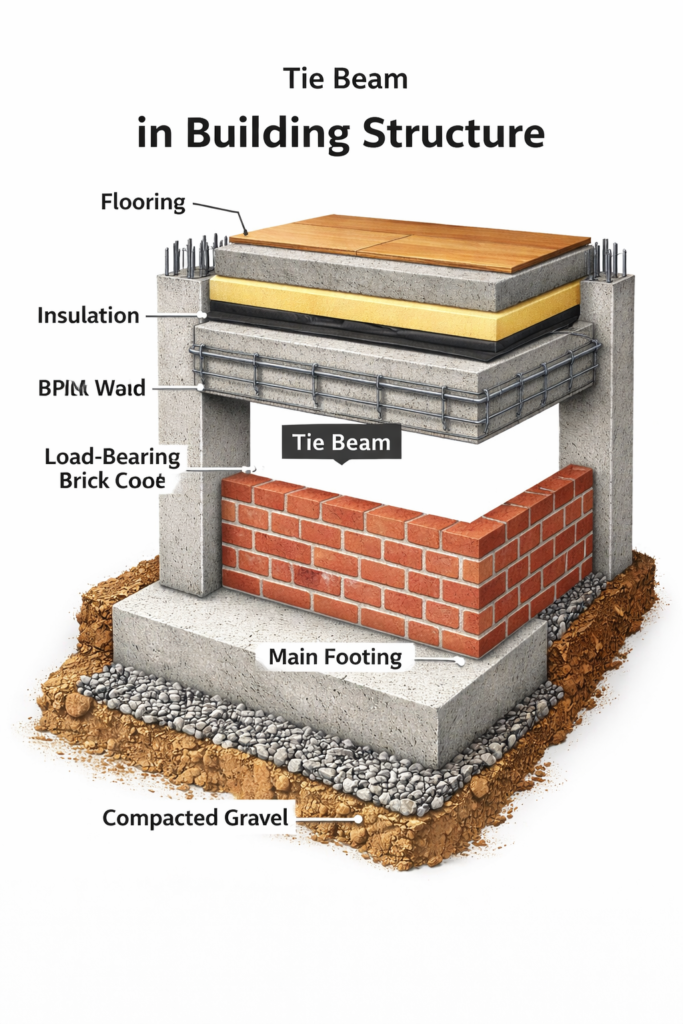
Practical Example of Tie Beam in House Construction
Consider a residential building with columns spaced 12 feet apart.
A typical tie beam may have:
Width = 9 inches
Depth = 12 inches
Reinforcement:
- 4 bars of 12 mm diameter
- 8 mm stirrups at 150 mm spacing
This tie beam connects the columns and improves structural stability.
Importance of Tie Beam in Earthquake Zones
Tie beams play a crucial role in earthquake-resistant construction.
During earthquakes, buildings experience horizontal forces that can cause structural movement. Tie beams help distribute these forces evenly across the structure.
By connecting columns together, tie beams reduce the chances of column displacement or structural damage.
In earthquake-prone areas, engineers often provide additional tie beams to improve building stability and safety.
Advantages of Tie Beam in Building Construction
Providing tie beams in buildings offers several advantages that improve structural performance and safety.
Improves Structural Rigidity
Tie beams connect columns and help make the building structure more rigid by distributing loads evenly throughout the structure.
Reduces Settlement Problems
Uneven soil settlement can cause structural cracks. Tie beams help reduce this problem by balancing loads between columns.
Improves Load Distribution
Tie beams help distribute loads between structural elements, reducing excessive stress on individual columns.
Enhances Earthquake Resistance
In seismic areas, tie beams help distribute horizontal forces across the structure, improving earthquake resistance.
Increases Building Durability
By maintaining structural stability and reducing stress concentration, tie beams increase the life span of the building.
Materials Used in Tie Beam Construction
Tie beams are constructed using several building materials that contribute to their strength and durability.
Cement
Cement acts as the binding material in concrete. High-quality cement ensures strong bonding between aggregates and reinforcement steel.
Sand
Clean sand is used as a fine aggregate in the concrete mix. It improves workability and helps achieve the required concrete strength.
Coarse Aggregate
Crushed stone aggregates provide compressive strength and stability to the concrete.
Steel Reinforcement
Steel reinforcement bars resist tension forces in the beam. TMT bars such as Fe415 or Fe500 are commonly used in residential construction.
Concrete
Concrete is the primary material used in tie beam construction. Proper mix proportions and compaction ensure the required strength and durability.
Using high-quality materials ensures that the tie beam performs effectively throughout the life of the building.
Common Mistakes in Tie Beam Construction
Some common mistakes during tie beam construction can reduce structural performance.
Incorrect Reinforcement
Providing insufficient reinforcement bars reduces beam strength.
Poor Concrete Quality
Low-quality concrete may weaken the beam.
Improper Compaction
Concrete must be properly vibrated to remove air voids.
Lack of Proper Curing
Concrete should be cured adequately to achieve full strength.
Incorrect Beam Size
Tie beam dimensions should always follow structural design.
Avoiding these mistakes ensures safe and durable construction.
To understand official structural design standards and building guidelines in India, you can refer to the Bureau of Indian Standards (BIS) website, which publishes the National Building Code and various structural design codes used in construction.
FAQs About Tie Beam in Construction
What is the purpose of a tie beam?
The purpose of a tie beam is to connect columns and improve the stability of a building structure.
Is tie beam necessary for houses?
Yes, tie beams help prevent column movement and improve structural stability.
What is the standard size of tie beam?
Typical tie beam sizes range between 9×9 inches and 9×12 inches depending on structural design.
What is the difference between Lintel beam and tie beam?
Tie beams connect columns, while lintel beams support walls above doors and windows.
Which concrete grade is used for tie beam?
Usually M20 grade concrete is used for residential construction.
Engineering Toolbox provides useful engineering formulas, technical explanations, and construction material information used by civil engineers worldwide.
Conclusion
Tie beam in construction is an important structural element that connects columns and improves the stability of a building structure. By distributing loads and preventing independent column movement, tie beams help maintain structural alignment and reduce the risk of cracks or settlement.
Proper design, reinforcement, and construction practices ensure that tie beams perform effectively throughout the life of the building. Civil engineers must always follow structural drawings and building standards when constructing tie beams.
For residential buildings, tie beams play a key role in maintaining structural safety and durability.

Shakeel T is a civil engineering enthusiast and founder of CivilGuide.in. He specializes in construction estimation, quantity surveying, and practical civil engineering calculations. Through CivilGuide, he shares real-world construction knowledge, calculators, and step-by-step guides to help students and site engineers improve their technical skills.